What This Document Is
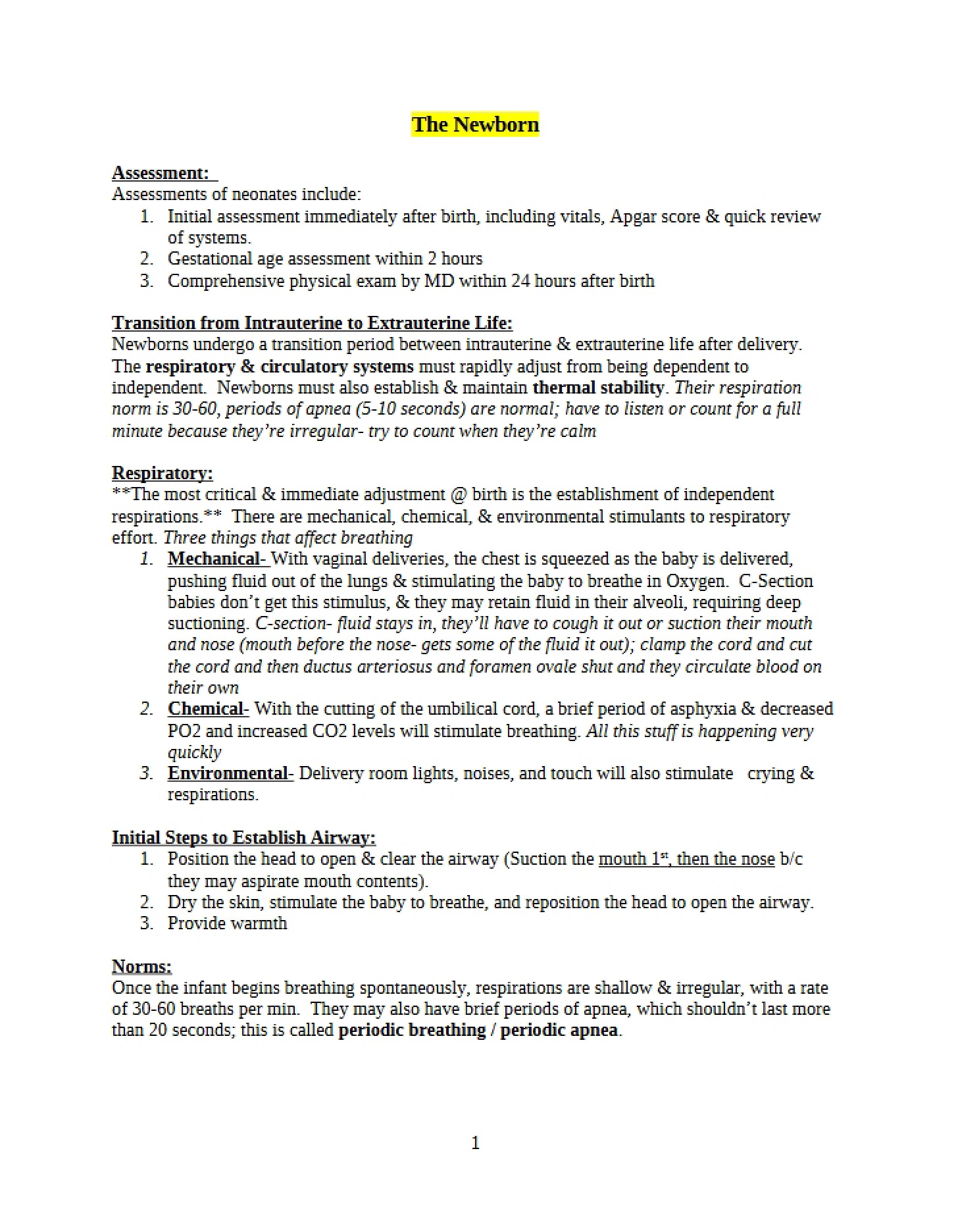
This resource is a focused guide to newborn assessment and electronic fetal monitoring – critical skills for nursing students and practicing maternal-newborn nurses. It delves into the essential components of evaluating a newborn’s physiological state and interpreting data obtained through fetal monitoring techniques. The material bridges theoretical knowledge with practical application, preparing you to confidently approach the unique demands of caring for mothers and newborns.
Why This Document Matters
This guide is invaluable for students in maternal-newborn nursing courses, particularly those preparing for clinical rotations or comprehensive exams. It’s also a useful refresher for registered nurses seeking to enhance their skills in assessing newborns and interpreting fetal heart rate patterns. Understanding these concepts is fundamental to identifying potential complications, intervening appropriately, and ensuring positive outcomes for both mother and baby. It’s most beneficial when used in conjunction with hands-on clinical experience and other course materials.
Common Limitations or Challenges
This resource provides a foundational understanding of newborn assessment and fetal monitoring principles. It does *not* substitute for direct clinical experience, supervised practice, or comprehensive textbooks. It will not provide step-by-step procedures for performing assessments or interpreting complex fetal monitoring strips. Furthermore, it does not cover all possible variations or complications that may arise in clinical practice.
What This Document Provides
* An overview of newborn wake/sleep states and their influence on assessment findings.
* A comparison of internal and external fetal monitoring techniques, including advantages and disadvantages.
* Key terminology related to uterine activity, including contraction frequency, duration, and intensity.
* Descriptions of methods used to evaluate contraction strength.
* Discussion of factors influencing the accuracy of different monitoring methods.