What This Document Is
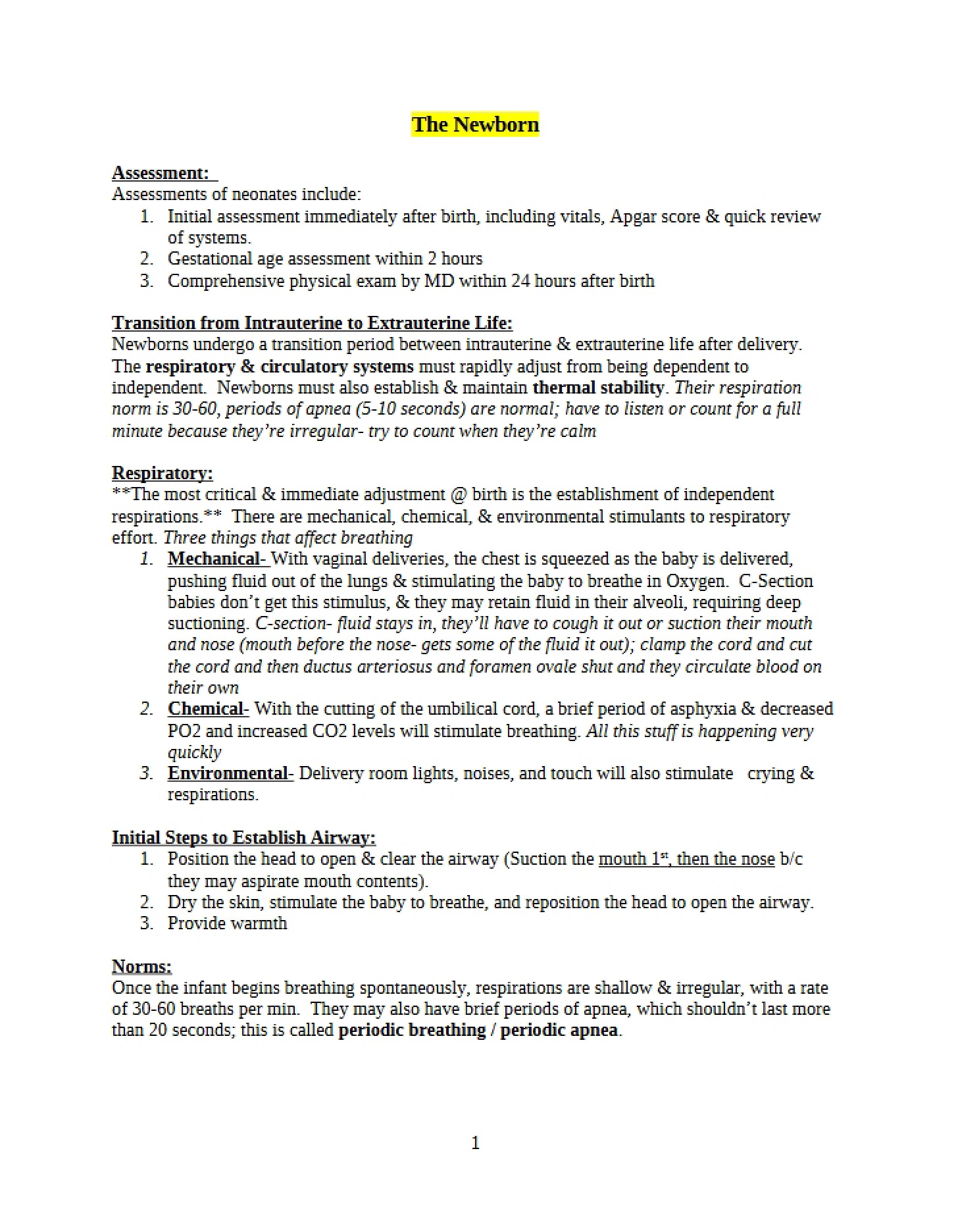
This resource is a detailed overview of essential newborn assessment and immediate care procedures, specifically designed for nursing students. It focuses on the critical steps and considerations taken *before* a newborn is fully transitioned and stabilized, covering a range of physiological evaluations and interventions. The content is presented as a transcription of a lecture or training video, offering a conversational yet informative approach to a foundational aspect of maternal-newborn nursing.
Why This Document Matters
This material is invaluable for students in a Maternal-Newborn Nursing course (like NURS 424 at the University of South Carolina) preparing for clinical rotations or exams. It’s particularly helpful for understanding the initial priorities in newborn care, recognizing potential complications, and grasping the rationale behind common procedures. Nursing professionals seeking a refresher on fundamental newborn assessment techniques will also find this a useful resource. It’s best utilized *before* engaging in hands-on practice to build a strong theoretical base.
Common Limitations or Challenges
This resource is a focused overview and does not substitute for comprehensive textbooks, clinical experience, or direct instruction from qualified healthcare professionals. It does not provide detailed, step-by-step guides for performing procedures, nor does it cover long-term newborn care or management of complex medical conditions. It’s designed to *supplement* your learning, not replace it. Access to the full content is required for a complete understanding of the topics covered.
What This Document Provides
* Discussion of initial newborn physiological assessments.
* Key considerations for identifying potential cardiovascular or metabolic concerns.
* Overview of equipment used in immediate newborn care (e.g., bulb syringe, cord clamp).
* Information regarding feeding considerations for different newborn populations.
* Exploration of techniques for clearing newborn airways and managing secretions.
* Insight into procedures related to amniotic membrane rupture.
* Discussion of gastric tube placement and indications.