What This Document Is
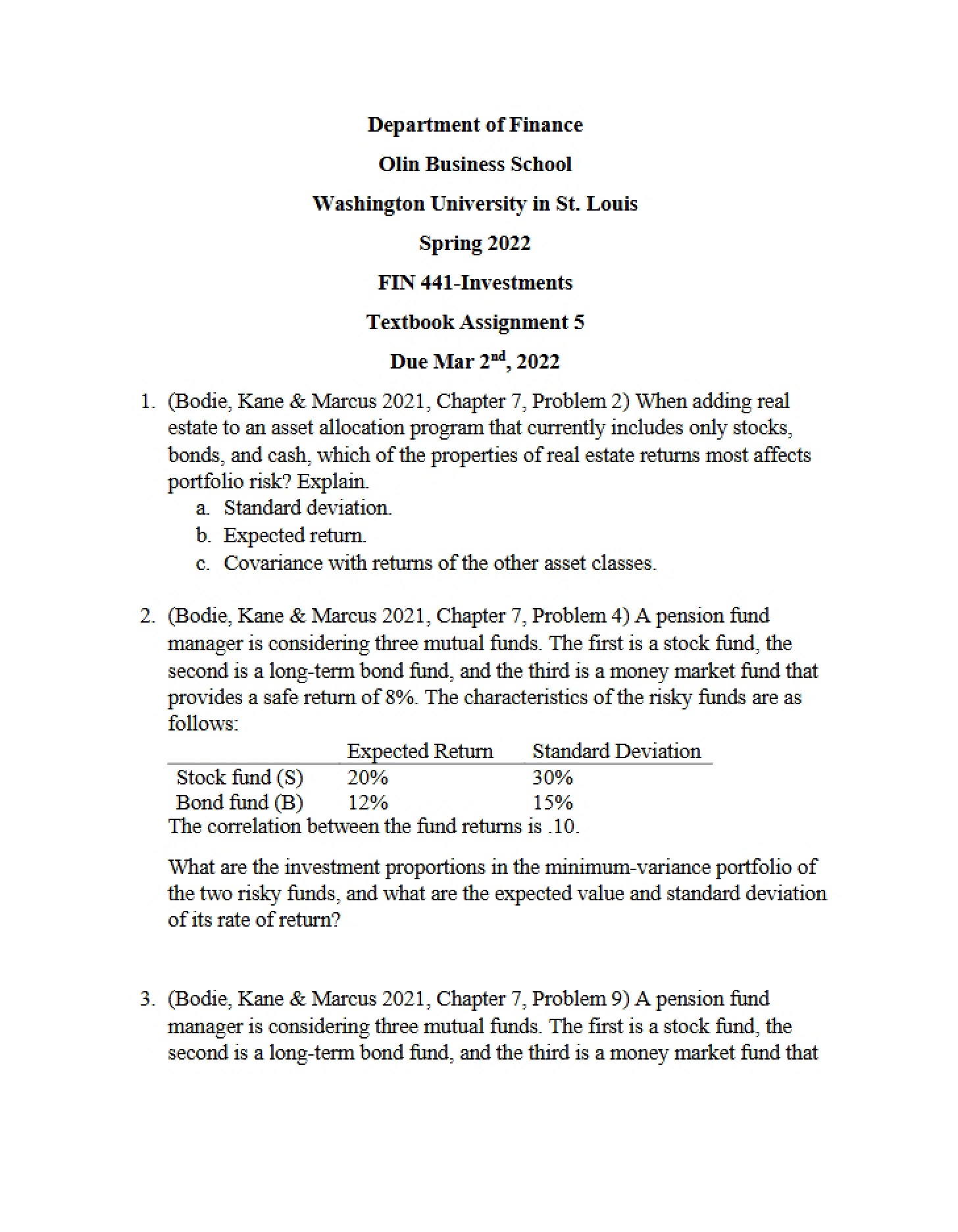
This is a problem set designed to reinforce your understanding of core investment principles, specifically as taught within FIN 441 at Washington University in St. Louis. It’s based directly on material from Bodie, Kane & Marcus’ widely-used investments textbook. The assignment focuses on applying theoretical concepts to practical scenarios, requiring you to analyze and interpret financial data. It covers topics related to investment companies and market returns.
Why This Document Matters
This assignment is crucial for students seeking to solidify their grasp of investment vehicles and performance measurement. It’s particularly helpful for those preparing for exams or looking to build a strong foundation for more advanced coursework in finance. Working through these types of problems will enhance your ability to evaluate different investment options and understand the factors influencing real-world returns. It’s best utilized *after* thoroughly reviewing the relevant textbook chapters and lecture materials.
Common Limitations or Challenges
This assignment focuses on applying established principles and doesn’t cover emerging trends or highly speculative investment strategies. It assumes a foundational understanding of financial terminology and basic calculations. The problems presented are designed to test comprehension of the textbook material, and won’t provide entirely new concepts or strategies. It does not offer detailed explanations of the solutions, requiring independent application of learned concepts.
What This Document Provides
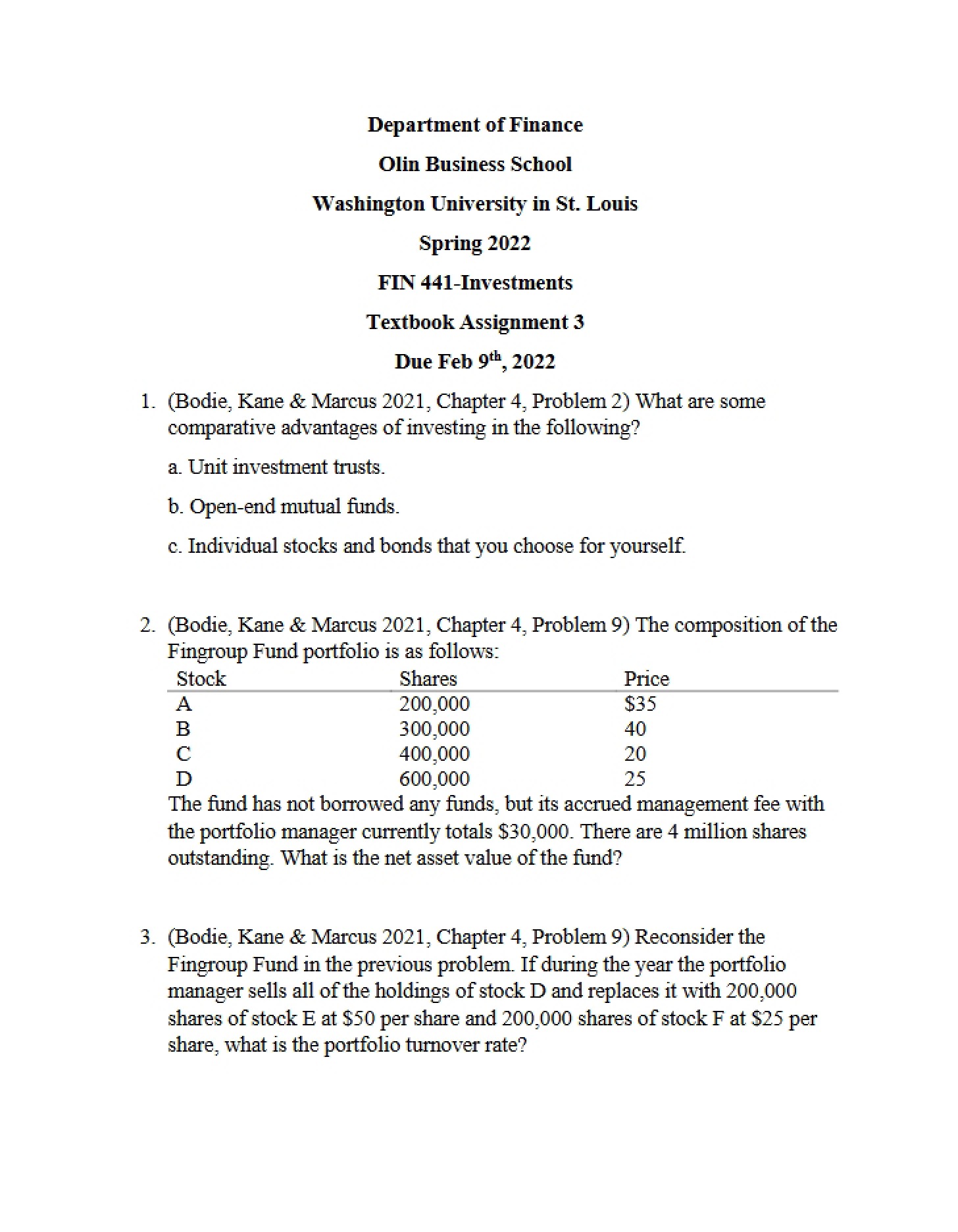
* A series of analytical questions relating to different types of investment companies – including unit investment trusts, open-end mutual funds, and individual securities.
* Problems requiring the calculation of net asset values for investment funds.
* Exercises focused on determining portfolio turnover rates based on trading activity.
* Scenarios involving real rates of return and the impact of inflation.
* A data analysis task utilizing historical market data to assess return distributions.
* Questions referencing data available from a specific academic source (Kenneth French’s data library).