What This Document Is
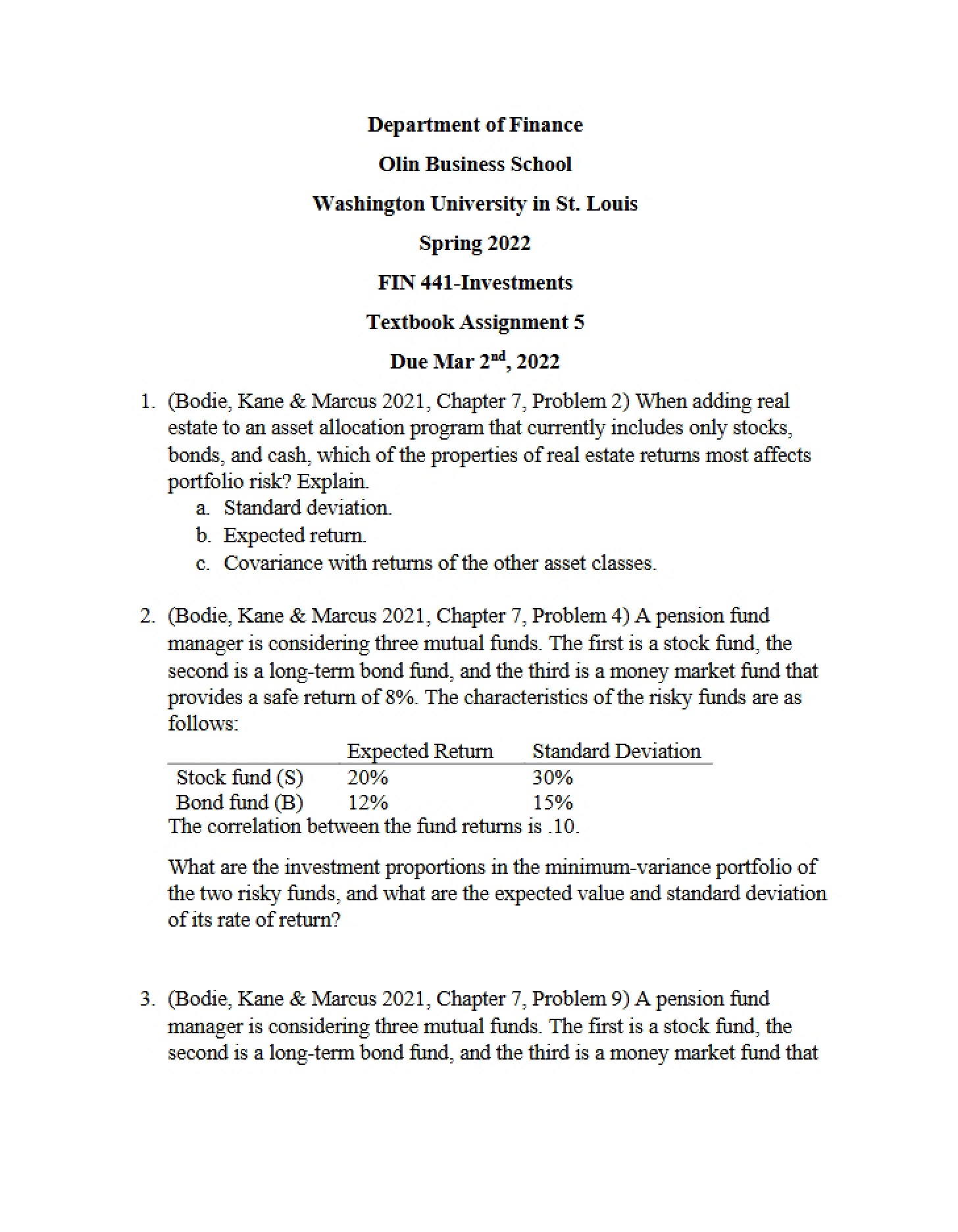
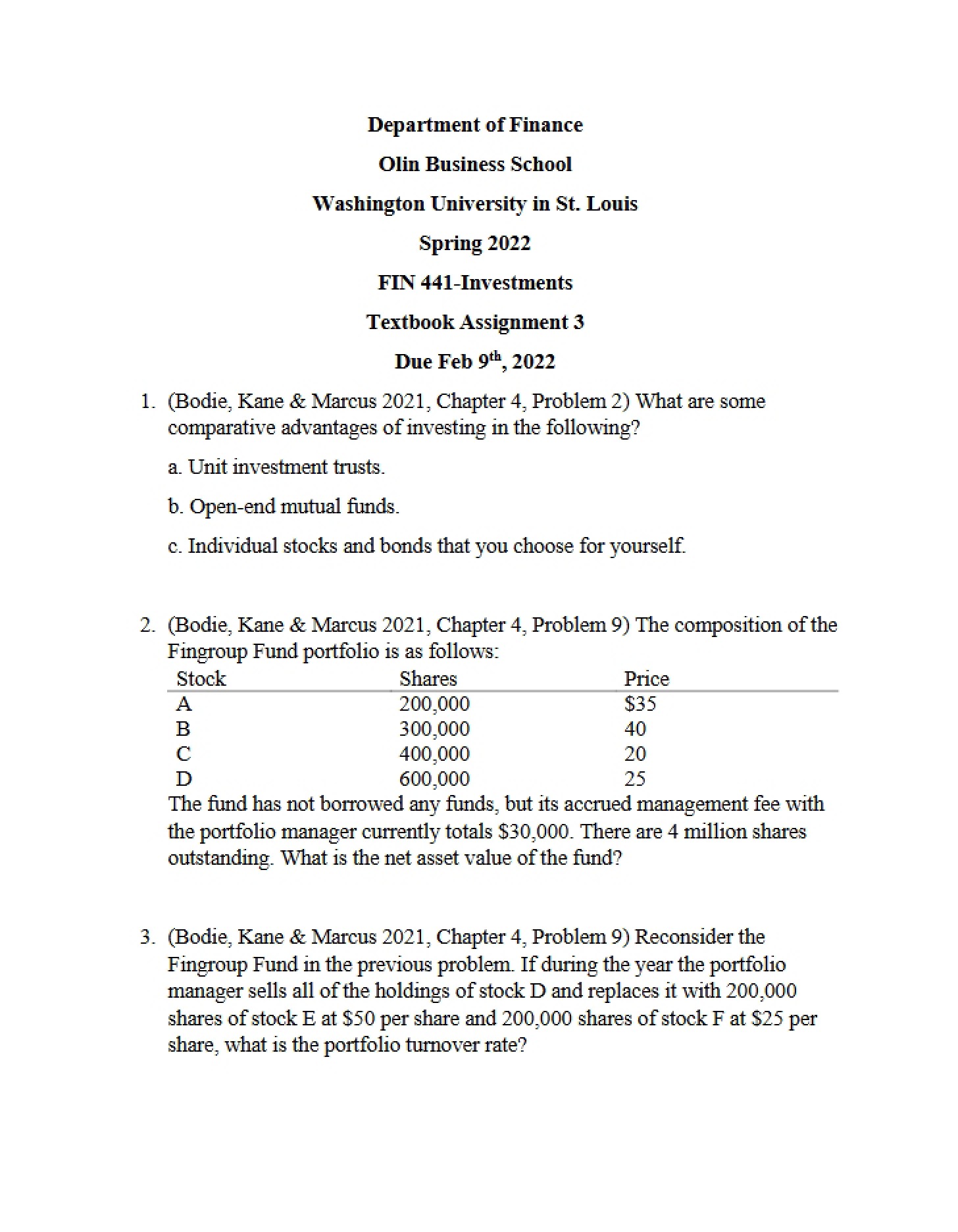
This is a problem set designed to reinforce your understanding of core investment principles, specifically focusing on portfolio performance evaluation and risk-return optimization. It’s part of the coursework for FIN 441 – Investments at Washington University in St. Louis, and builds directly on material covered in Bodie, Kane & Marcus’s widely-used textbook. The assignment centers around applying theoretical concepts to practical scenarios involving stocks, portfolios, and risk-free assets. It requires calculations and analytical thinking to assess investment opportunities.
Why This Document Matters
This assignment is crucial for students aiming to solidify their grasp of portfolio theory. Successfully completing these problems will demonstrate your ability to calculate expected returns, standard deviations, and to determine appropriate asset allocations based on investor risk preferences. It’s particularly valuable for students preparing for careers in financial analysis, portfolio management, or wealth advising. Working through these exercises will prepare you for more complex investment strategies and real-world decision-making. It’s best utilized *after* thoroughly reviewing the relevant chapters in the textbook and attending lectures.
Common Limitations or Challenges
This assignment focuses on applying formulas and concepts; it does not provide foundational explanations of the underlying theories. It assumes you have a solid understanding of expected return, standard deviation, and risk aversion. The problems require independent calculation and interpretation – detailed step-by-step solutions are not included within this resource. Furthermore, it doesn’t cover qualitative factors influencing investment decisions, concentrating solely on quantitative analysis.
What This Document Provides
* A series of analytical problems related to portfolio return and risk.
* Scenarios involving different market conditions (bear, normal, bull) and their impact on asset performance.
* Exercises requiring the calculation of expected returns for individual stocks and portfolios.
* Problems focused on determining appropriate asset allocations based on varying degrees of risk aversion.
* Applications of the Capital Allocation Line and its use in portfolio optimization.
* Opportunities to practice applying concepts related to risk-free assets and their integration into investment strategies.