What This Document Is
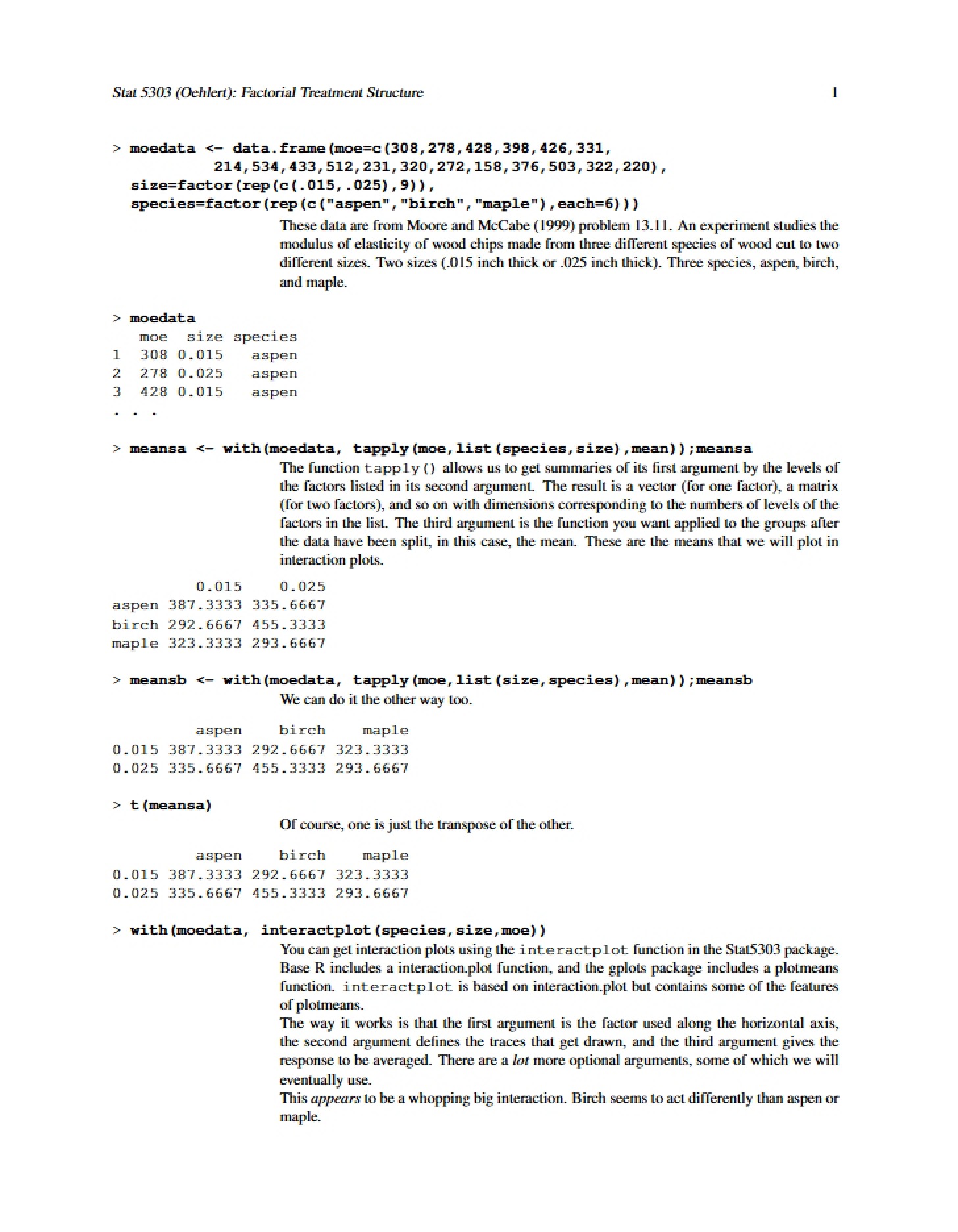
This document provides a detailed exploration of a core statistical experimental design technique: Randomized Complete Blocks. It’s part of the STAT 5303 course at the University of Minnesota Twin Cities, focusing on applying statistical methods to real-world research scenarios. The material delves into the practical application of this design, utilizing statistical software to analyze data and interpret results. It builds upon foundational statistical concepts and introduces students to a powerful method for controlling variability in experiments.
Why This Document Matters
This resource is invaluable for students learning experimental design and analysis of variance (ANOVA). Researchers in fields like agriculture, biology, engineering, and any discipline requiring controlled experiments will find this particularly useful. If you're grappling with how to structure experiments to minimize error and accurately assess treatment effects, or if you need to interpret ANOVA results from blocked designs, this material will provide a strong foundation. It’s especially helpful when dealing with situations where known sources of variation might influence your experimental outcomes.
Common Limitations or Challenges
This document focuses specifically on Randomized Complete Block designs and their analysis. It does *not* cover other experimental designs (like factorial designs or incomplete block designs) or advanced statistical modeling techniques. While it demonstrates analysis using statistical software, it doesn’t provide a comprehensive tutorial on the software itself – a basic working knowledge is assumed. It also assumes a foundational understanding of statistical concepts like hypothesis testing and regression.
What This Document Provides
* A practical example using a classic dataset to illustrate the principles of Randomized Complete Blocks.
* Demonstration of how to implement the design and analyze the resulting data using statistical software.
* Visualizations to aid in understanding the impact of blocking on experimental results.
* Interpretation of ANOVA output, focusing on identifying significant treatment effects.
* Discussion of potential challenges in interpreting results and drawing valid conclusions.