What This Document Is
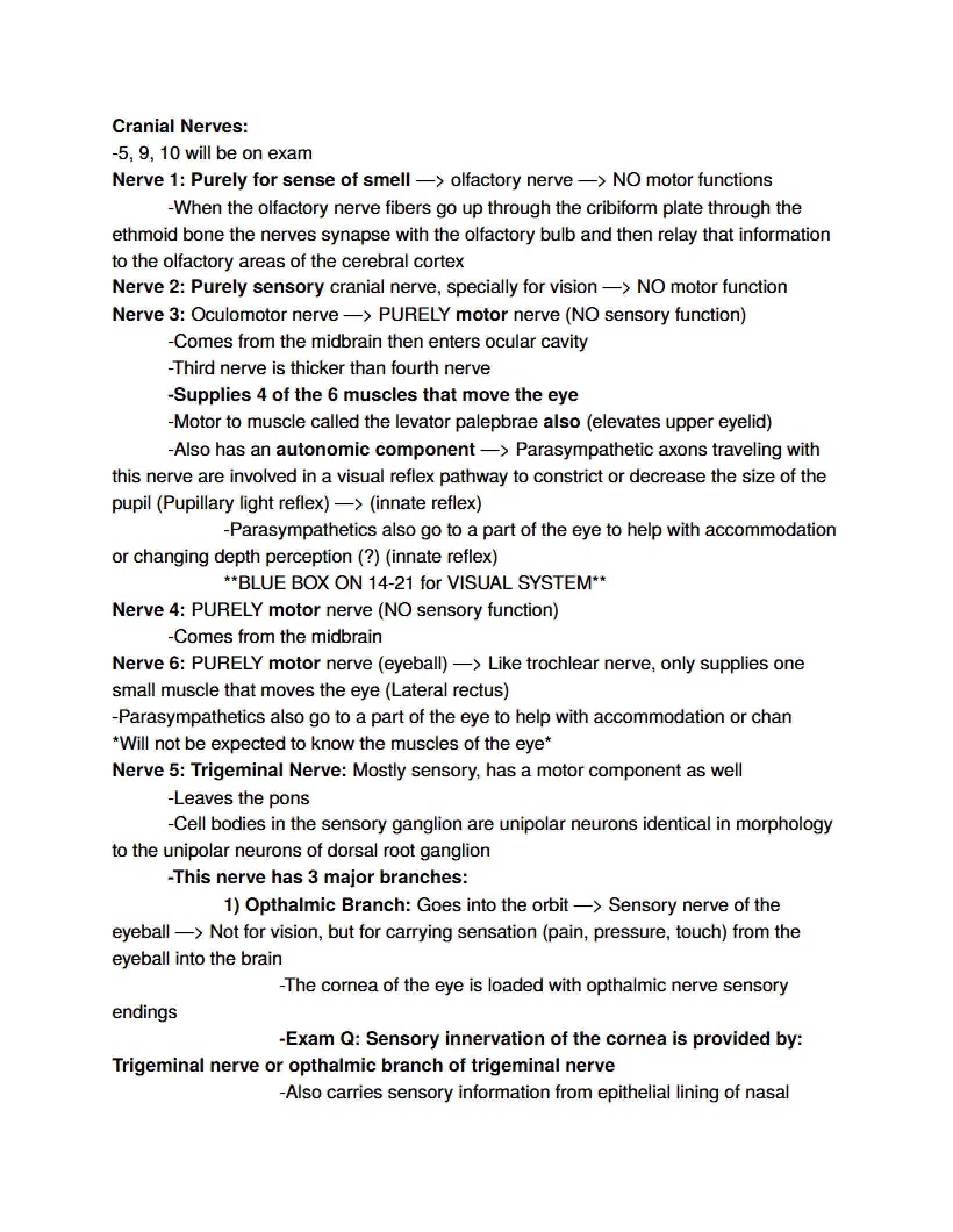
This document presents detailed notes on the twelve cranial nerves, a core topic within Anatomy & Physiology II. It’s a focused resource outlining each nerve’s function, origin, pathway, and potential conditions resulting from damage. The notes are structured for quick reference, utilizing mnemonics to aid in memorization of nerve names and order.
Why This Document Matters
These notes are essential for students in ANAT 102 at Drexel University, and anyone studying human neuroanatomy. Understanding cranial nerves is fundamental to diagnosing neurological conditions, understanding sensory and motor functions of the head and neck, and grasping the complexities of the nervous system. This resource is particularly useful during exam preparation and for building a strong foundation for advanced coursework.
Common Limitations or Challenges
This document serves as a concentrated overview. It does *not* replace the need for a comprehensive understanding of neuroanatomy gained through lectures, labs, and the full textbook. It provides a framework for learning but doesn’t offer in-depth physiological explanations or clinical case studies. It’s a study aid, not a complete course.
What This Document Provides
This preview includes information on the first six cranial nerves (Olfactory, Optic, Oculomotor, Trochlear, Trigeminal, and Abducens). For each nerve, the notes detail: a description of its function, sensory, somatic motor, and parasympathetic roles, its origin and pathway, and conditions that can arise from nerve damage, along with methods for testing nerve function. The full document expands on this for all twelve cranial nerves, including Vestibulocochlear, Glossopharyngeal, Vagus, Accessory, and Hypoglossal, and provides a complete mnemonic aid. This preview offers a representative sample of the detailed information contained within the complete notes.