What This Document Is
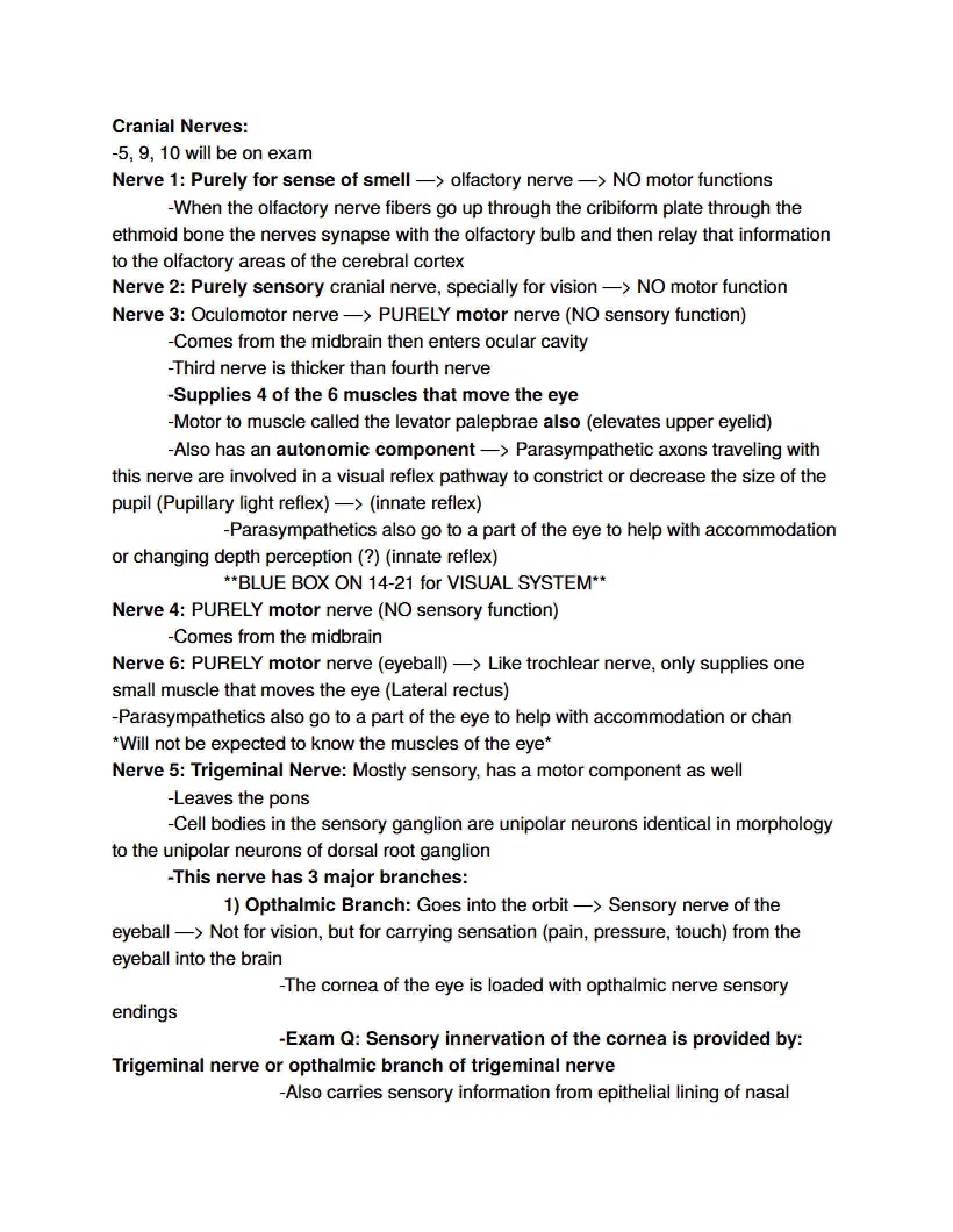
This document provides a comprehensive overview of the twelve cranial nerves – the nerves that directly relay information between the brain and the environment. It’s a foundational resource for understanding the neurological connections responsible for sensory perception and motor control of the head and neck. The document centers around a detailed table summarizing each nerve, outlining its components (sensory, motor, or mixed) and principal functions.
Why This Document Matters
This resource is essential for students in Anatomy & Physiology II (ANAT 102) at Drexel University, and anyone studying human neuroanatomy. Understanding the cranial nerves is crucial for diagnosing neurological disorders, interpreting sensory deficits, and comprehending the physiological basis of reflexes. It’s typically used during units covering the nervous system, specifically when exploring peripheral nerve function and brainstem anatomy. This document serves as a quick reference and study aid for mastering this complex topic.
Common Limitations or Challenges
This document is a summary and does *not* provide in-depth explanations of the underlying neuroanatomy, detailed clinical correlations, or diagnostic procedures. It’s a starting point for learning, not a complete substitute for lectures, textbooks, or laboratory dissections. Users will still need to supplement this information with broader study materials to fully grasp the intricacies of cranial nerve function.
What This Document Provides
The full document includes:
* A detailed table (Table 14.4) listing all twelve cranial nerves.
* For each nerve, a breakdown of its components: Special Sensory, Somatic Motor, Branchial Motor, and/or Autonomic Motor.
* A concise description of each nerve’s principal functions, including specific sensory modalities (smell, vision, taste, touch, pain, thermal sensations) and motor actions (eye movement, chewing, facial expression, swallowing, etc.).
* A mnemonic device ("To Touch And Feel Very Green Vegetables AH! On Oh Oh...") to aid in memorizing the names of the cranial nerves.
* Brief notes on specific aspects of nerve function, such as accommodation and pupil constriction related to the oculomotor nerve.
This preview only provides a high-level overview of the document’s contents and organization. The full document contains the complete table and detailed functional descriptions.