What This Document Is
This document is a focused chapter excerpt from a comprehensive course on Analog and Digital Electronics, specifically addressing the foundational principles of MOS Digital Circuits. It delves into the characteristics and operation of circuits built using Metal-Oxide-Semiconductor (MOS) transistors, a cornerstone of modern digital systems. The material centers around the critical building block of digital logic – the inverter – and explores its behavior under varying conditions. It’s designed for students seeking a detailed understanding of the underlying physics and engineering principles governing these circuits.
Why This Document Matters
This resource is invaluable for undergraduate Electrical Engineering students enrolled in courses covering digital logic design, VLSI design, or microelectronics. It’s particularly helpful when you need to solidify your understanding of how fundamental transistor characteristics translate into practical circuit behavior. Use this material to supplement lectures, prepare for assignments, or build a strong foundation before tackling more complex digital system designs. It’s ideal for students who want to move beyond simply knowing *that* a circuit works, and instead understand *why* it works.
Common Limitations or Challenges
This excerpt focuses specifically on NMOS inverter characteristics and doesn’t cover all aspects of digital circuit design. It does not include solved problems, practical implementation details, or comparisons to other circuit families beyond a high-level mention of CMOS. It also assumes a pre-existing understanding of basic semiconductor physics and circuit analysis techniques. This material provides a theoretical foundation, but won’t substitute for hands-on lab experience or broader course materials.
What This Document Provides
* A detailed examination of NMOS inverter operation.
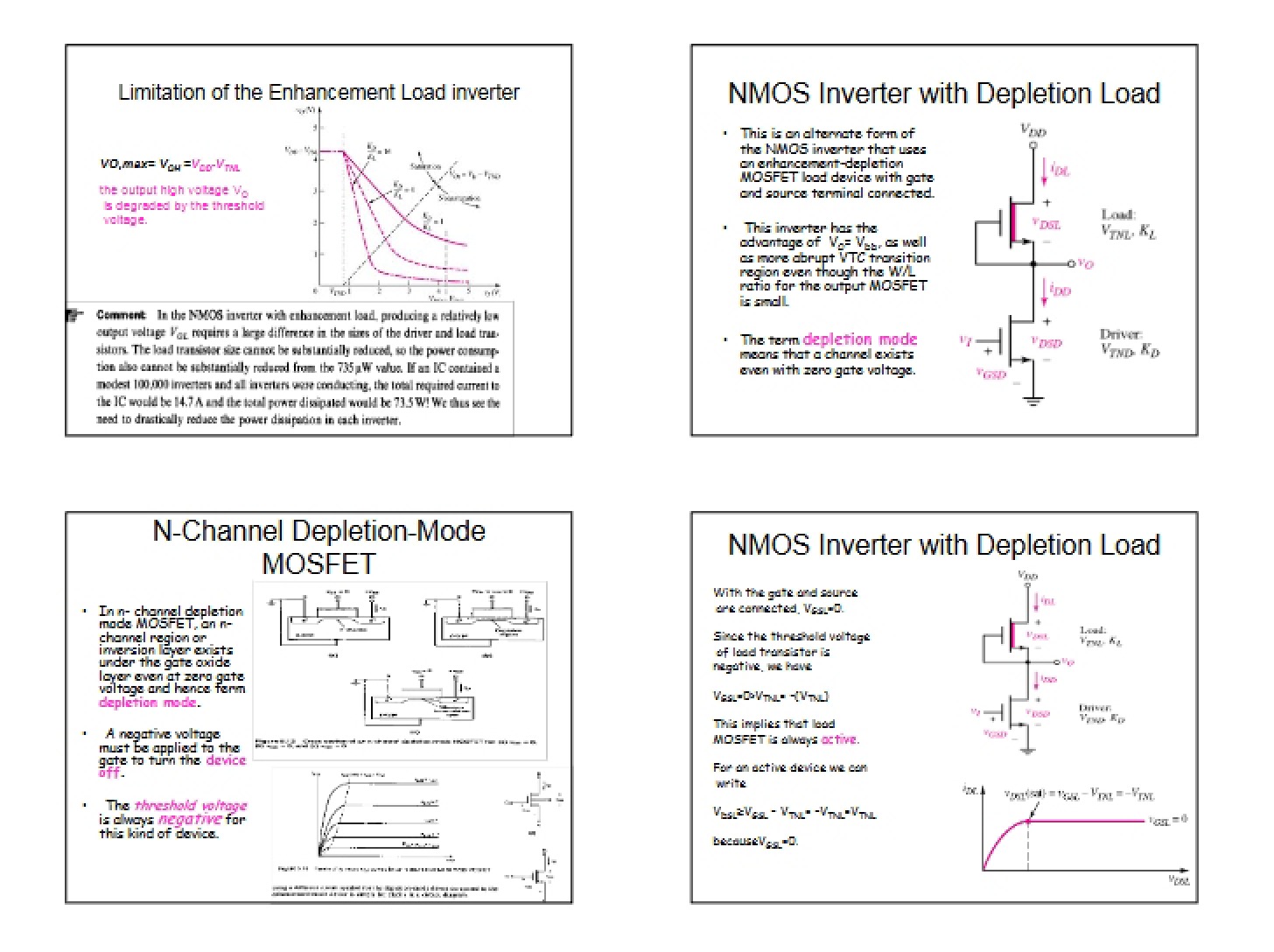
* Analysis of inverter transfer characteristics across different operating regions (saturation, transition, and non-saturation).
* Key relationships between voltages and currents within the inverter circuit.
* Discussion of the role of the load device in NMOS inverter design.
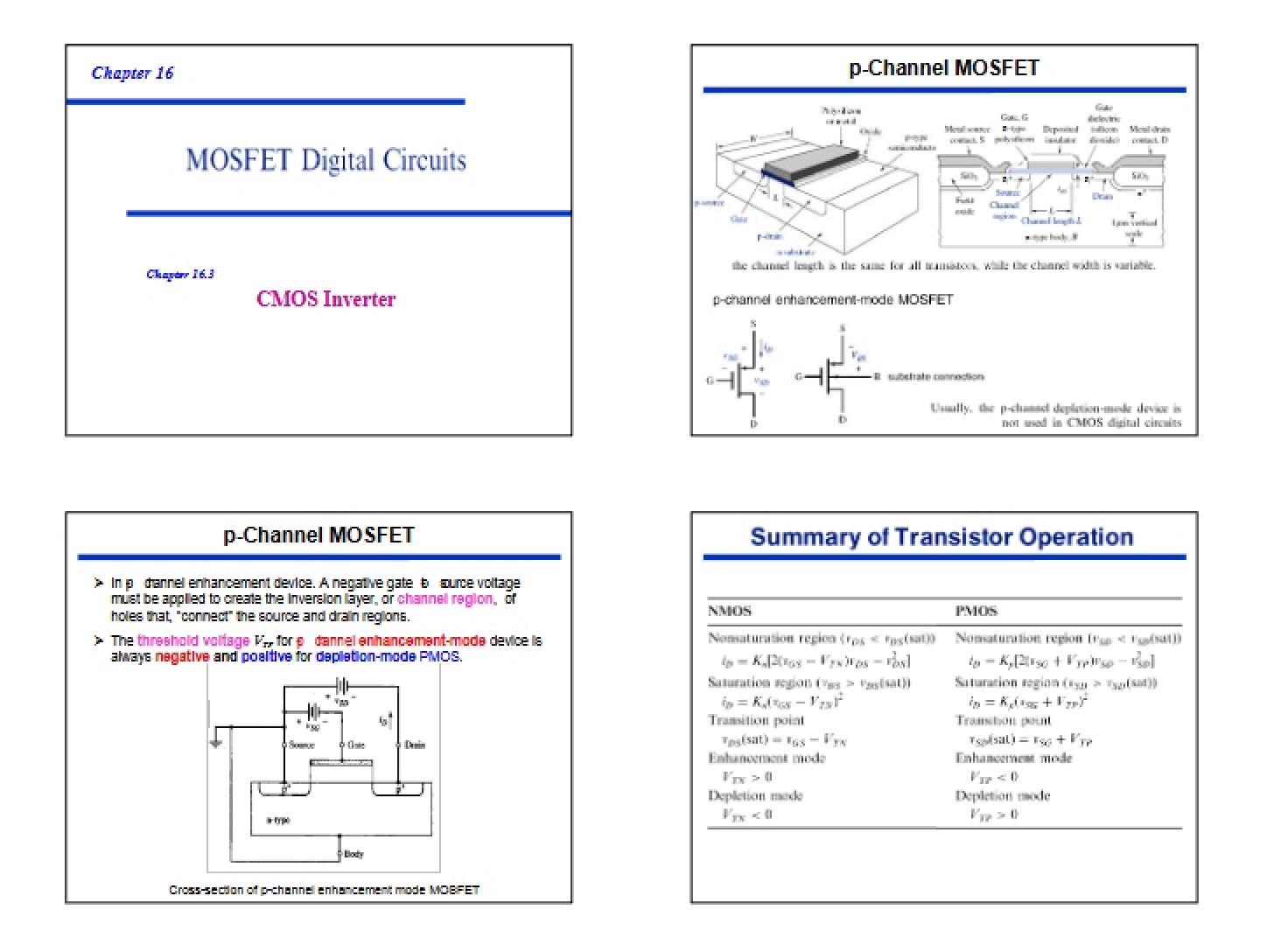
* An exploration of the importance of the inverter as a fundamental building block for more complex logic gates.
* Insight into the advantages of CMOS technology in digital circuit implementation.