What This Document Is
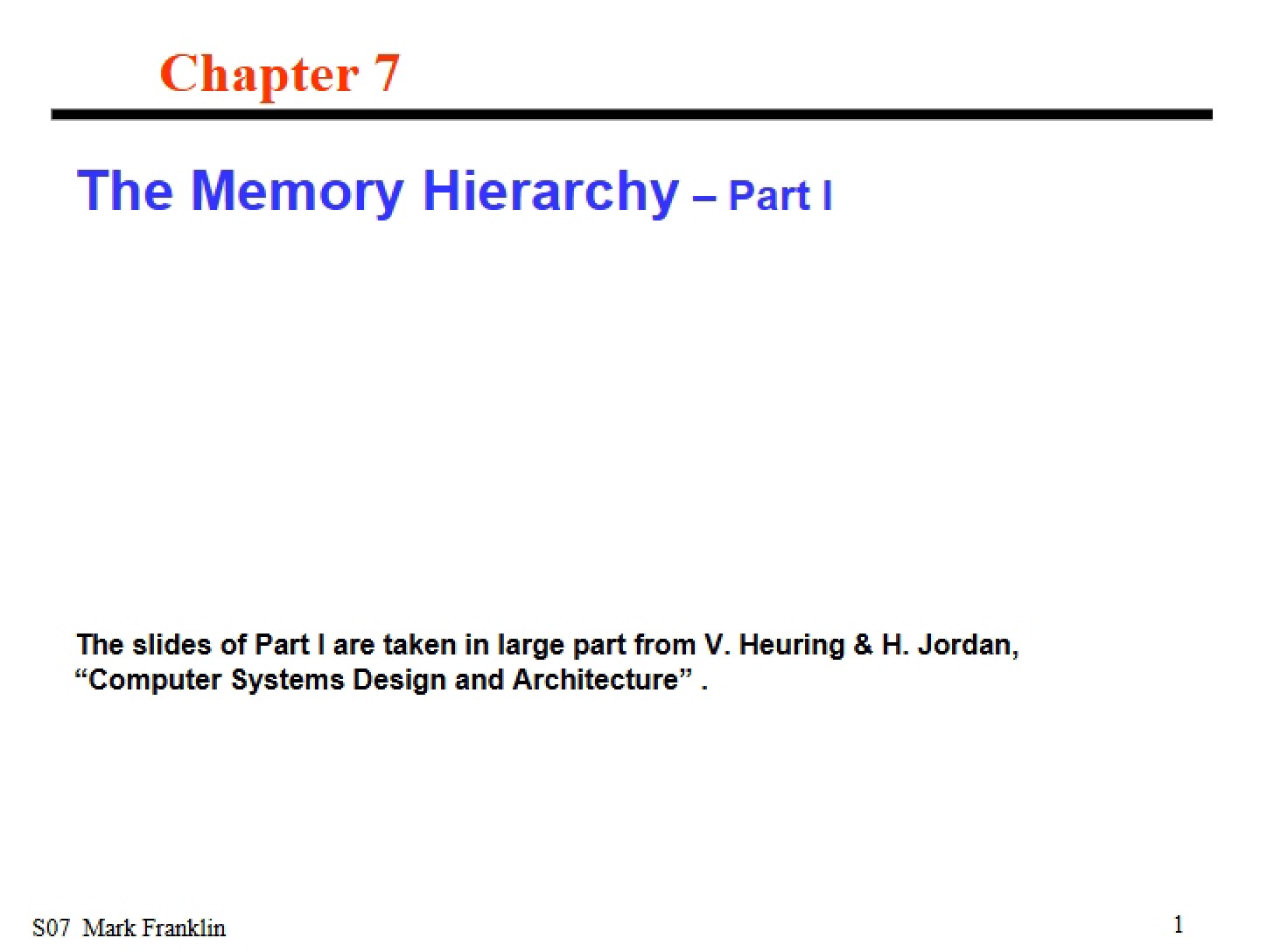
This document is a set of lecture slides focusing on the Memory Hierarchy within the field of Computer Architecture. Specifically, it appears to be the first part of a two-part exploration of this critical topic. It delves into the various levels and technologies that comprise a computer’s memory system, from the fastest, most expensive components to the slowest, most cost-effective ones. The material is sourced from established texts in the field and presented with annotations from a Washington University in St. Louis instructor.
Why This Document Matters
This resource is invaluable for students enrolled in a Computer Architecture course, or anyone seeking a deeper understanding of how computers manage and access data. It’s particularly useful when studying processor performance, system design, and the trade-offs involved in memory system implementation. Understanding the memory hierarchy is fundamental to optimizing code and building efficient computing systems. It’s best used as a companion to lectures and textbook readings, providing a visual and structured overview of complex concepts.
Common Limitations or Challenges
This material presents a theoretical framework and overview of memory systems. It does *not* provide practical coding exercises, detailed implementation guides, or specific hardware configurations. It also doesn’t cover advanced topics like non-volatile memory technologies in depth. The slides are designed to be a starting point for learning, and further research and practical application will be necessary for complete mastery of the subject. It assumes a foundational understanding of digital logic and computer organization.
What This Document Provides
* An overview of core memory components like RAM (Static and Dynamic) and ROM.
* Discussion of how memory chips are organized and timed.
* An explanation of the levels within the memory hierarchy (Registers, Cache, Main Memory, Disk).
* Analysis of the performance gap between processors and DRAM.
* Examination of the CPU-Memory interface and associated signals.
* Key performance parameters used to evaluate memory systems (access time, cycle time, bandwidth, latency).
* A comparison of different memory technologies and their characteristics.