What This Document Is
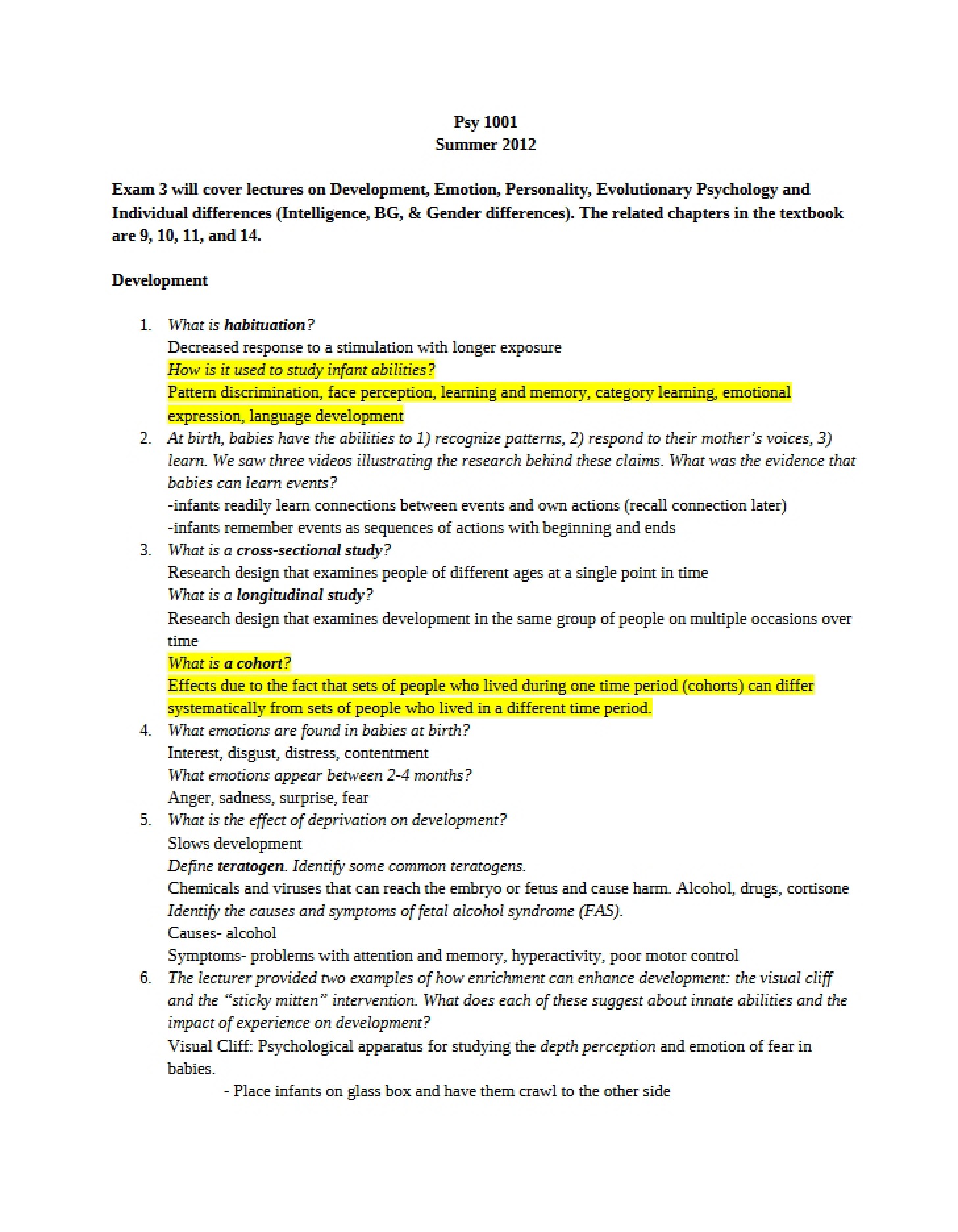
This study guide provides a comprehensive overview of key theories and research related to human development, specifically as explored within an introductory psychology framework. It delves into the fascinating changes individuals undergo from infancy through adolescence and beyond, focusing on the interplay between cognitive, emotional, and perceptual development. The material is geared towards students seeking a deeper understanding of the foundational principles in developmental psychology.
Why This Document Matters
This resource is ideal for students enrolled in introductory psychology courses, particularly those preparing for exams or seeking to solidify their understanding of developmental milestones. It’s beneficial for anyone wanting to grasp the core concepts that explain how and why we change throughout our lives. Use this guide to supplement lectures, textbook readings, and class discussions, helping you build a strong foundation for more advanced study in psychology or related fields. It’s particularly helpful when you need a consolidated resource to review complex ideas.
Common Limitations or Challenges
This guide is designed to *complement* – not replace – your core course materials. It does not include the full scope of research or nuanced discussions presented in a university-level psychology course. It also doesn’t offer practice questions or direct application exercises. The material is presented as a structured overview, and a full understanding requires engagement with the broader curriculum. It will not provide definitive answers to complex questions, but rather a framework for understanding the key debates and findings.
What This Document Provides
* Exploration of research methodologies used to study development across the lifespan.
* An overview of early emotional development and the impact of early experiences.
* Discussion of factors that can influence prenatal development.
* Detailed examination of a prominent theory of cognitive development, including its core principles and stages.
* Key terminology related to cognitive processes like assimilation, accommodation, and schema formation.
* Insights into the development of fundamental concepts such as object permanence and conservation.
* Consideration of the development of understanding of the physical world, numbers, and other people.