What This Document Is
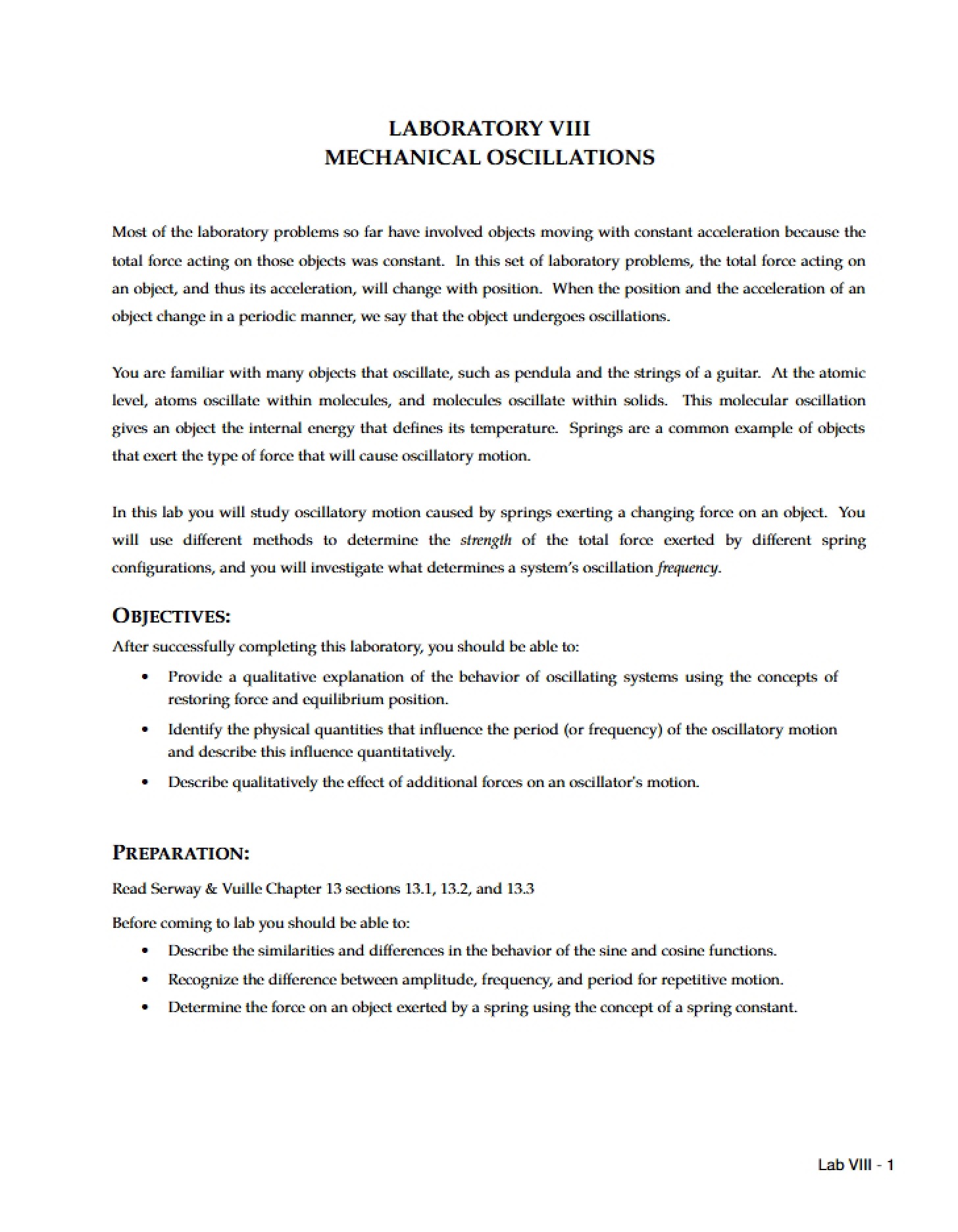
This is a laboratory manual designed to accompany an introductory physics course, specifically focusing on the principles of circular motion. It outlines a series of experiments and investigations intended to deepen your understanding of how objects move along curved paths. The material builds upon foundational physics concepts like position, velocity, and acceleration, extending them to scenarios where constant speed doesn’t necessarily mean constant acceleration. It’s geared towards a hands-on learning experience, likely involving data collection and analysis.
Why This Document Matters
This resource is essential for students enrolled in an introductory physics course—particularly those seeking to solidify their grasp of dynamics and kinematics. It’s most valuable when used *in conjunction* with lectures and textbook readings. If you’re struggling to visualize or apply the theoretical concepts of circular motion to real-world scenarios, or if you need guidance on experimental procedures and data interpretation, this manual will be a significant aid. It’s also helpful for preparing for quizzes and exams related to rotational motion.
Common Limitations or Challenges
This manual provides a framework for laboratory work, but it does *not* substitute for active participation in the lab itself. It won’t provide pre-filled data tables or completed analyses. Furthermore, it assumes a basic understanding of vector analysis and prior laboratory experience with motion tracking and data collection. It focuses specifically on *uniform* circular motion and doesn’t delve into more complex variations.
What This Document Provides
* Detailed descriptions of laboratory experiments exploring circular motion.
* Specific learning objectives outlining the skills you should gain.
* Preparation guidance, referencing relevant textbook sections.
* Equipment lists for each experimental setup.
* Conceptual questions designed to stimulate pre-lab thinking and predictions.
* A scenario-based problem involving amusement ride safety and circular motion principles.
* Instructions for analyzing velocity and acceleration in circular paths.