What This Document Is
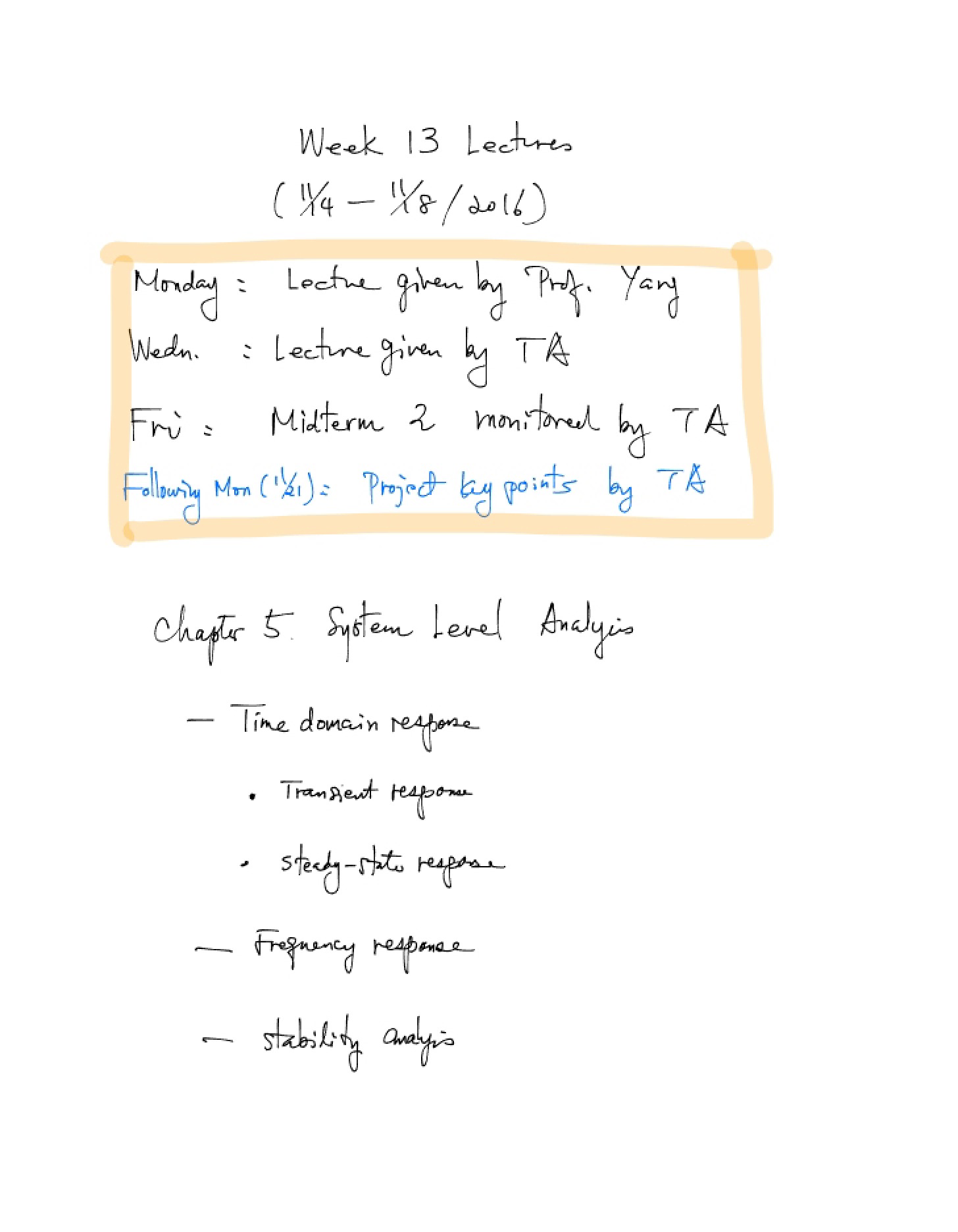
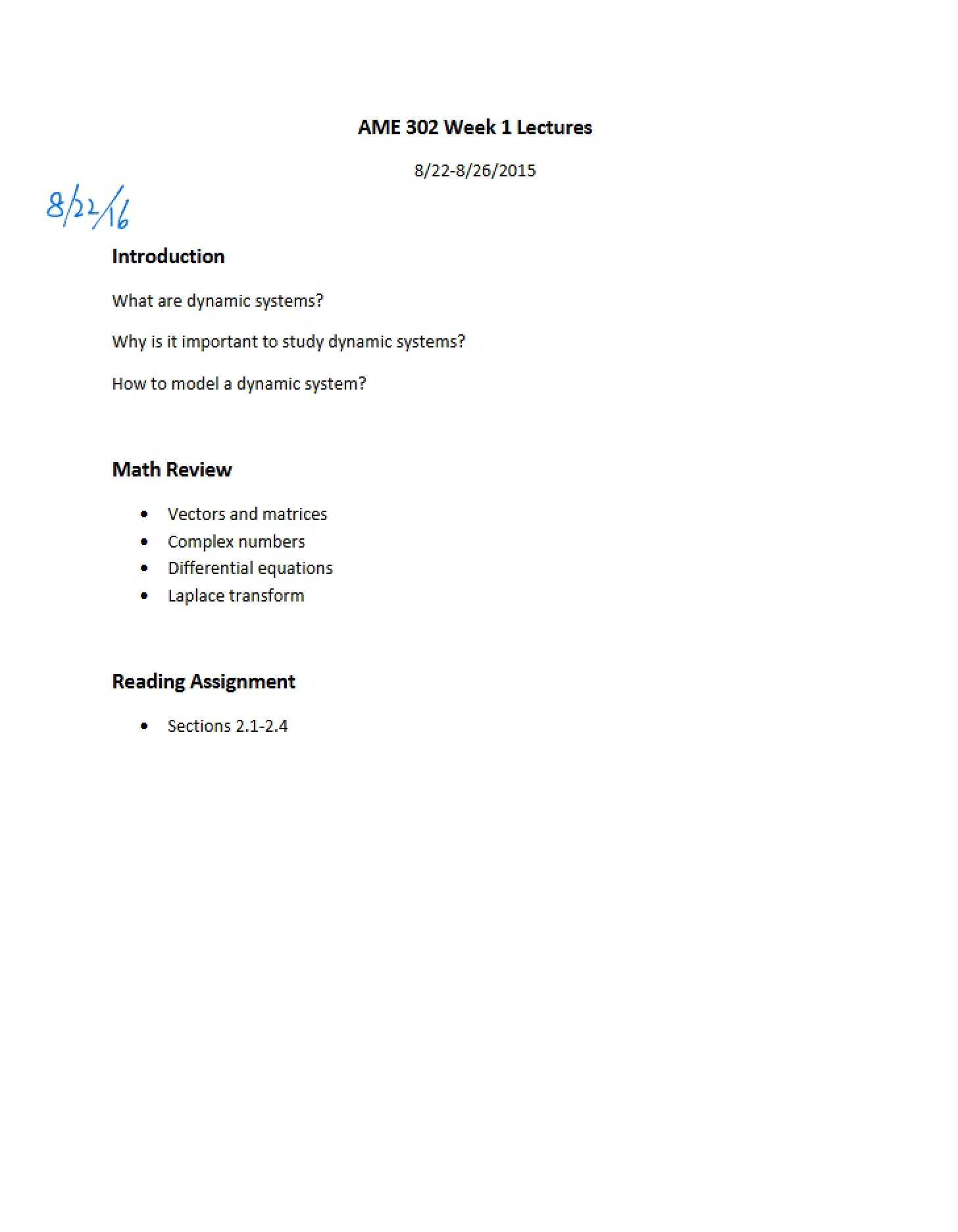
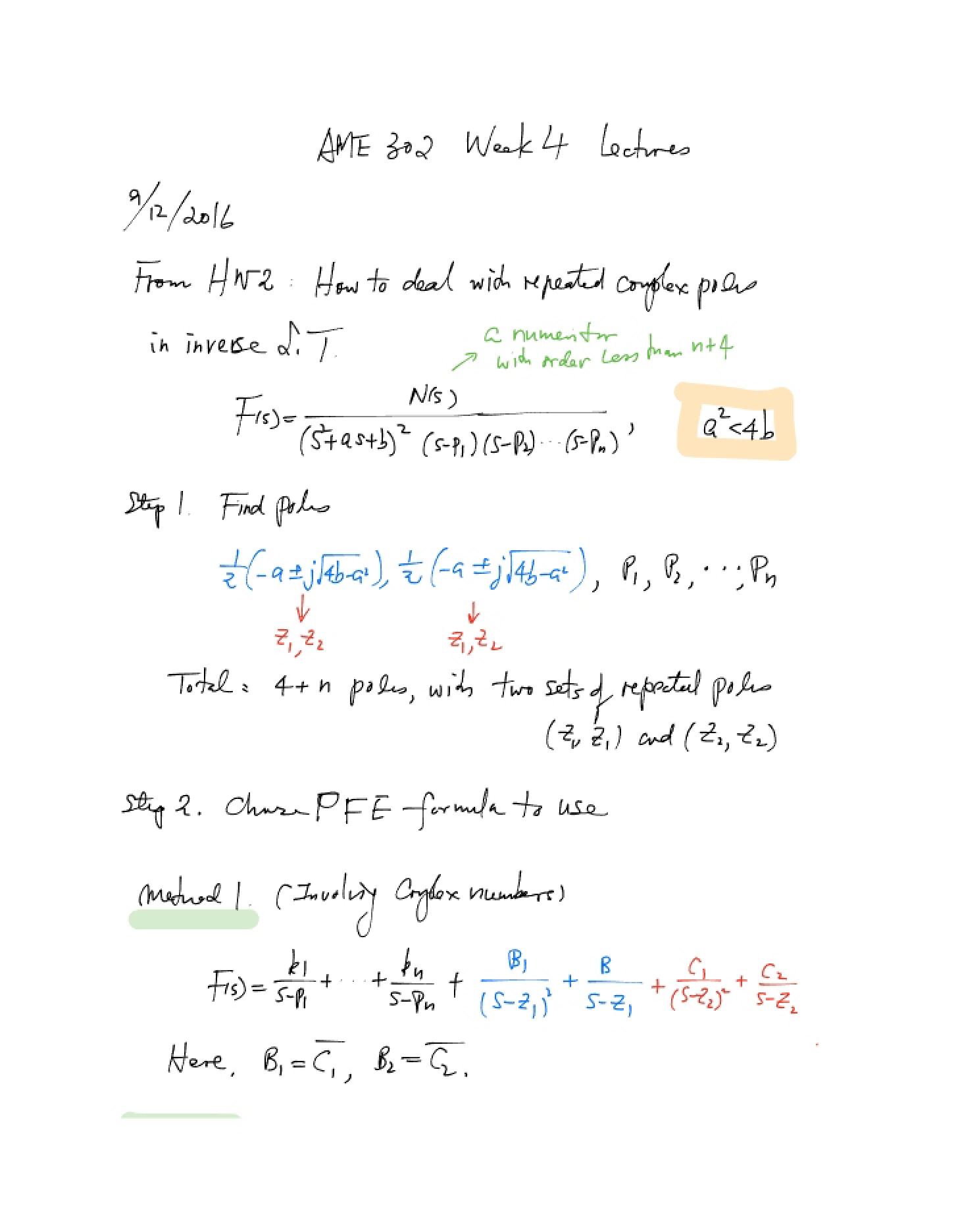
This document comprises lecture materials from Week 8 of AME 302: Dynamic Systems at the University of Southern California. It appears to delve into advanced concepts related to system modeling, analysis, and potentially control systems. The content is presented in a format typical of university-level engineering lectures – a mix of symbolic notation, equations, and potentially diagrams (not visible in this preview). The focus seems to be on building a mathematical framework for understanding and predicting the behavior of dynamic systems.
Why This Document Matters
This material is crucial for students currently enrolled in AME 302 who are seeking to solidify their understanding of the core principles discussed in lectures. It’s particularly valuable for review before quizzes or exams, or for students who may have missed a class and need to catch up. Individuals preparing for more advanced coursework in mechanical engineering, aerospace engineering, or related fields will also find the foundational concepts presented here beneficial. Access to these notes can significantly aid in completing homework assignments and understanding complex system behaviors.
Common Limitations or Challenges
These lecture notes are a *supplement* to attending class and should not be considered a replacement for active participation. The material is dense and relies heavily on a pre-existing understanding of calculus, linear algebra, and basic physics. This document does *not* include worked examples, detailed derivations of equations, or explanations of how to apply these concepts to real-world engineering problems. It also doesn’t offer interactive elements or practice problems for self-assessment.
What This Document Provides
* A compilation of key equations and symbolic representations related to dynamic system analysis.
* A presentation of concepts concerning system states and variables.
* Potential exploration of relationships between different system parameters.
* A framework for understanding system behavior over time.
* Notes on important definitions and terminology used in the course.
* References to specific topics or concepts discussed during the corresponding week’s lectures.