What This Document Is
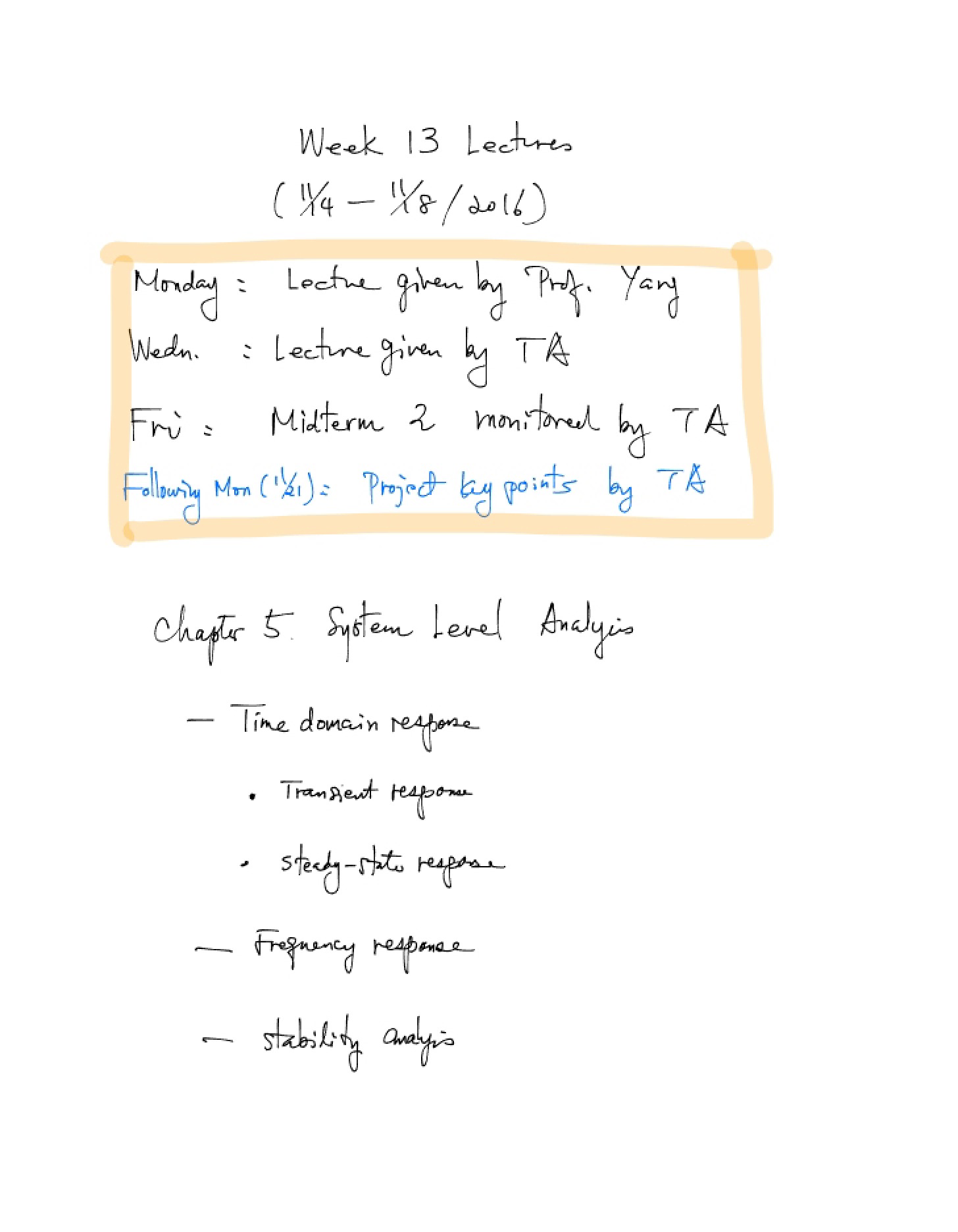
This document contains lecture materials from Week 9 of AME 302: Dynamic Systems, offered at the University of Southern California. It focuses on a crucial aspect of understanding and modeling dynamic systems – the representation and manipulation of systems within the time domain. The content delves into techniques for visualizing system behavior and establishing a foundational understanding for more complex analyses. It builds upon previously covered concepts and prepares students for advanced topics in control systems and related fields.
Why This Document Matters
This material is essential for any student enrolled in AME 302 seeking to solidify their grasp of dynamic systems. It’s particularly valuable when studying for quizzes and exams related to time-domain analysis, and serves as a strong reference point when tackling homework assignments. Students who find themselves struggling with visualizing system responses or translating mathematical representations into practical understanding will benefit greatly from a detailed review of these lecture notes. It’s best used in conjunction with textbook readings and active participation in class discussions.
Common Limitations or Challenges
These lecture notes are a record of the instructor’s presentation and are intended to *supplement*, not replace, active learning. The material assumes a foundational understanding of prior concepts covered in the course, such as transfer functions and frequency response. It does not include fully worked-out examples or step-by-step solutions to practice problems. Access to this resource will not automatically grant proficiency; diligent study and practice are still required.
What This Document Provides
* An exploration of time-domain block diagrams and their application in system representation.
* Discussion of signal characteristics relevant to dynamic system analysis.
* Key concepts related to system modeling in the time domain.
* Insights into the relationships between system components and overall system behavior.
* Foundational elements for understanding more advanced topics like system stability and response analysis.
* Connections to practical tools used in dynamic systems analysis.