What This Document Is
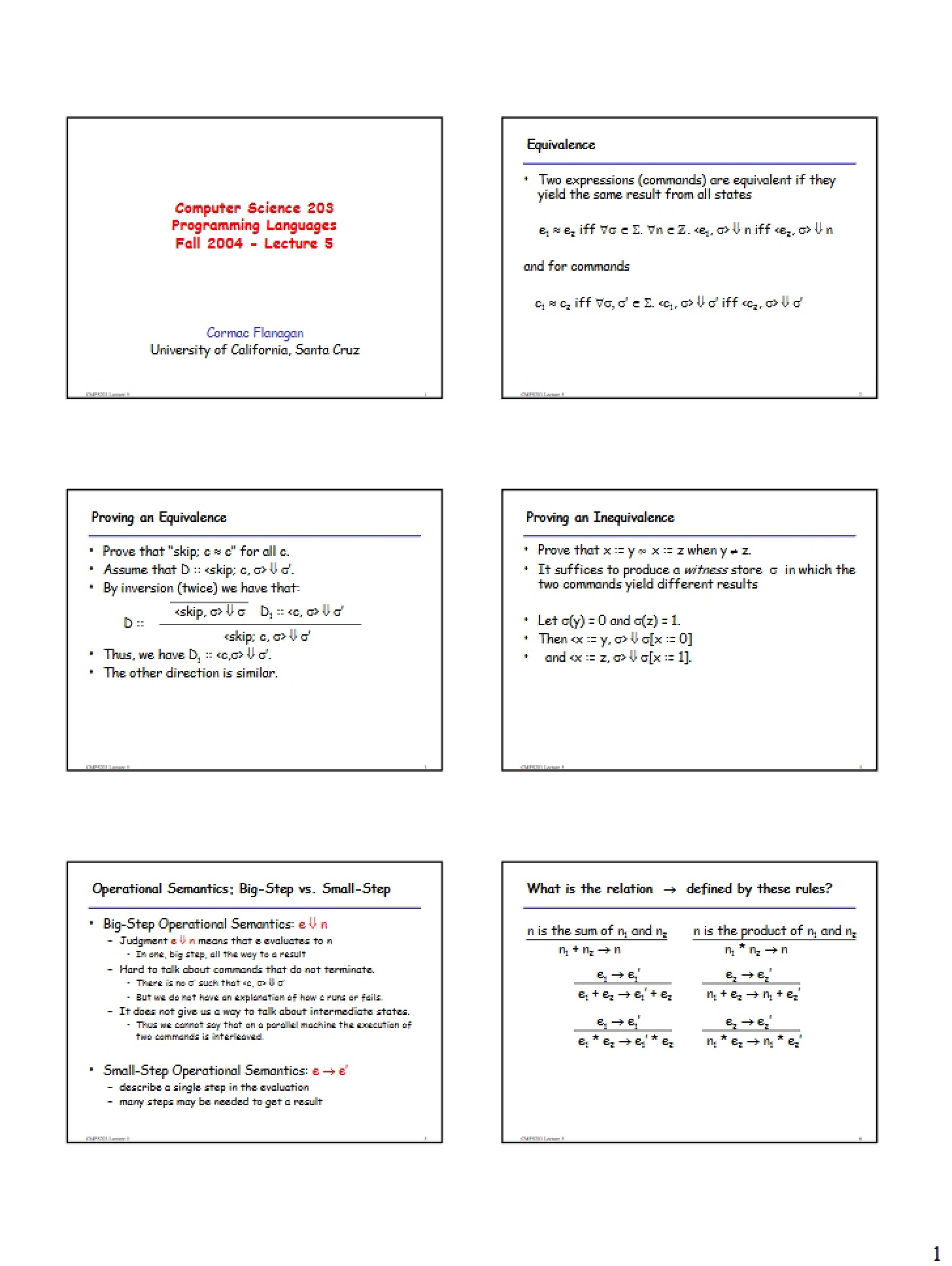
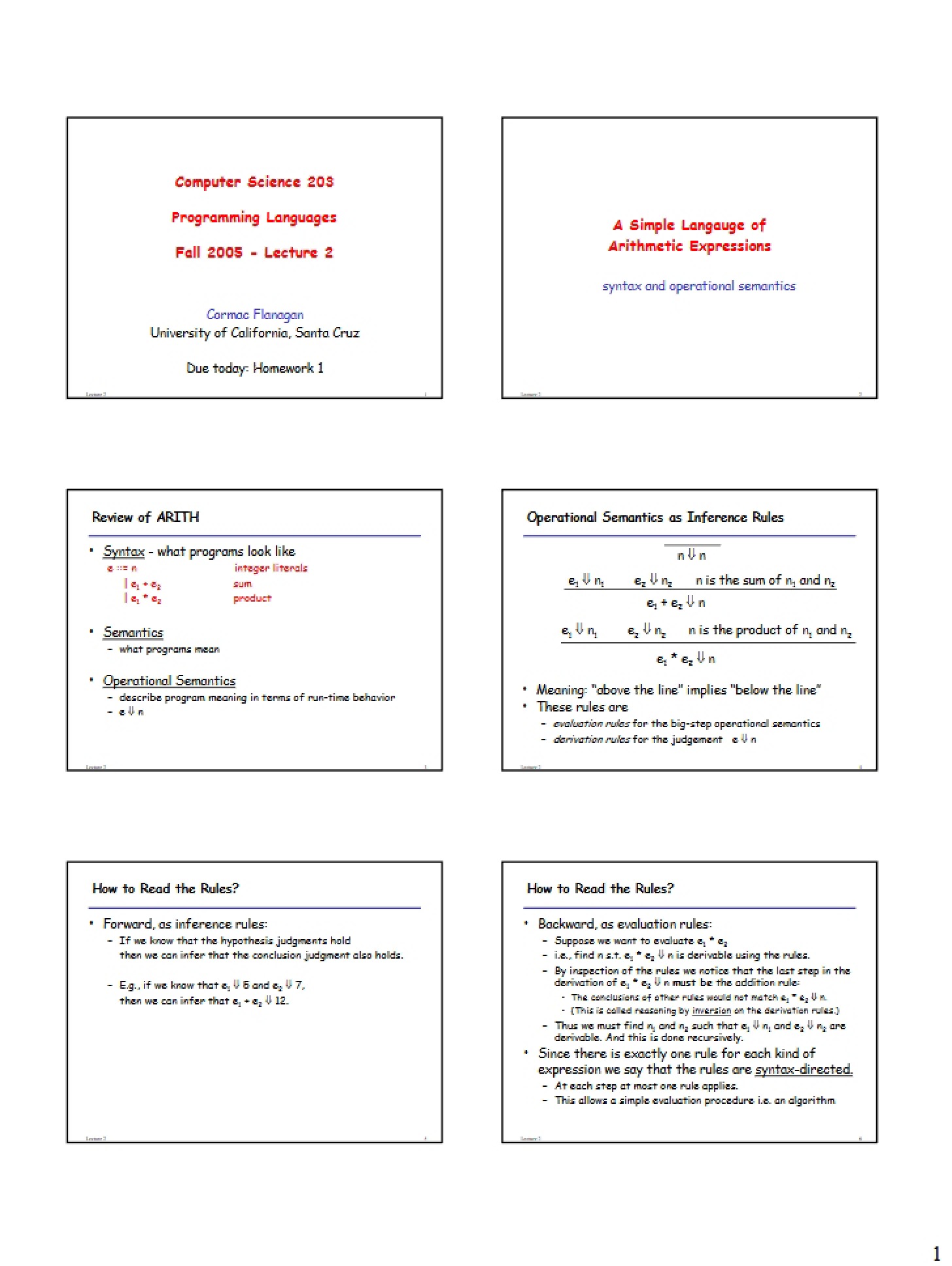
These are class notes from CMPS 203, Programming Languages, offered at the University of California, Santa Cruz. This material represents a lecture focused on foundational concepts within the theory of programming languages, specifically exploring the relationship between procedures, functions, and a formal system known as the lambda calculus. It delves into the underlying mechanisms that enable computation and how these are represented abstractly.
Why This Document Matters
This resource is invaluable for students enrolled in a programming languages course, or those seeking a deeper understanding of the theoretical underpinnings of how programming languages work. It’s particularly helpful when you’re grappling with concepts beyond syntax and into the ‘why’ and ‘how’ of language design. Reviewing these notes can be beneficial during coursework, while preparing for exams, or as a reference when tackling complex programming projects. Accessing the full notes will provide a comprehensive understanding of these core principles.
Topics Covered
* Bindings and their role in associating names with values
* The concept of procedures and functions in programming
* An introduction to the lambda calculus – its syntax and operational semantics
* Scoping rules (dynamic vs. static) and their impact on code behavior
* Higher-order languages and the challenges related to scoping
* Parameter passing mechanisms and their trade-offs
* Historical context and development of the lambda calculus
What This Document Provides
* A structured overview of key concepts in programming language theory.
* Discussion of important considerations in language design, such as efficiency and flexibility.
* An exploration of the theoretical foundations that underpin many modern programming languages.
* Insights into potential pitfalls and challenges related to scoping and parameter passing.
* A foundation for further study of type systems and related topics (covered in subsequent materials).