What This Document Is
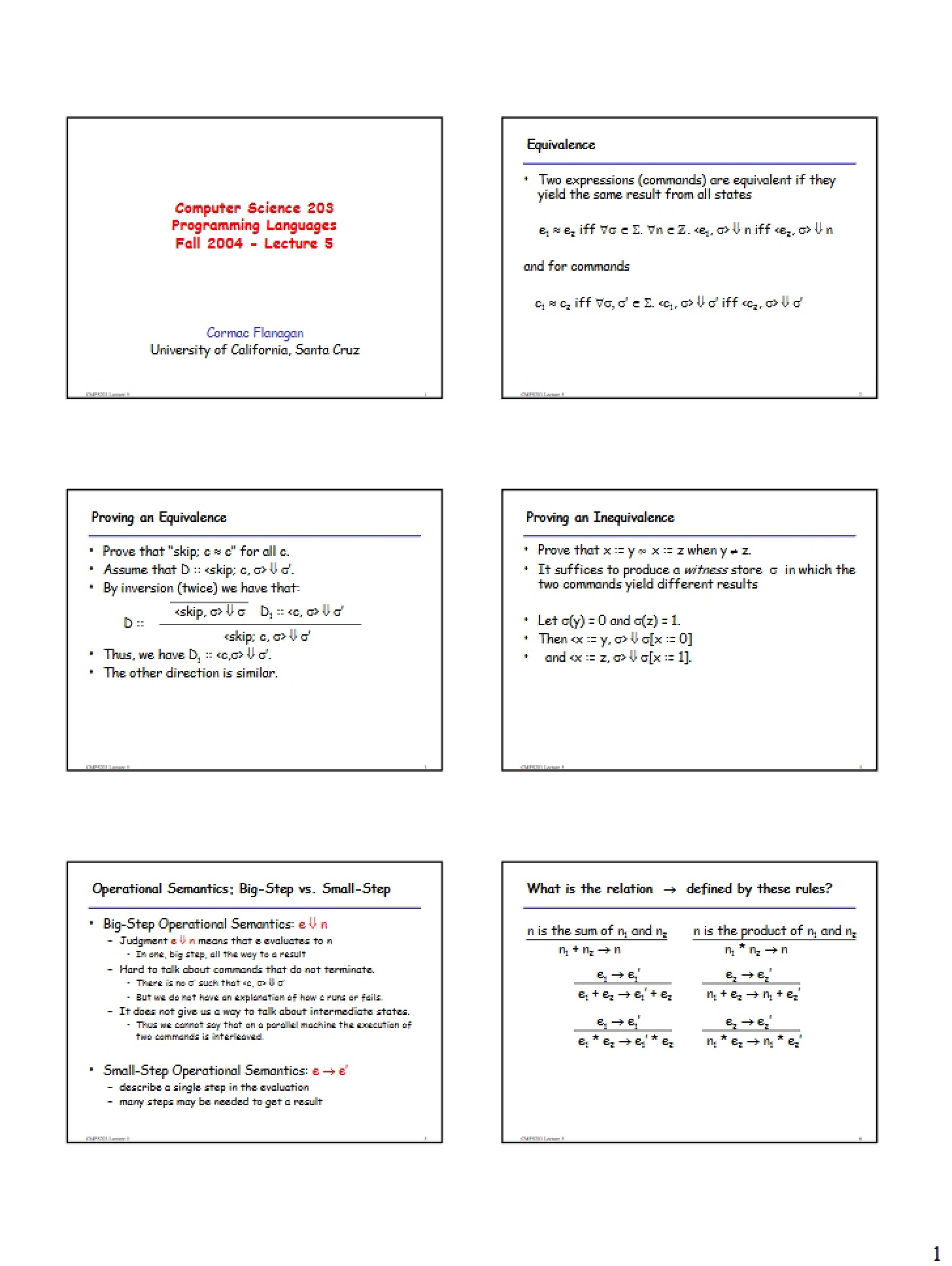
These are lecture notes from the second session of CMPS 203, Programming Languages, offered at the University of California, Santa Cruz. The notes delve into the foundational concepts required to understand how programming languages are defined and interpreted. It builds upon initial ideas and introduces a more formal approach to analyzing program behavior. This material is crucial for anyone seeking a deeper understanding of the theoretical underpinnings of the programming languages they use.
Why This Document Matters
This resource is particularly valuable for students enrolled in CMPS 203, or those with a strong interest in compiler design, language theory, or formal methods. It’s best used in conjunction with attending lectures and completing assigned readings, serving as a detailed reference to reinforce key concepts. Individuals preparing for more advanced coursework in related areas will also find these notes beneficial for establishing a solid base of knowledge. Accessing the full content will provide a comprehensive understanding of the topics discussed.
Topics Covered
* Formalizing program syntax and semantics
* Operational semantics and its interpretation
* Evaluation rules for simple languages
* The concept of deterministic languages
* Introduction to imperative programming concepts
* Defining states and their role in program execution
* Syntax and semantics of arithmetic and boolean expressions
* Command structures within a programming context
What This Document Provides
* A structured presentation of core concepts in programming language theory.
* A detailed exploration of how to represent program meaning.
* An introduction to the use of inference rules for defining language behavior.
* A foundation for understanding the relationship between syntax and semantics.
* A stepping stone towards analyzing more complex programming language features.
* A basis for understanding how programs are evaluated and executed.