What This Document Is
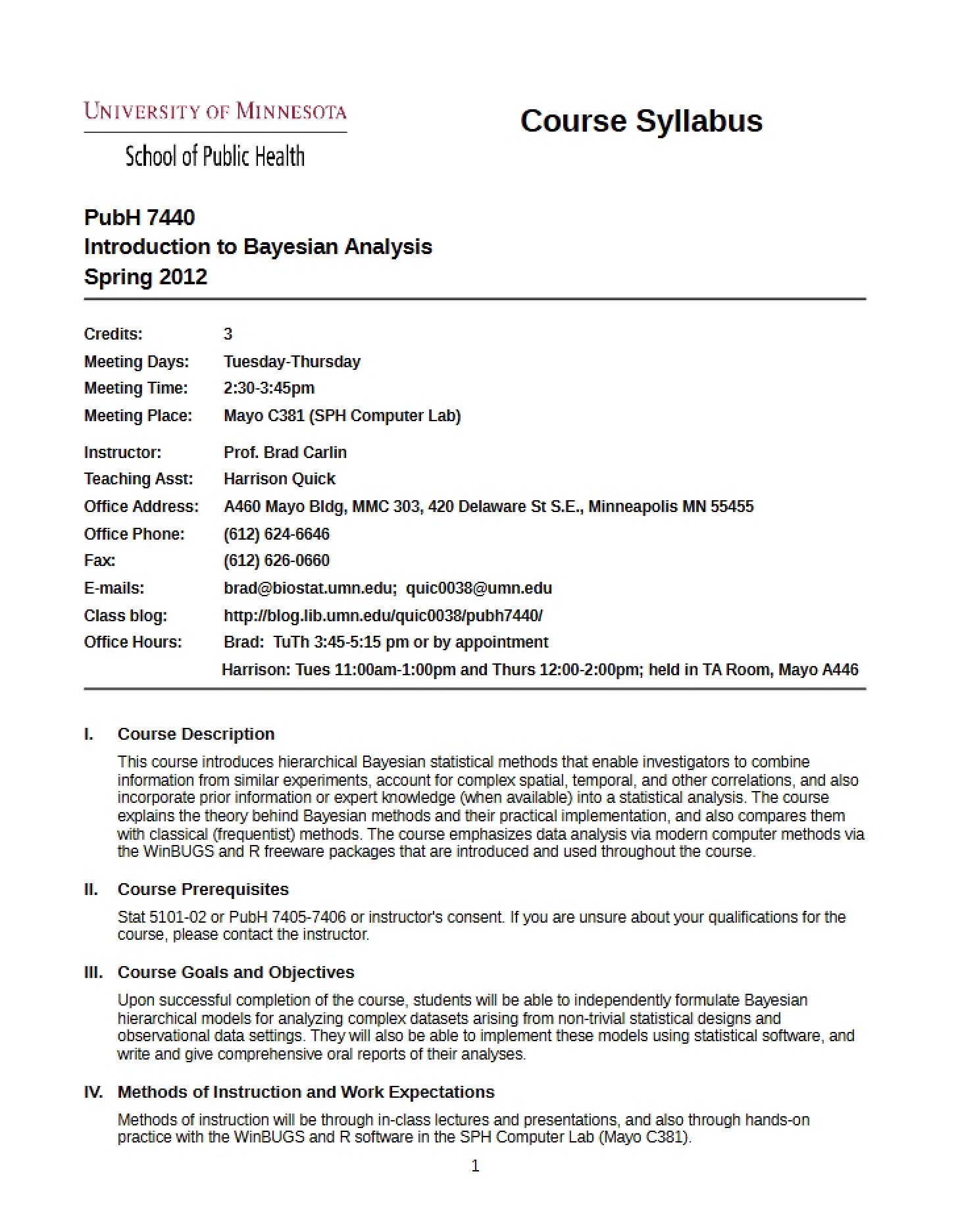
This is a detailed class plan—a syllabus—for Introduction to Bayesian Analysis (PubH 7440) at the University of Minnesota’s School of Public Health. It outlines the structure, expectations, and content covered throughout the semester. The course focuses on applying Bayesian statistical methods to complex data analysis, particularly within public health and biostatistics contexts. It’s designed for graduate-level students seeking a robust understanding of this increasingly important analytical approach.
Why This Document Matters
This syllabus is essential for anyone considering enrolling in or currently registered for PubH 7440. It provides a clear roadmap of the course, allowing prospective students to assess if their background and interests align with the material. Current students will find it invaluable for understanding grading criteria, assignment expectations, and the overall flow of topics. Researchers and professionals looking to understand the course’s scope can also benefit from this overview to gauge its relevance to their work. Knowing the planned schedule helps with long-term planning and preparation.
Common Limitations or Challenges
This document provides a high-level overview and does *not* contain the actual course lectures, detailed explanations of Bayesian methods, or specific code examples used in the course. It doesn’t include the full text of assigned readings or solutions to practice problems. It also doesn’t offer personalized guidance on individual learning needs. Access to the full syllabus is required to understand the specifics of assignments, exam formats, and detailed weekly topics.
What This Document Provides
* A comprehensive overview of the course description and learning objectives.
* Details regarding instructor contact information and office hours.
* Information on required prerequisites for successful course completion.
* A week-by-week schedule outlining the major topics to be covered, including areas like Bayesian linear models, hierarchical modeling, and spatial statistics.
* A breakdown of the grading components and their respective weights (homework, midterms, final project).
* Information on the software used in the course (WinBUGS and R).
* Details on the expected format and content of data analysis reports.