What This Document Is
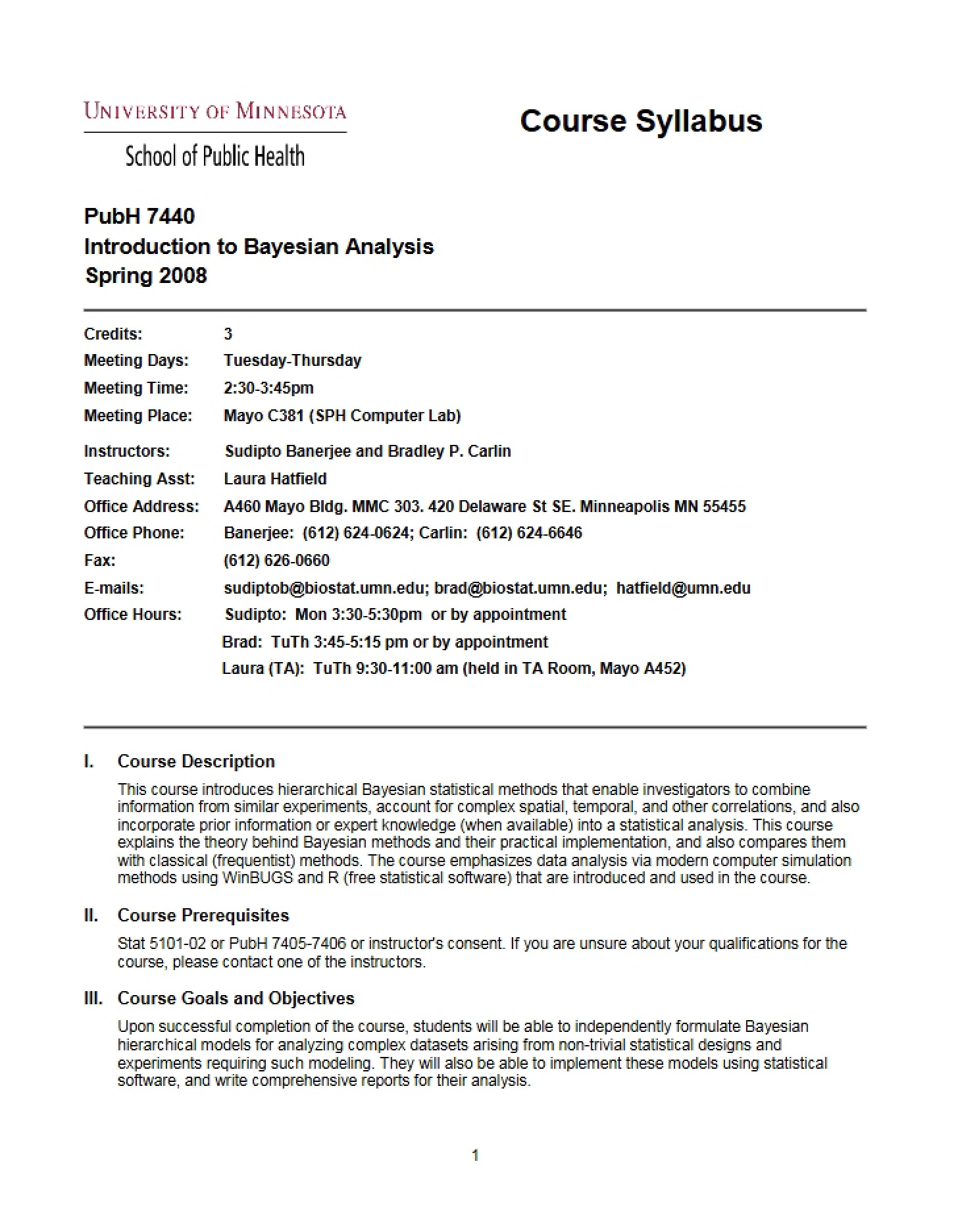
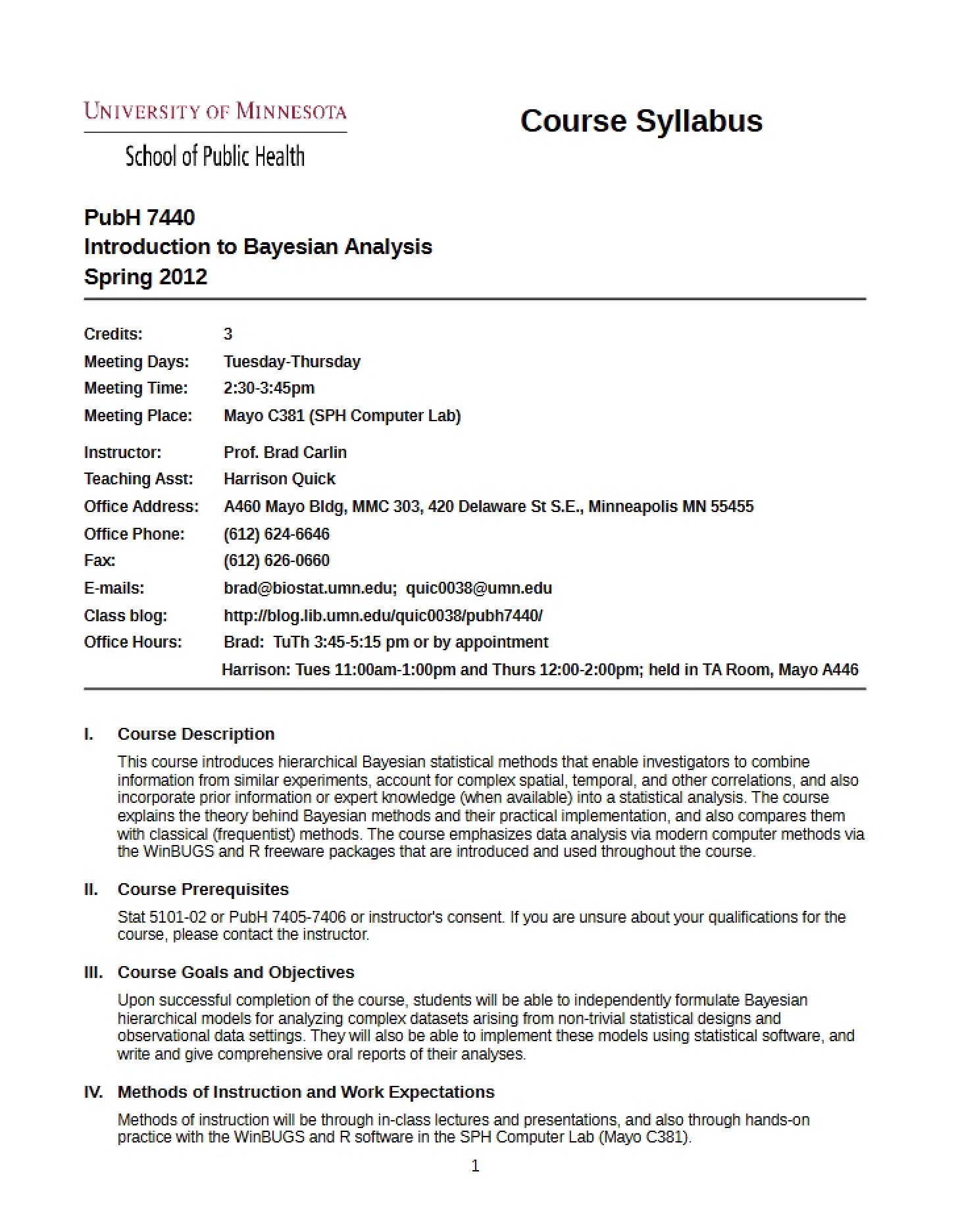
This is a syllabus for PubH 7440, an introductory course in Bayesian Analysis offered at the University of Minnesota’s School of Public Health. It outlines the expectations, structure, and logistical details for students enrolled in the Spring 2009 semester. It serves as a foundational guide for navigating the course and understanding its requirements. The syllabus details the course’s place within the broader public health curriculum and provides essential information for prospective and current students.
Why This Document Matters
This syllabus is crucial for anyone considering enrolling in PubH 7440, or for students already registered who need a clear understanding of the course’s scope and demands. It’s particularly valuable for individuals with a background in statistics or a related field who are looking to expand their analytical toolkit with Bayesian methods. Understanding the prerequisites and course goals *before* committing to the course can help ensure a successful learning experience. It’s also a key reference point throughout the semester for deadlines, grading policies, and instructor contact information.
Common Limitations or Challenges
This syllabus provides an overview of the course, but it does *not* contain the actual course content, lectures, assignments, or solutions. It doesn’t delve into the specific statistical techniques or software applications that will be taught. It also doesn’t offer detailed explanations of Bayesian principles or examples of how they are applied to public health problems. Access to the full course materials is required to gain a comprehensive understanding of the subject matter.
What This Document Provides
* A clear outline of course logistics: meeting times, location, and instructor contact details.
* An overview of the course description and its focus on hierarchical Bayesian statistical methods.
* A listing of required prerequisites to assess student preparedness.
* Defined course goals and objectives outlining expected student competencies.
* A weekly schedule providing a broad overview of topics covered throughout the semester.
* Information regarding the course textbook and other potential reading materials.
* A breakdown of the grading components and their respective weights.