What This Document Is
This material represents a session focused on the core principles of representing and utilizing knowledge within computational systems. It delves into various methods for building systems capable of reasoning and drawing conclusions from information, a fundamental aspect of intelligent systems. The session explores different approaches to logical inference, moving beyond simple data storage to enable machines to *think* through problems. It’s part of a larger course covering the foundations of intelligent systems.
Why This Document Matters
This session is crucial for students aiming to understand how computers can be programmed to mimic human-like reasoning. It’s particularly valuable for those interested in knowledge representation, automated reasoning, and the development of expert systems. If you’re grappling with how to structure information for a machine to effectively use it, or are curious about the underlying mechanisms behind intelligent behavior, this session will provide a solid foundation. It’s best reviewed *after* gaining a basic understanding of formal logic and before tackling more advanced topics like planning and machine learning.
Common Limitations or Challenges
This session focuses on the theoretical underpinnings of logical reasoning systems. It does *not* provide a comprehensive guide to implementing these systems in a specific programming language. While it touches upon efficiency considerations, it doesn’t offer detailed code optimization strategies. Furthermore, it presents a range of approaches, but doesn’t definitively declare one as “best” – the optimal choice depends heavily on the specific application.
What This Document Provides
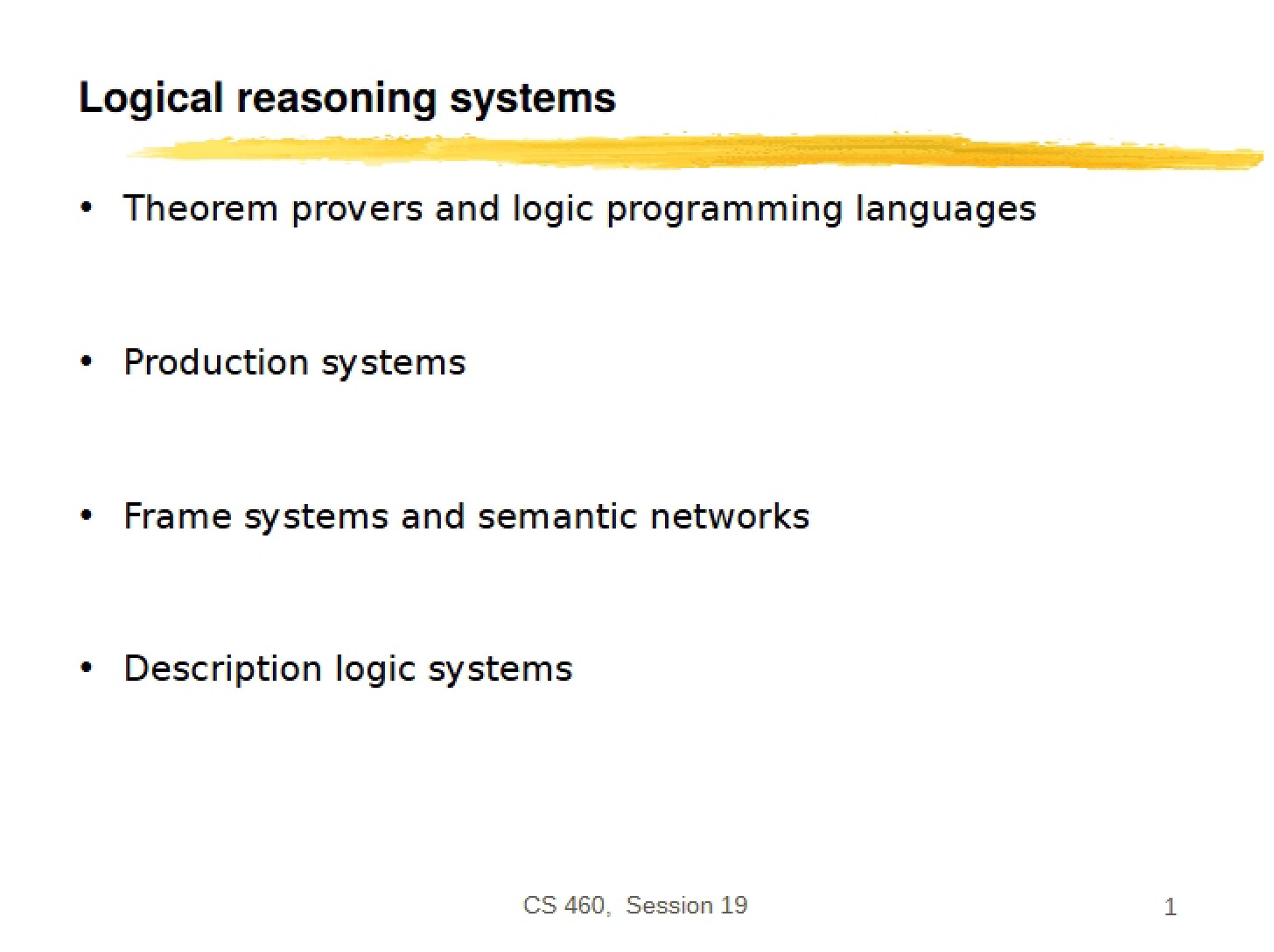
* An overview of different logical reasoning approaches, including theorem proving, logic programming, and production systems.
* Discussion of methods for adding, retrieving, and modifying information within a knowledge base.
* Exploration of indexing techniques designed to improve the efficiency of knowledge retrieval.
* An introduction to the concept of unification and its importance in logical inference.
* A comparison between traditional programming paradigms and logic programming.