What This Document Is
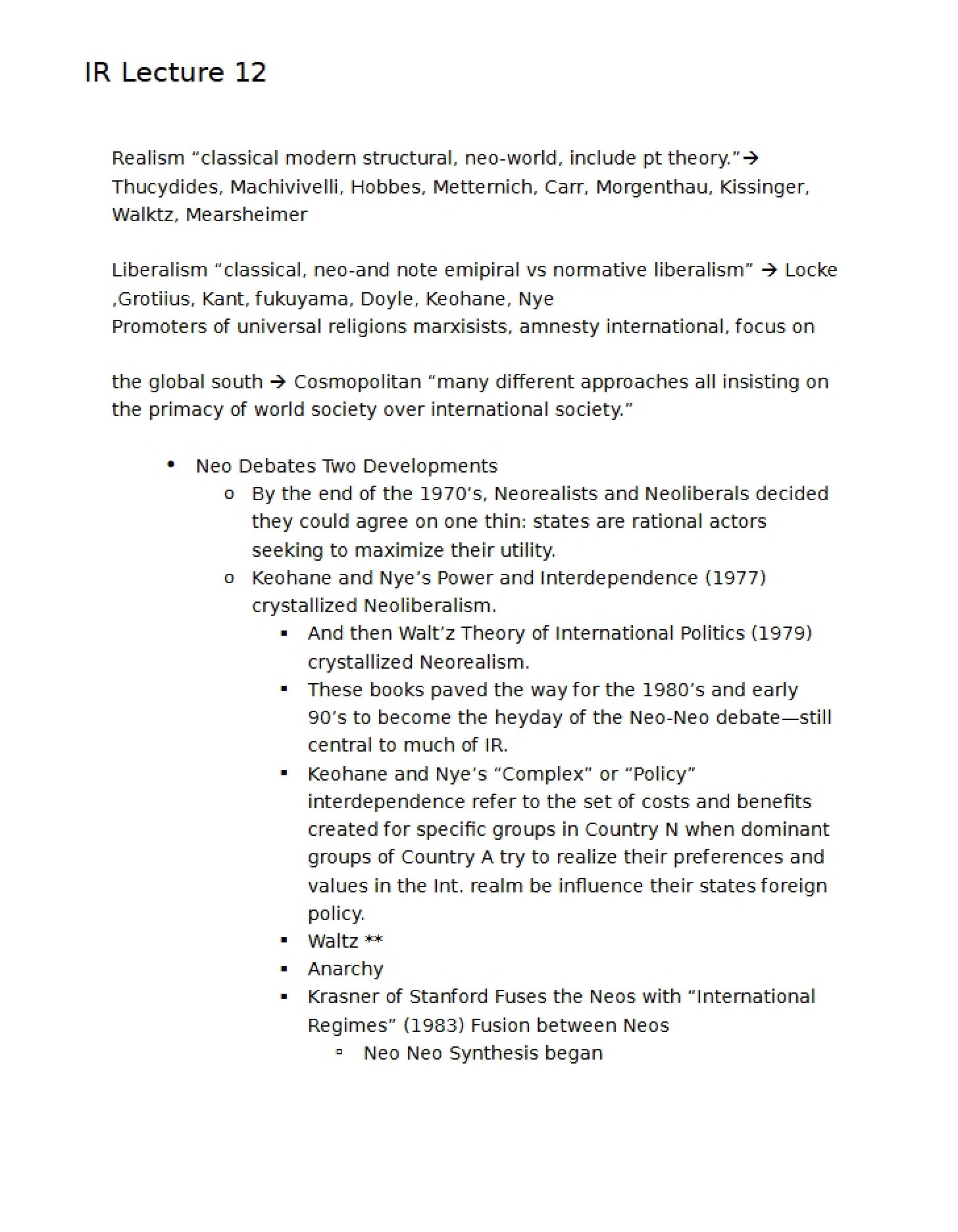
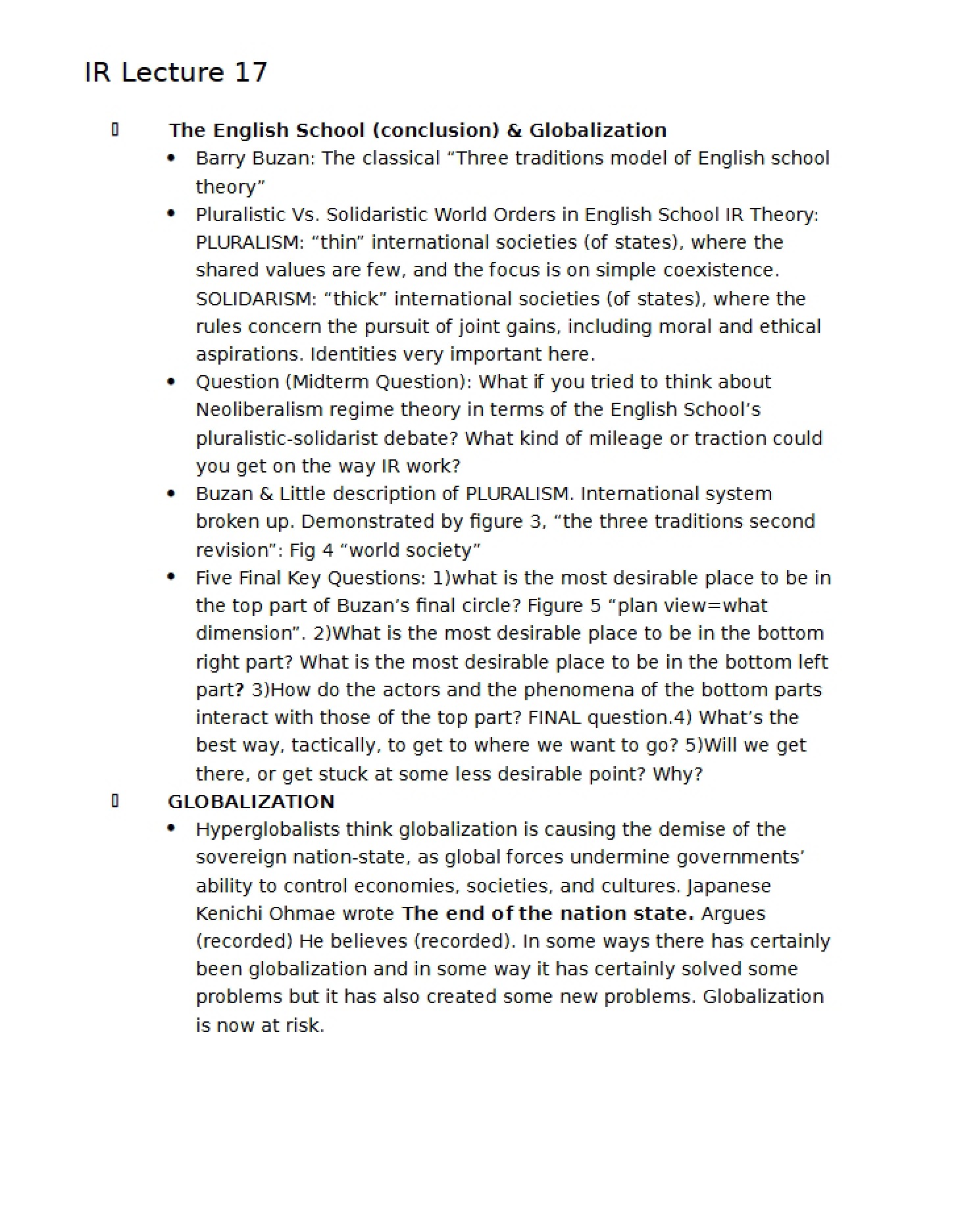
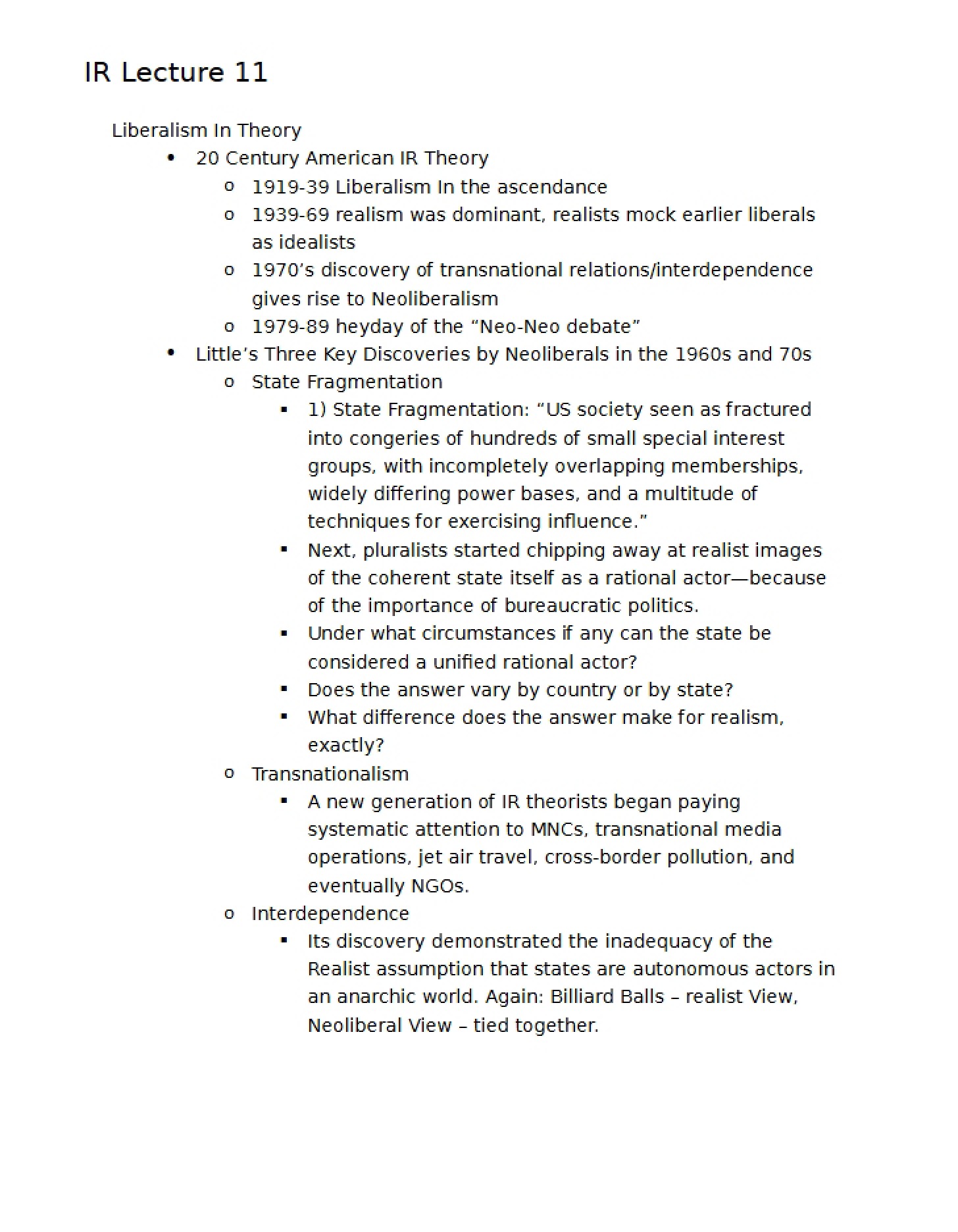
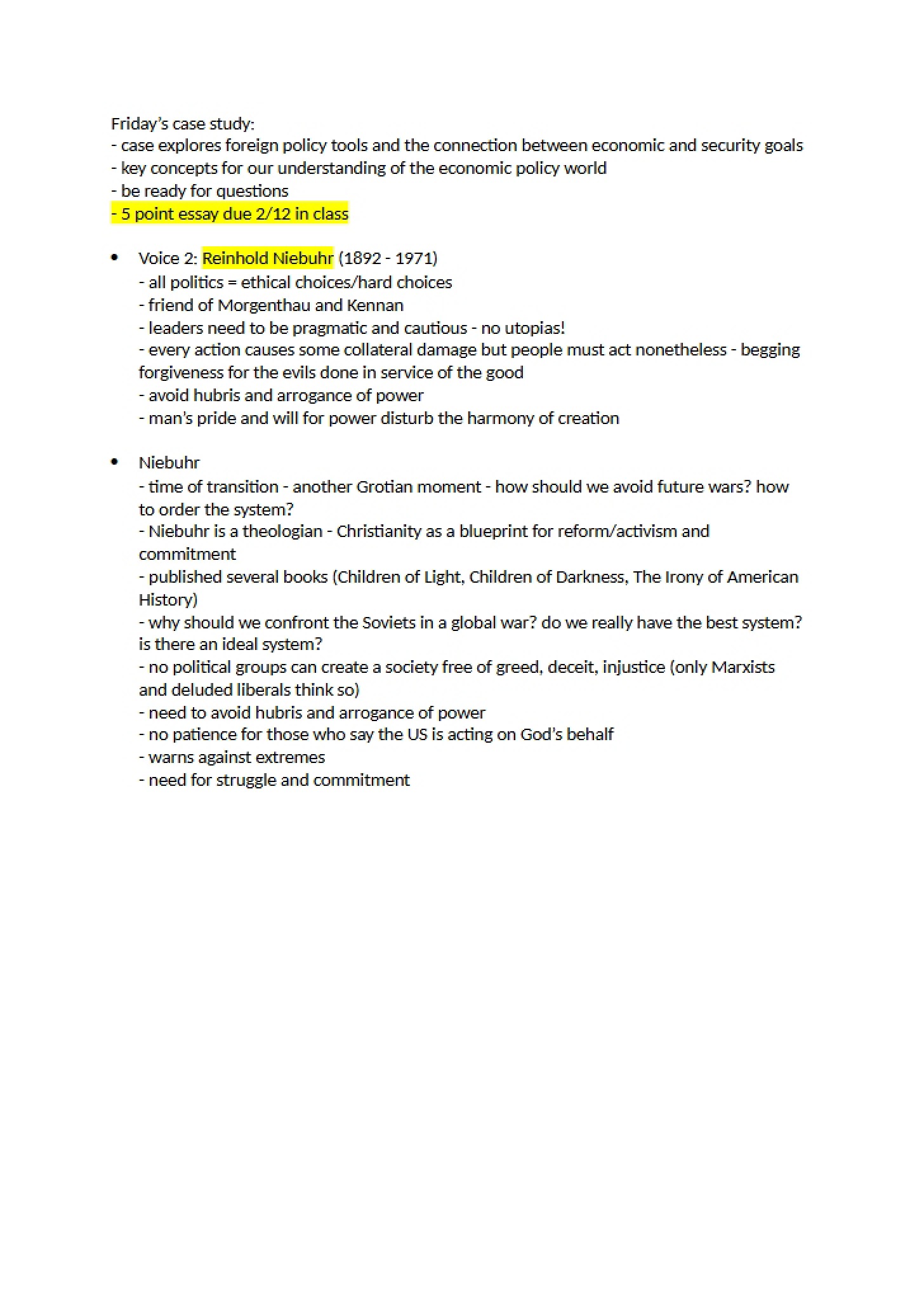
This is a comprehensive study guide designed to prepare students for the first midterm exam in IR 210: Introduction to International Relations at the University of Southern California. It focuses on foundational concepts relating to the evolution of the international system, specifically examining the shifts in units and structures from ancient times through the modern era. The guide delves into the interplay between military, political, and economic factors in shaping international dynamics.
Why This Document Matters
Students enrolled in IR 210 who are preparing for their first midterm will find this guide exceptionally valuable. It’s particularly useful for those seeking a consolidated overview of the core theoretical frameworks discussed in class regarding the historical development of international relations. Utilizing this resource can help solidify understanding of key terminology and prepare for essay-style questions requiring comparative analysis of different historical periods. It’s best used in conjunction with course lectures and assigned readings, serving as a focused review tool in the days leading up to the exam.
Common Limitations or Challenges
This guide is specifically tailored to the content covered for the *first* midterm of IR 210. It does not cover material from later in the semester. It is also designed to *supplement* – not replace – your own notes, readings, and class participation. While it provides a robust overview, it won’t offer detailed explanations of every nuance discussed in the course. It does not include practice questions or model answers.
What This Document Provides
* A comparative analysis of “units” (major actors) in the international system across ancient, classical, and modern eras.
* An overview of the structural characteristics – such as hierarchy and anarchy – that have defined different periods of international relations.
* Discussion of the role of technological advancements in transforming interaction capacity between actors.
* Examination of the relationship between military development, economic growth, and the rise of the modern state.
* Insights into the emergence of key structural effects like regionalism and the global market.