What This Document Is
This document presents a focused exploration of externality control within the field of environmental economics. It delves into the complexities of both positive and negative externalities, examining the economic principles underlying their existence and the challenges associated with effectively addressing them. It’s designed as a deep dive into the theoretical frameworks used to analyze and manage situations where market transactions don’t fully reflect the true costs or benefits to society.
Why This Document Matters
Students enrolled in environmental economics courses, particularly those at the upper undergraduate or graduate level, will find this resource valuable. It’s especially helpful when grappling with concepts related to market failures and policy interventions. Professionals working in environmental policy, resource management, or regulatory economics can also benefit from a refresher on these core principles and a nuanced understanding of the tools available for externality control. This material is best utilized when you need a comprehensive understanding of the economic rationale behind environmental regulations.
Topics Covered
* Positive Externalities: Understanding their causes and consequences.
* Negative Externalities: Exploring the issues surrounding pollution and its impact.
* Polluter Heterogeneity: Analyzing differences in abatement capabilities among firms.
* Pollution Trading: Investigating the benefits and potential drawbacks of market-based approaches.
* Policy Instruments: Comparing and contrasting pollution taxes and standards.
* Externality Policy Components: Examining the building blocks of effective policies.
* Technology Diffusion: Considering the role of technological advancements in addressing externalities.
What This Document Provides
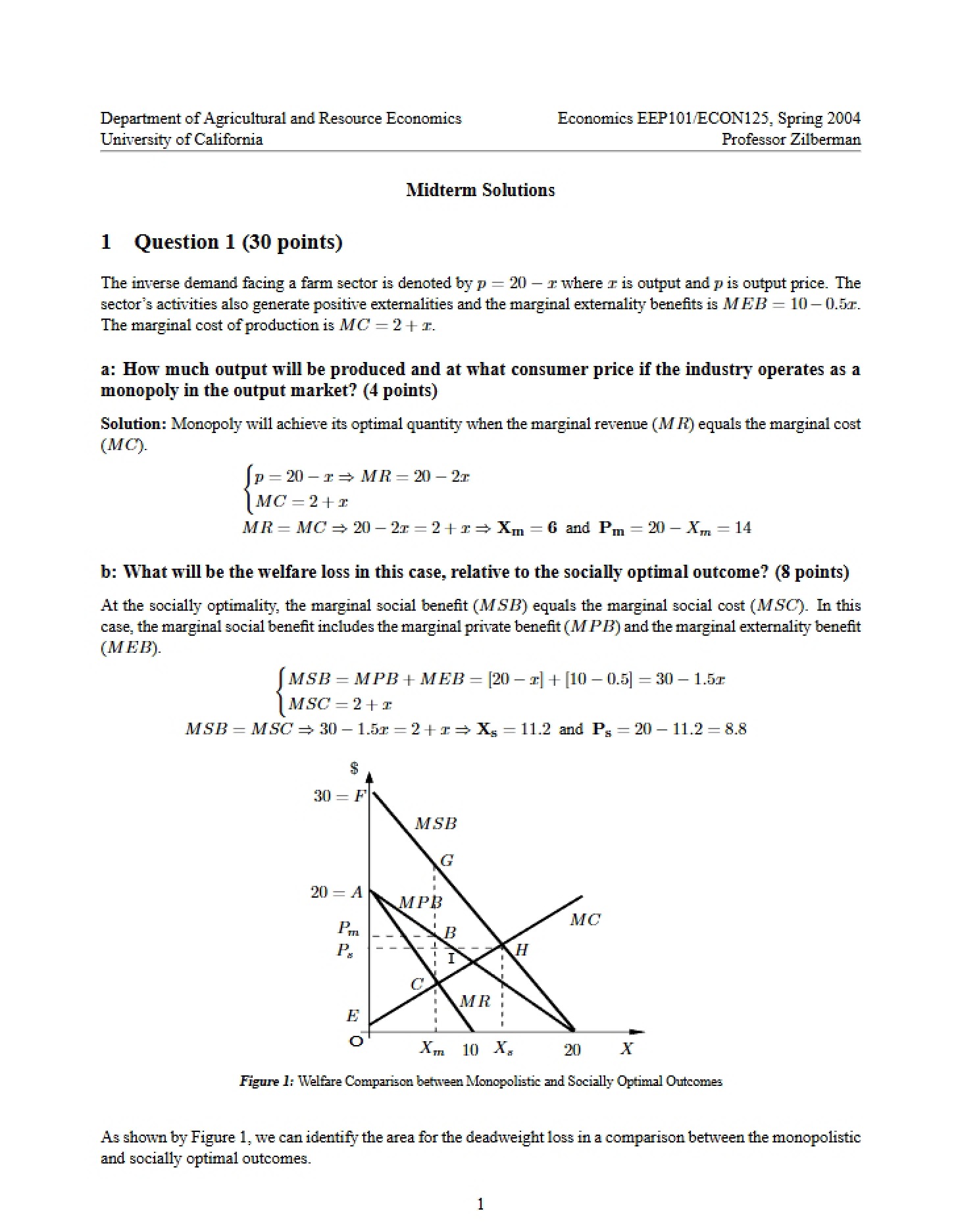
* Economic models illustrating the impact of externalities on social welfare.
* Detailed analysis of the conditions necessary for efficient allocation of resources in the presence of externalities.
* Frameworks for evaluating the effectiveness of different policy interventions.
* Discussions on the practical challenges of implementing externality control measures.
* Graphical representations to aid in visualizing key economic concepts.
* A comparative look at approaches to address positive versus negative externalities.