What This Document Is
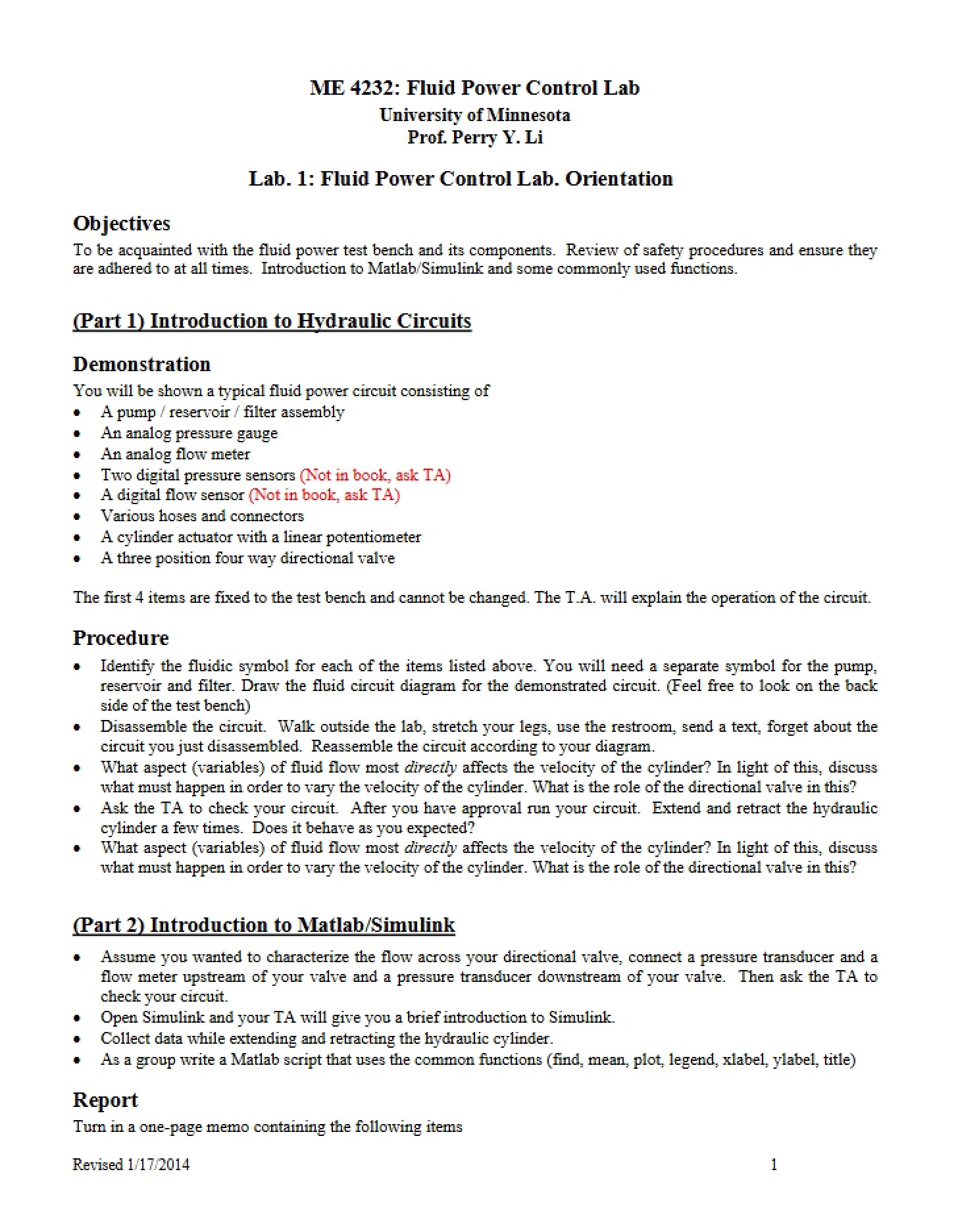
This is a comprehensive guide focused on the safe and effective operation of equipment within a Fluid Power Control Laboratory setting. Specifically designed for students engaging with hydraulic systems, it details essential protocols for a hands-on learning environment. The material covers critical aspects of working with fluid power components, emphasizing both operational procedures and safety considerations. It’s a foundational resource for anyone undertaking experiments and projects involving hydraulic circuits and controls.
Why This Document Matters
This resource is vital for students enrolled in courses like Fluid Power Control Lab (ME 4232) at the University of Minnesota Twin Cities, or similar programs at other institutions. It’s particularly beneficial *before* beginning any lab work, serving as a crucial reference for understanding the potential hazards and best practices associated with hydraulic systems. Students will find it useful during experiment setup, operation, and teardown, ensuring a safe and productive learning experience. It’s also a valuable refresher for anyone needing to recall proper procedures before revisiting the lab.
Common Limitations or Challenges
This guide focuses on procedural knowledge and safety. It does *not* provide in-depth theoretical explanations of fluid power principles, detailed circuit analysis techniques, or troubleshooting guides for complex system failures. It assumes a basic understanding of hydraulic concepts and is intended to supplement, not replace, formal coursework and instructor guidance. The document also doesn’t cover specific experiment instructions – it prepares you *for* the experiments, but doesn’t walk you through them.
What This Document Provides
* Detailed safety precautions specific to a fluid power laboratory environment.
* Standard operating procedures for starting up and shutting down hydraulic workbenches.
* Guidelines for the safe use of electronic sensors commonly integrated with hydraulic systems.
* Important reminders regarding laboratory housekeeping and component handling.
* Information regarding potential hazards associated with hydraulic fluid and high-pressure systems.
* Emphasis on pre-operation checks to ensure circuit integrity and prevent damage.