What This Document Is
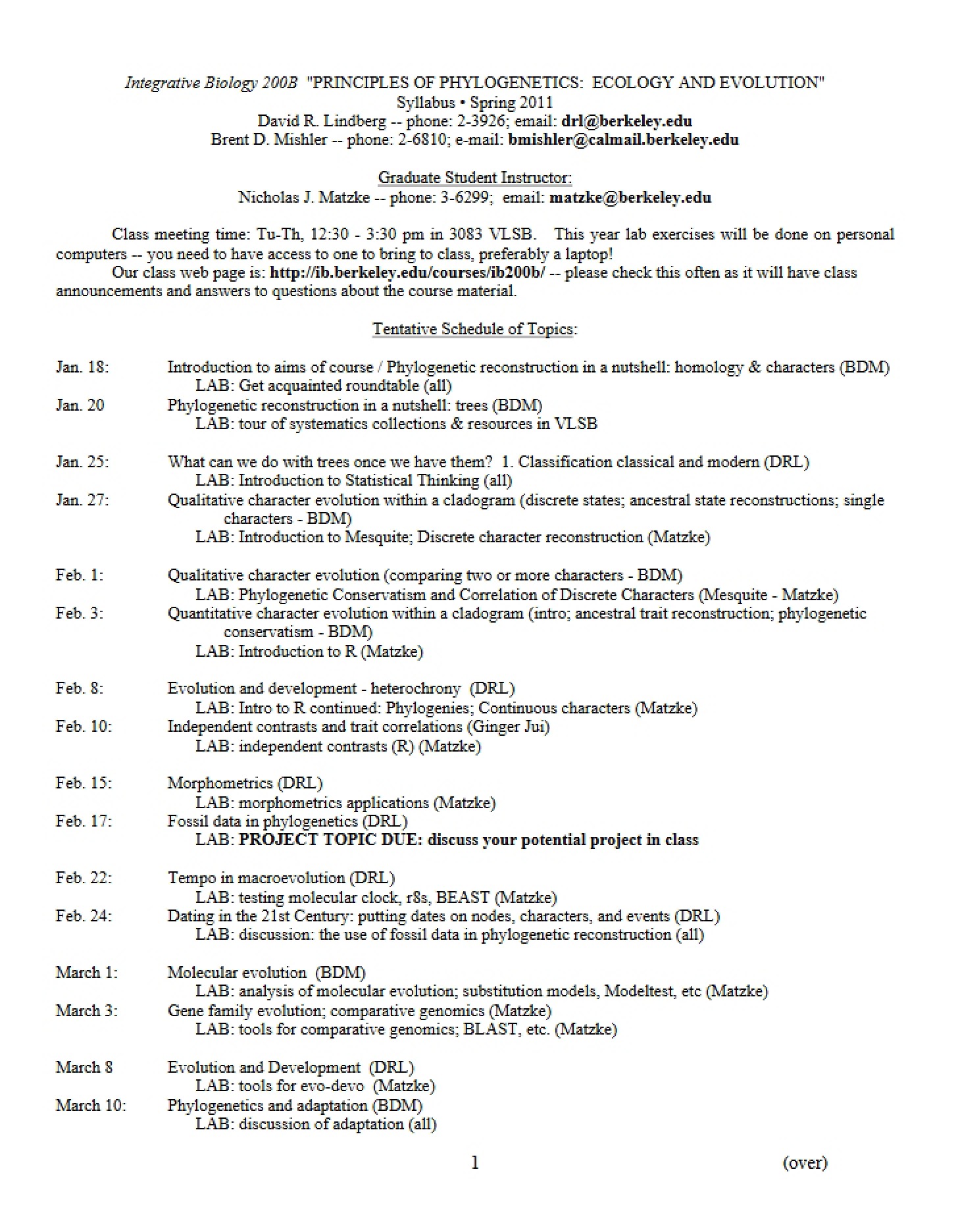
This is a detailed course outline for Principles of Phylogenetics, a graduate-level course offered at the University of California, Berkeley’s Integrative Biology department. It provides a week-by-week schedule and overview of the topics explored within the field of systematic biology – the study of evolutionary relationships. This outline serves as a roadmap for the entire semester, detailing the progression of concepts and skills students will develop.
Why This Document Matters
This outline is invaluable for prospective students, current students, and anyone interested in understanding the scope of a rigorous phylogenetics course. It’s particularly helpful for determining if the course aligns with your academic goals and for planning your study schedule. Individuals with a background in biology, evolution, or ecology will find this outline especially relevant, as it details the core concepts and methodologies used to reconstruct evolutionary history. Reviewing this outline *before* the course begins can provide a significant advantage.
Topics Covered
* Foundational principles of systematic biology and its historical development
* Methods for analyzing and interpreting morphological data, including fossils
* Exploration of various molecular data types used in phylogenetic reconstruction
* Detailed examination of phylogenetic tree reconstruction algorithms and models
* Techniques for assessing the reliability and robustness of phylogenetic trees
* Principles of phylogenetic classification and nomenclature
* Current applications of phylogenetics, including DNA barcoding and taxonomy
What This Document Provides
* A complete, tentative schedule of lecture topics for the semester.
* Identification of key instructors and their areas of expertise.
* Information regarding required resources, such as access to a personal computer for lab exercises.
* A list of software packages utilized throughout the course for data analysis and tree building.
* Details regarding lab exercises and project requirements, including due dates.
* References to supplemental learning opportunities, such as guest lectures and seminars.