What This Document Is
This resource provides a focused exploration of emotional development, specifically within the field of child psychology. It’s designed as a foundational piece for understanding how the capacity for experiencing and expressing emotions unfolds over the course of childhood. The material delves into core theoretical frameworks used to conceptualize emotions, and examines the typical progression of emotional capabilities from infancy onward. It aims to provide a comprehensive overview of the key considerations when studying this complex area of human development.
Why This Document Matters
This is an essential resource for students enrolled in child psychology courses, developmental psychology, or related fields. It’s particularly helpful when you’re beginning to grapple with the intricacies of emotional milestones and the factors that influence them. Use this material to build a strong base for understanding more advanced topics like temperament, attachment, and the impact of emotional regulation on social and cognitive development. It’s ideal for pre-lecture reading, exam review, or as a reference while completing assignments.
Common Limitations or Challenges
This resource focuses on foundational concepts and theoretical perspectives. It does *not* offer detailed case studies, clinical applications, or specific intervention strategies for addressing emotional difficulties. While it touches upon individual variations in emotional development, it doesn’t provide in-depth analysis of specific disorders or atypical emotional trajectories. It also doesn’t include current research updates beyond the date indicated within the material.
What This Document Provides
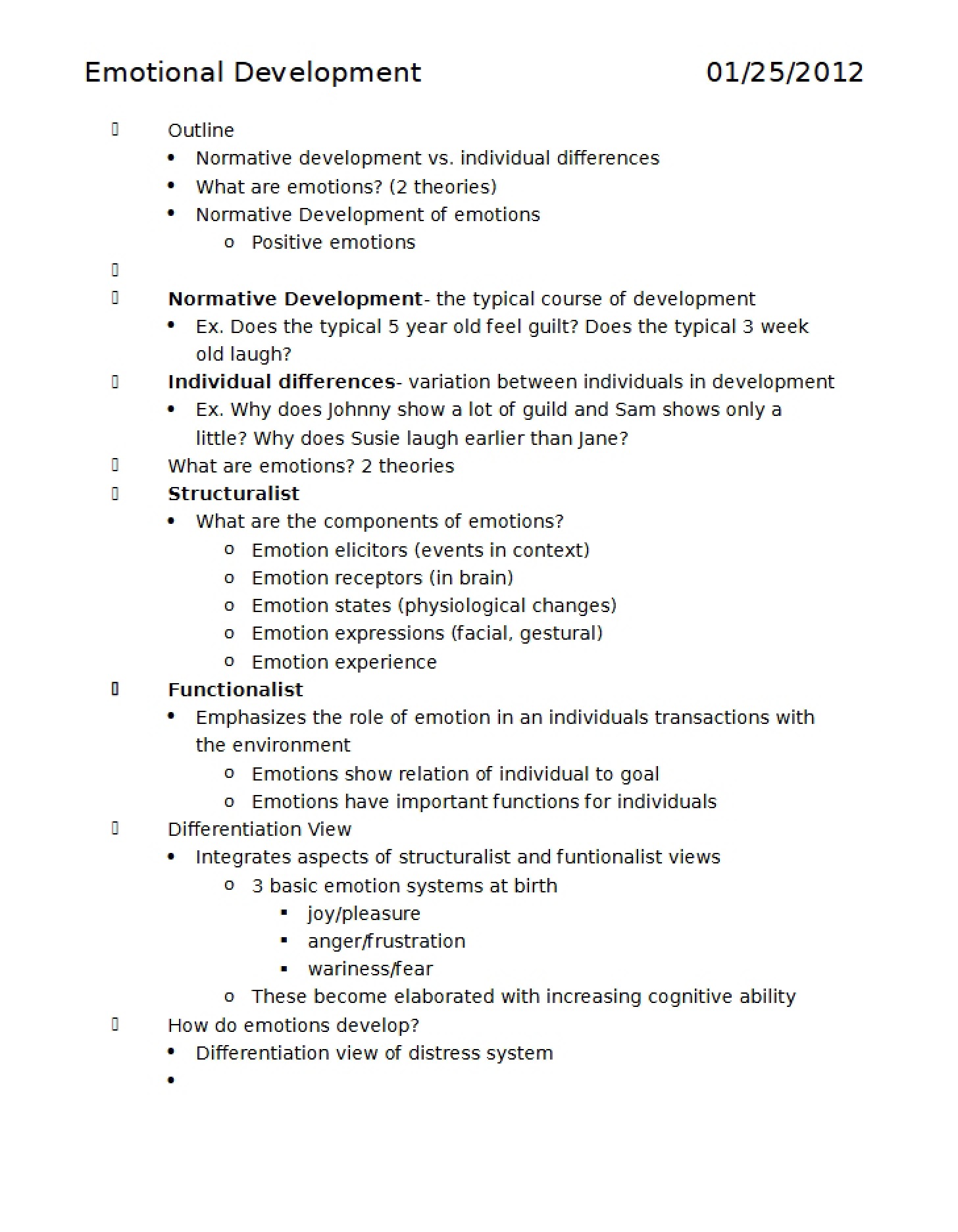
* An overview of the distinction between normative development and individual differences in emotional expression.
* Exploration of prominent theoretical approaches to understanding the fundamental nature of emotions.
* A framework for considering the components that contribute to an emotional experience.
* Discussion of how emotional systems may originate and evolve with cognitive growth.
* Consideration of the role emotions play in an individual’s interaction with their environment.