What This Document Is
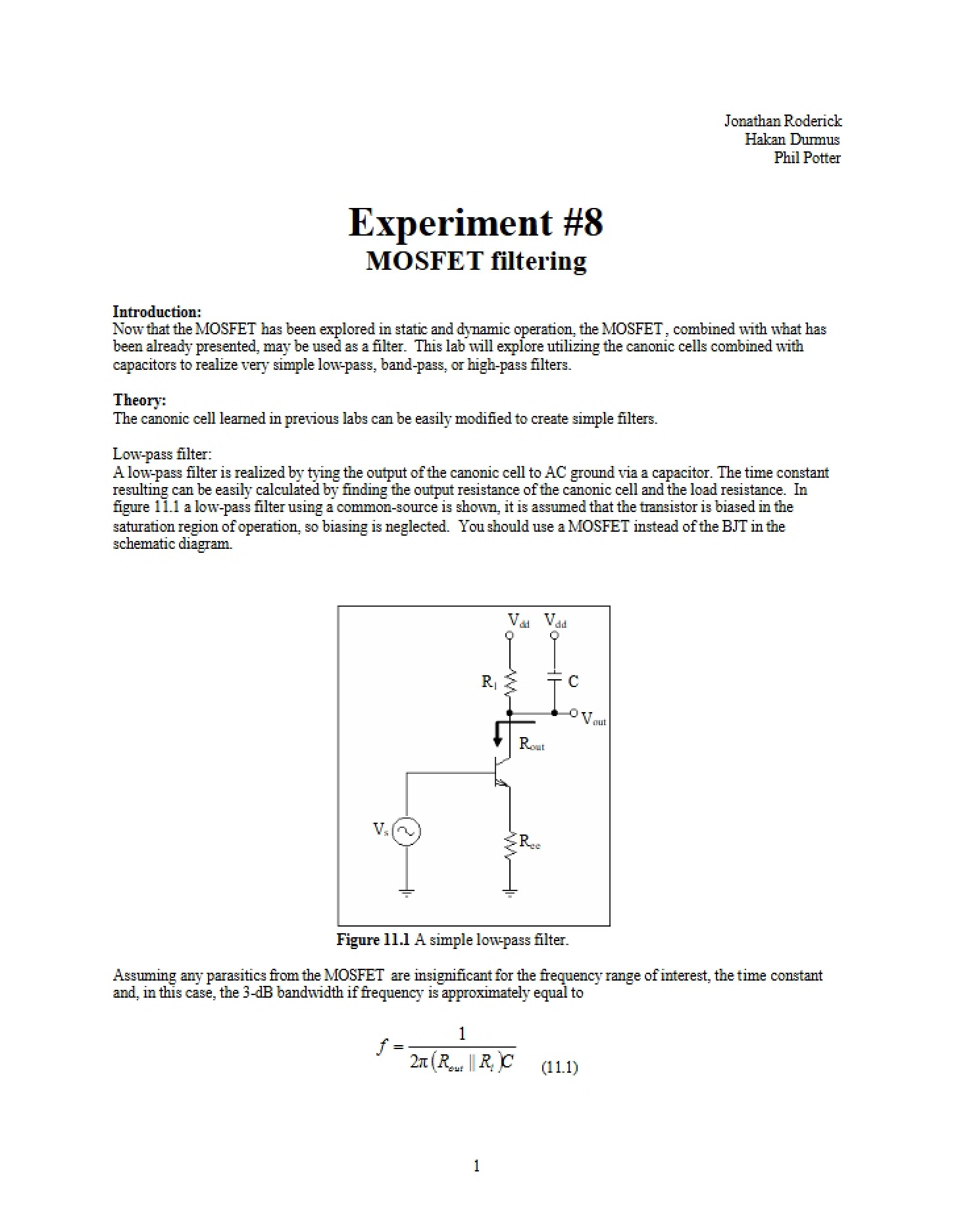
This is a detailed exploration of fundamental building blocks within the field of electronic circuits, specifically focusing on bipolar junction transistor (BJT) circuits. It’s a focused section from a course on electronic circuits, likely a lecture supplement, designed to provide a deep dive into the characteristics and behavior of core BJT configurations. The material centers around analyzing circuits built using these transistors, with a strong emphasis on low-frequency performance.
Why This Document Matters
This resource is invaluable for students enrolled in intermediate to advanced electronic circuit analysis and design courses. It’s particularly helpful for those seeking a solid foundation in bipolar transistor technology. Students preparing to design or analyze more complex electronic systems will benefit from understanding the properties of these “canonic cells.” It’s best utilized while actively studying circuit topologies and equivalent circuit analysis, or when preparing to tackle design problems involving linear bipolar circuits.
Common Limitations or Challenges
This material focuses specifically on the theoretical underpinnings of BJT circuits and does not offer practical lab exercises or simulations. It assumes a pre-existing understanding of basic circuit analysis techniques and transistor fundamentals. While it discusses limitations of the circuits, it doesn’t provide step-by-step troubleshooting guides or address real-world implementation challenges in detail. It also doesn’t cover alternative transistor technologies like MOSFETs.
What This Document Provides
* A detailed examination of key BJT circuit configurations – including common emitter, common base, and cascode amplifiers.
* Analysis of the low-frequency performance characteristics of these circuits.
* Discussion of key circuit parameters like gain, input resistance, and output resistance.
* Introduction to the use of small-signal models for BJT analysis.
* Exploration of the conditions required for linear transistor operation.
* Insight into the relationship between transistor biasing and circuit performance.