What This Document Is
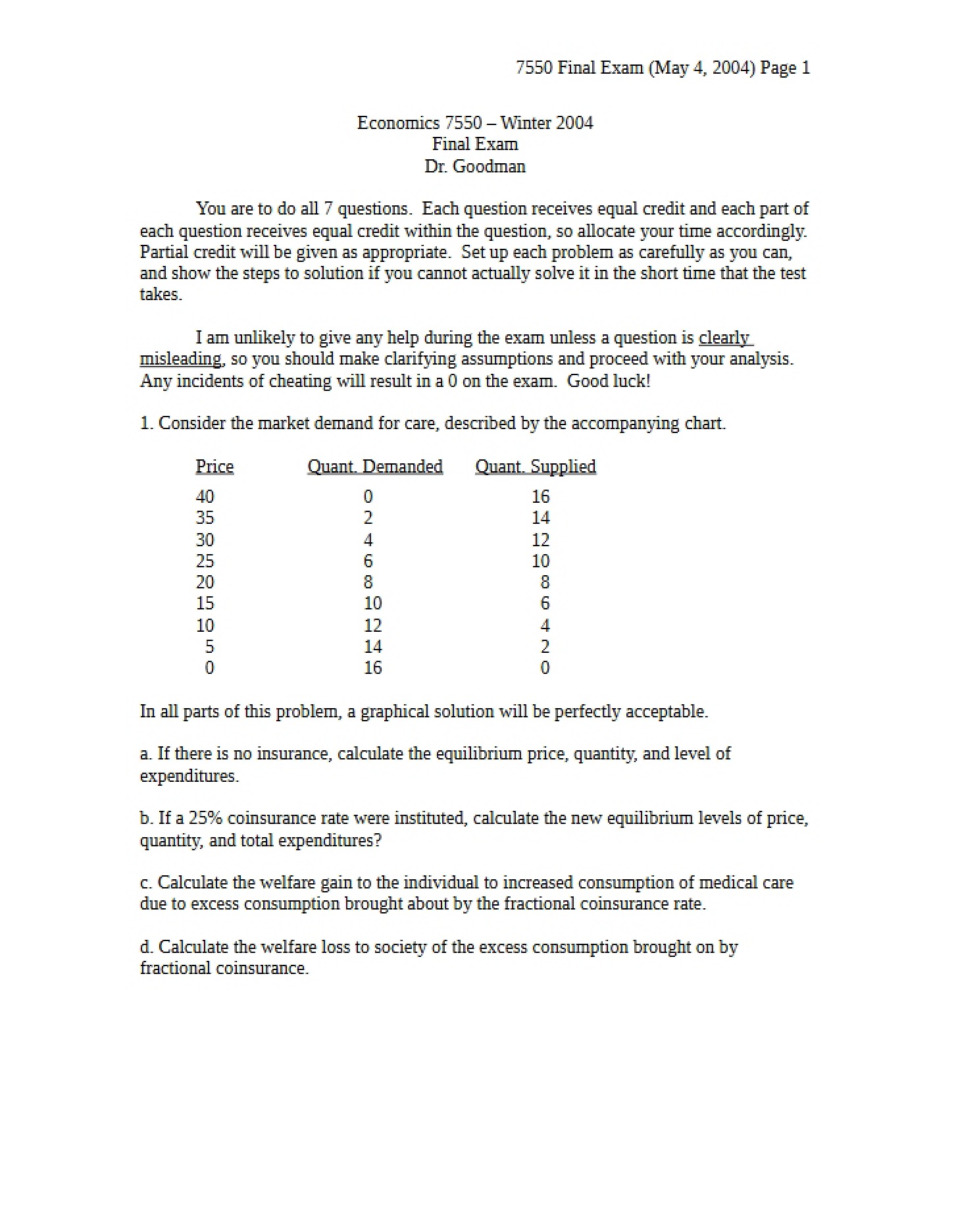
This is a final exam for Economics 7550, a graduate-level course in the Economics of Health Care, offered at Wayne State University. It assesses a student’s comprehensive understanding of core economic principles as they apply to the healthcare industry. The exam covers a range of topics explored throughout the semester, requiring analytical and problem-solving skills. It’s designed to test not just recall of concepts, but the ability to apply them to realistic healthcare scenarios.
Why This Document Matters
This resource is invaluable for students currently enrolled in, or preparing for, a similar health economics course. It’s particularly useful for those seeking to gauge the depth and breadth of material covered in an advanced economics of healthcare curriculum. Reviewing the exam structure and the types of questions asked can help students identify areas where their understanding needs strengthening and refine their test-taking strategies. It’s best utilized *after* completing coursework and as part of a final review process.
Common Limitations or Challenges
Please note that this document presents the exam questions themselves, but does *not* include any solutions, explanations, or worked examples. It serves as a practice tool to assess your understanding, not as a substitute for completing the assigned readings, attending lectures, or engaging with course materials. The exam reflects the specific content and emphasis of the Fall 1999 course at Wayne State University, and may not perfectly align with all health economics curricula.
What This Document Provides
* A complete copy of the final exam as administered in Fall 1999.
* Six distinct questions covering key areas within the economics of healthcare.
* Problem sets relating to monopoly pricing in hospital markets.
* Analytical exercises involving economic equity and efficiency in resource allocation.
* Questions exploring the relationship between technological change, insurance, and profit incentives.
* Scenarios requiring the application of price elasticity and coinsurance concepts.
* Problems concerning quality-quantity trade-offs in hospital settings.
* A policy-focused question regarding the impact of income and price changes on healthcare spending.