What This Document Is
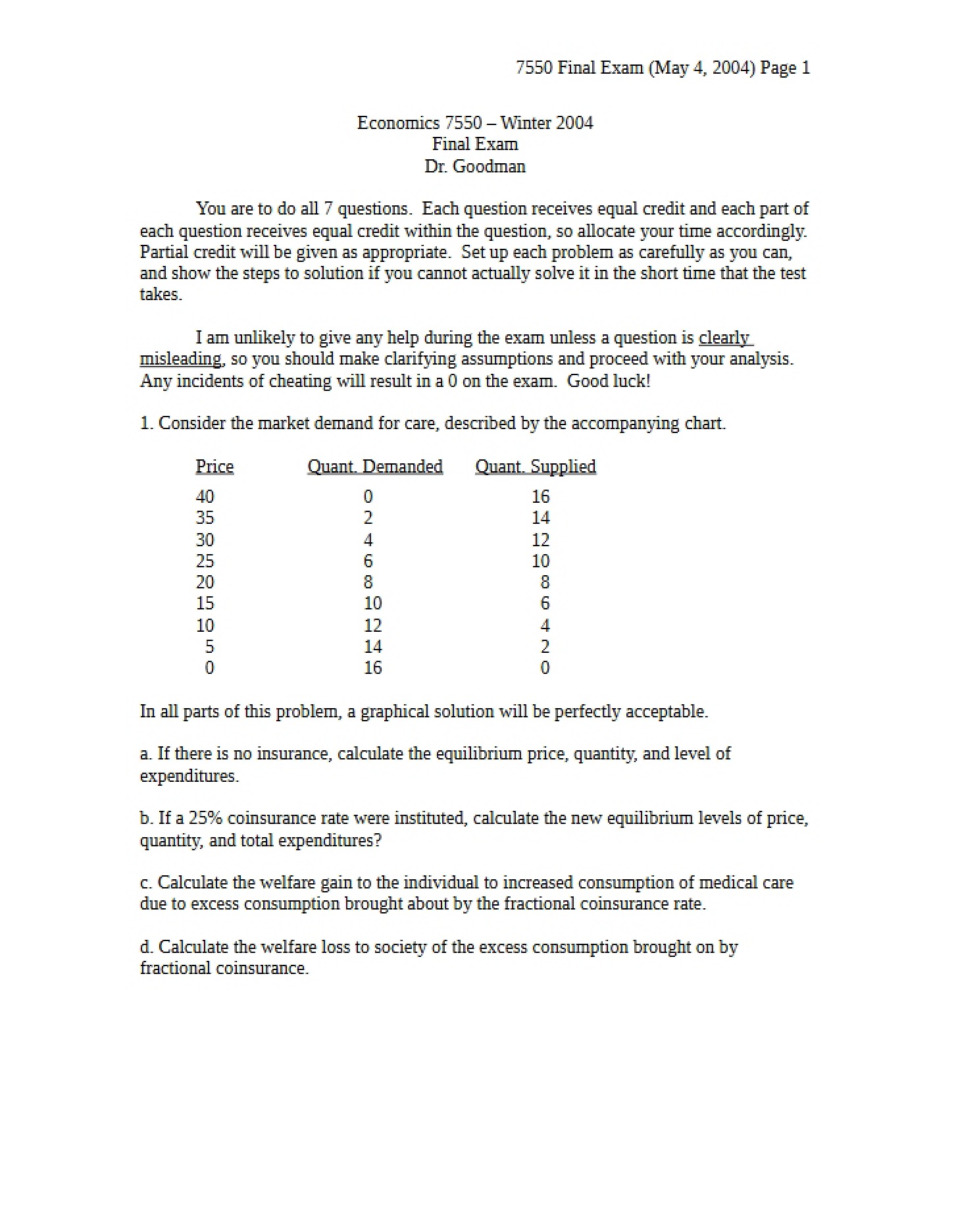
This document is a final examination for Economics 7550, a graduate-level course in the Economics of Health Care, offered at Wayne State University. It’s designed to comprehensively assess a student’s understanding of core economic principles as they apply to the healthcare industry. Version B of the final exam covers a broad range of topics explored throughout the semester, requiring analytical and problem-solving skills. The exam is structured to be completed within a 2.5-hour timeframe.
Why This Document Matters
This resource is invaluable for students currently enrolled in, or preparing to take, a similar health economics course. It’s particularly useful for those seeking to gauge the depth and breadth of material covered in an advanced economics of healthcare curriculum. Reviewing the exam’s structure and the types of questions asked can help students identify areas where their understanding needs strengthening and refine their test-taking strategies. It’s best utilized *after* completing coursework and as part of a final review process.
Common Limitations or Challenges
Please note that this document *does not* include answers, solutions, or detailed explanations for any of the questions. It is a representation of the exam itself, intended to familiarize you with the format and scope of the assessment. Access to the full document is required to view the specific questions and complete the exam. It also represents a specific version (Version B) of the final exam, and other versions may exist.
What This Document Provides
* A comprehensive final exam covering key concepts in health economics.
* Questions relating to utility functions and resource allocation within an economic framework.
* Problem sets focused on healthcare regulation, including discussions of DRGs and market structures.
* Analytical exercises involving production functions and cross-country health data.
* Scenarios exploring the impact of health insurance and moral hazard on market equilibrium.
* Questions relating to technological change and its effects on healthcare costs and outcomes.
* A clear indication of the exam’s structure, time constraints, and grading weight.