What This Document Is
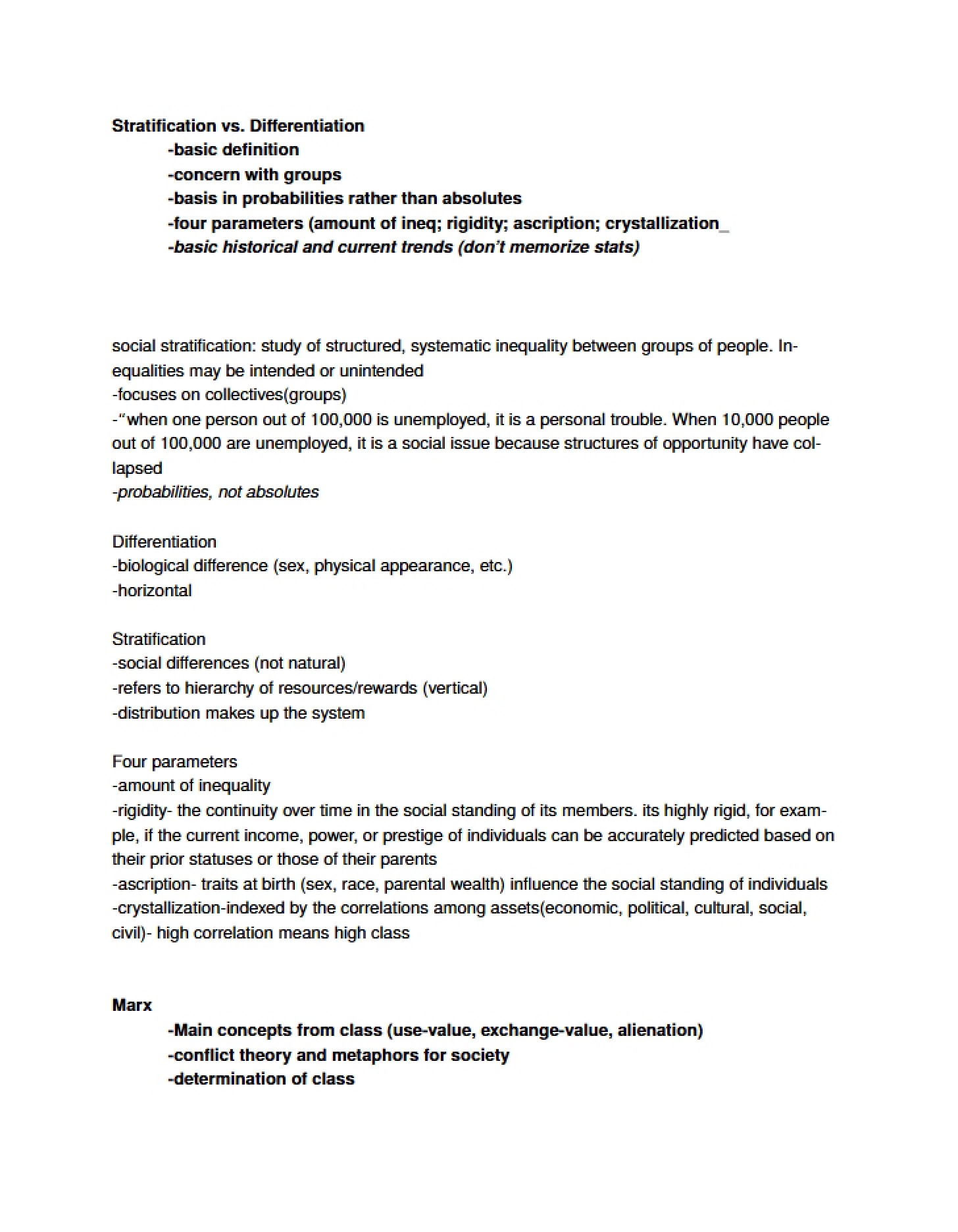
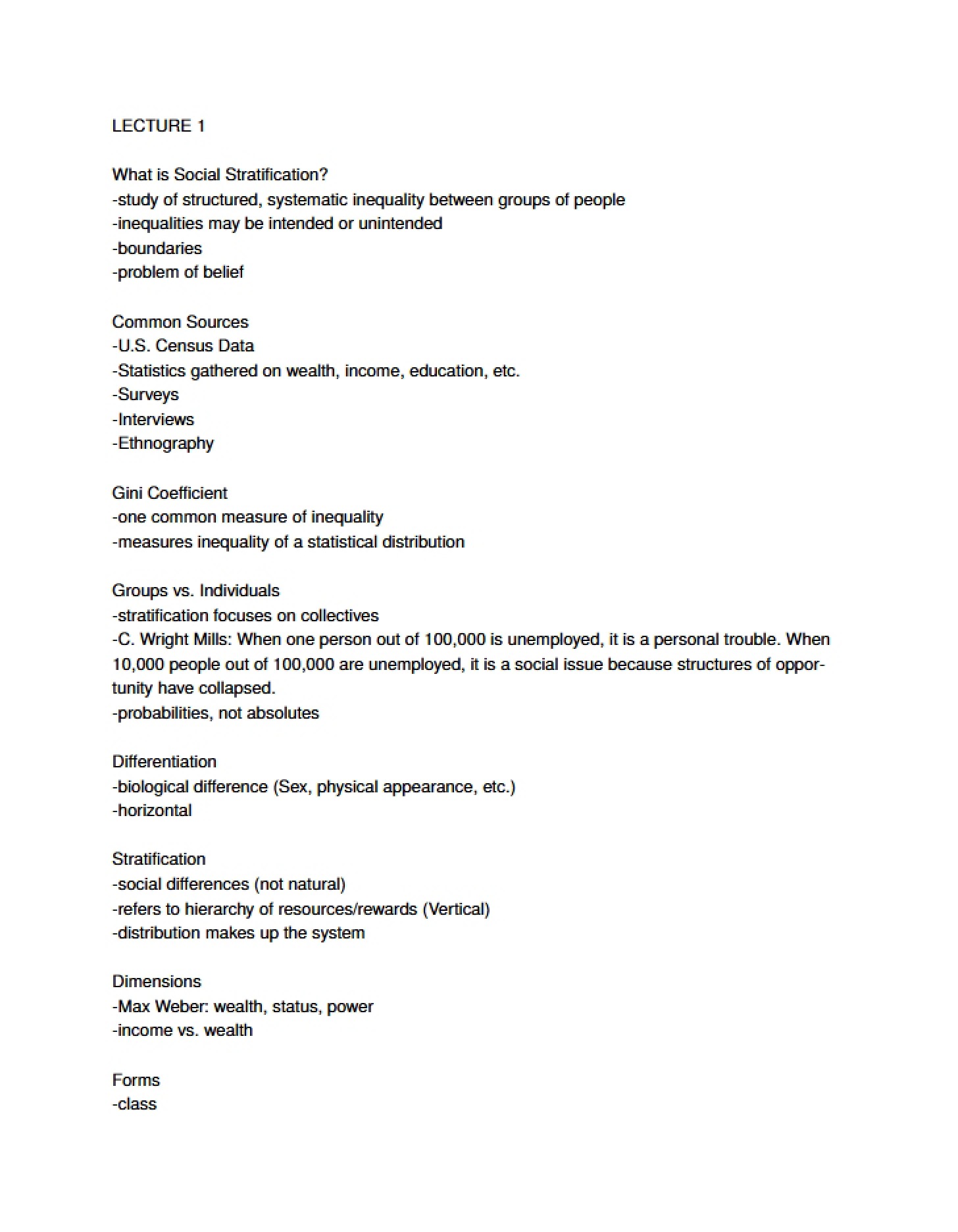
This resource is a comprehensive set of exam notes designed to support students in a Social Stratification course (SOC 373) at the University of Illinois at Urbana-Champaign. It focuses on the core concepts and theoretical frameworks used to understand patterns of inequality within societies. The notes synthesize key ideas related to how societies are structured, how resources are distributed, and the consequences of unequal access to those resources. It delves into the complexities of social hierarchies and the factors that contribute to their persistence.
Why This Document Matters
These notes are invaluable for students preparing for assessments in a Social Stratification course. They are particularly helpful for those seeking a consolidated review of major themes, theoretical perspectives, and terminology. Students who are struggling to connect course readings to broader concepts, or who need a focused study aid for exams, will find this resource beneficial. It’s best utilized *after* engaging with assigned course materials, as a tool to reinforce understanding and identify areas needing further review.
Common Limitations or Challenges
This resource is specifically tailored to the content covered in a University of Illinois at Urbana-Champaign Social Stratification course and may not perfectly align with all variations of the topic. It is *not* a substitute for attending lectures, completing assigned readings, or engaging in class discussions. The notes provide a framework for understanding, but do not offer in-depth analysis of specific research studies or current events. It also does not include practice exam questions.
What This Document Provides
* An overview of foundational concepts related to social stratification and inequality.
* Exploration of different theoretical perspectives on the causes and consequences of stratification (including conflict theory).
* Discussion of key dimensions of stratification, including class, status, and power.
* An outline of the structure of social classes within the American context.
* Examination of factors contributing to poverty and different ways of defining it.
* Consideration of the changing nature of work and the class structure in post-industrial economies.
* Analysis of the sources and distribution of wealth in the United States.