What This Document Is
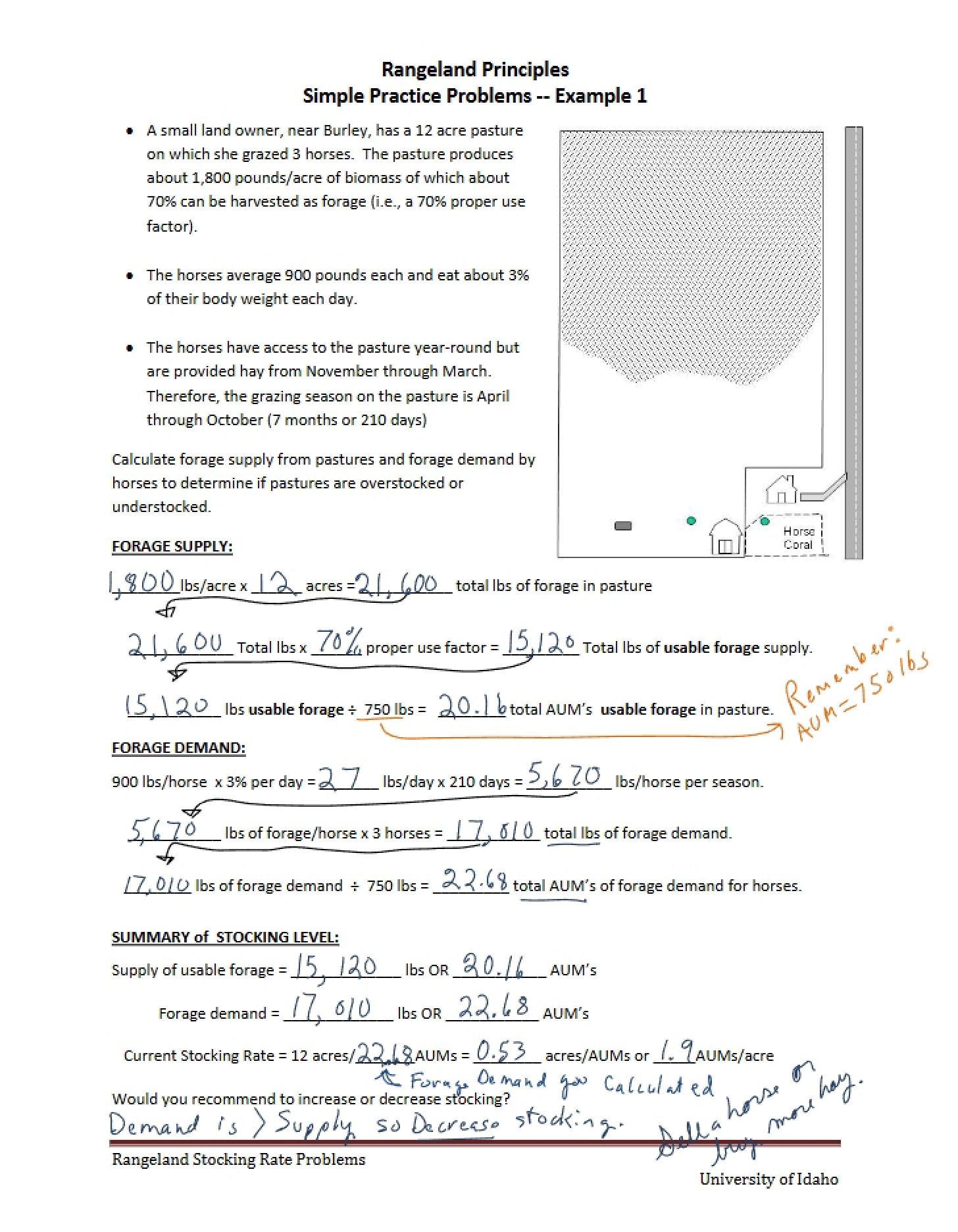
This resource presents a series of practice problems designed to reinforce core principles of rangeland management. Specifically, it focuses on applying theoretical knowledge to practical scenarios involving forage balance and stocking rate calculations. These examples are geared towards students learning to assess rangeland health and sustainability. It’s structured to help you build confidence in your ability to analyze real-world grazing situations.
Why This Document Matters
This practice set is ideal for students enrolled in integrated rangeland management courses, or those preparing for assessments on grazing ecology and livestock management. It’s particularly useful for solidifying understanding *after* initial instruction on key concepts. Working through these examples will help you develop a practical skillset applicable to range monitoring, land stewardship, and informed decision-making regarding grazing practices. It’s best used as a self-check tool to identify areas where further study might be beneficial.
Topics Covered
* Forage Supply Assessment
* Forage Demand Calculation
* Animal Unit Months (AUMs) – Definition and Application
* Stocking Rate Determination
* Proper Use Factors & Biomass Estimation
* Rangeland Carrying Capacity
* Grazing Season Length & Impact
* Evaluating Stocking Level – Overstocking vs. Understocking
What This Document Provides
* Multiple, distinct practice scenarios involving different rangeland settings.
* Problem setups detailing land area, livestock numbers, and forage production characteristics.
* Frameworks for calculating forage supply based on acreage and production rates.
* Structures for determining forage demand based on animal size, consumption rates, and grazing duration.
* Templates for summarizing stocking levels and making informed recommendations regarding adjustments to grazing pressure.
* Opportunities to practice applying key formulas and concepts related to rangeland assessment.