What This Document Is
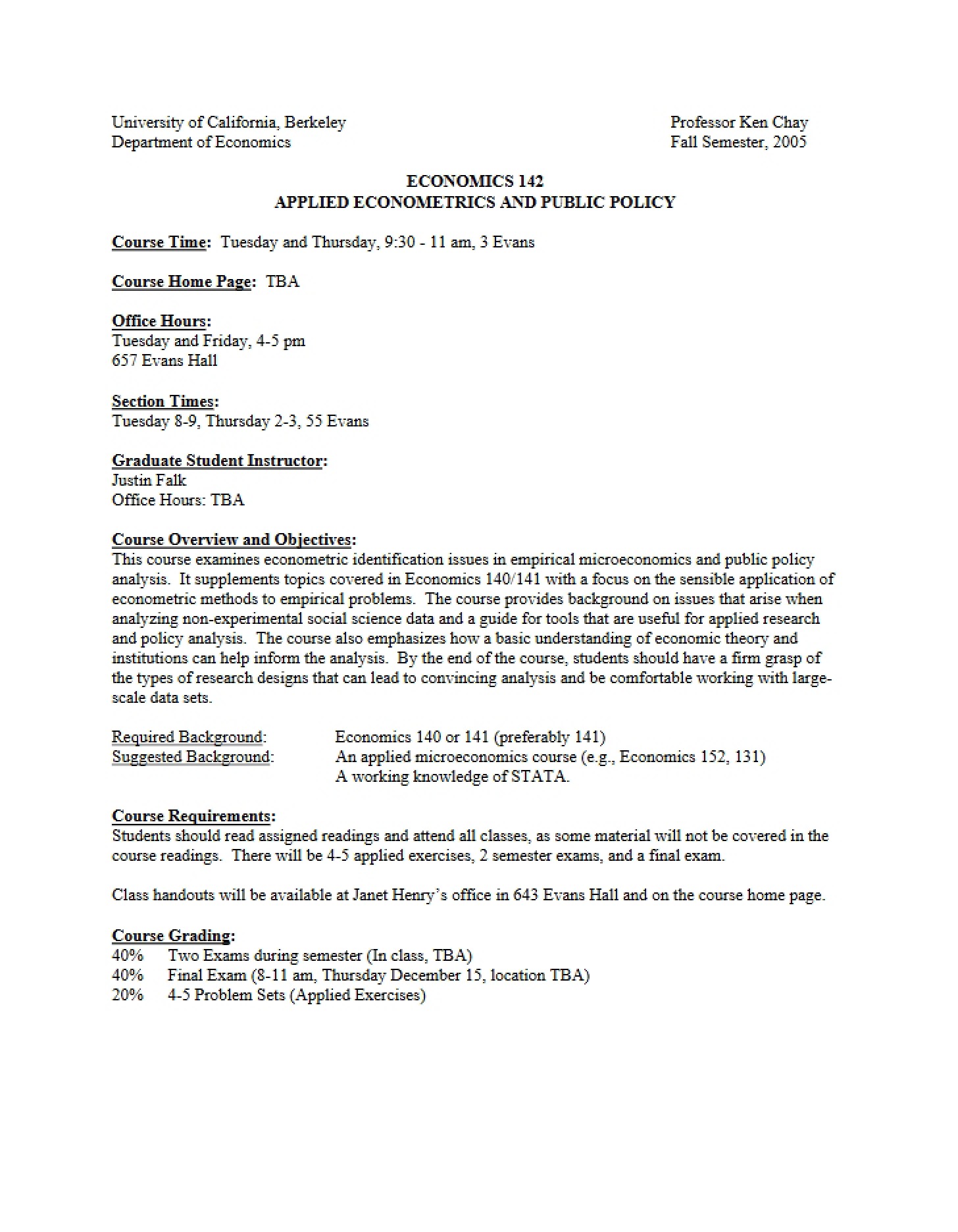
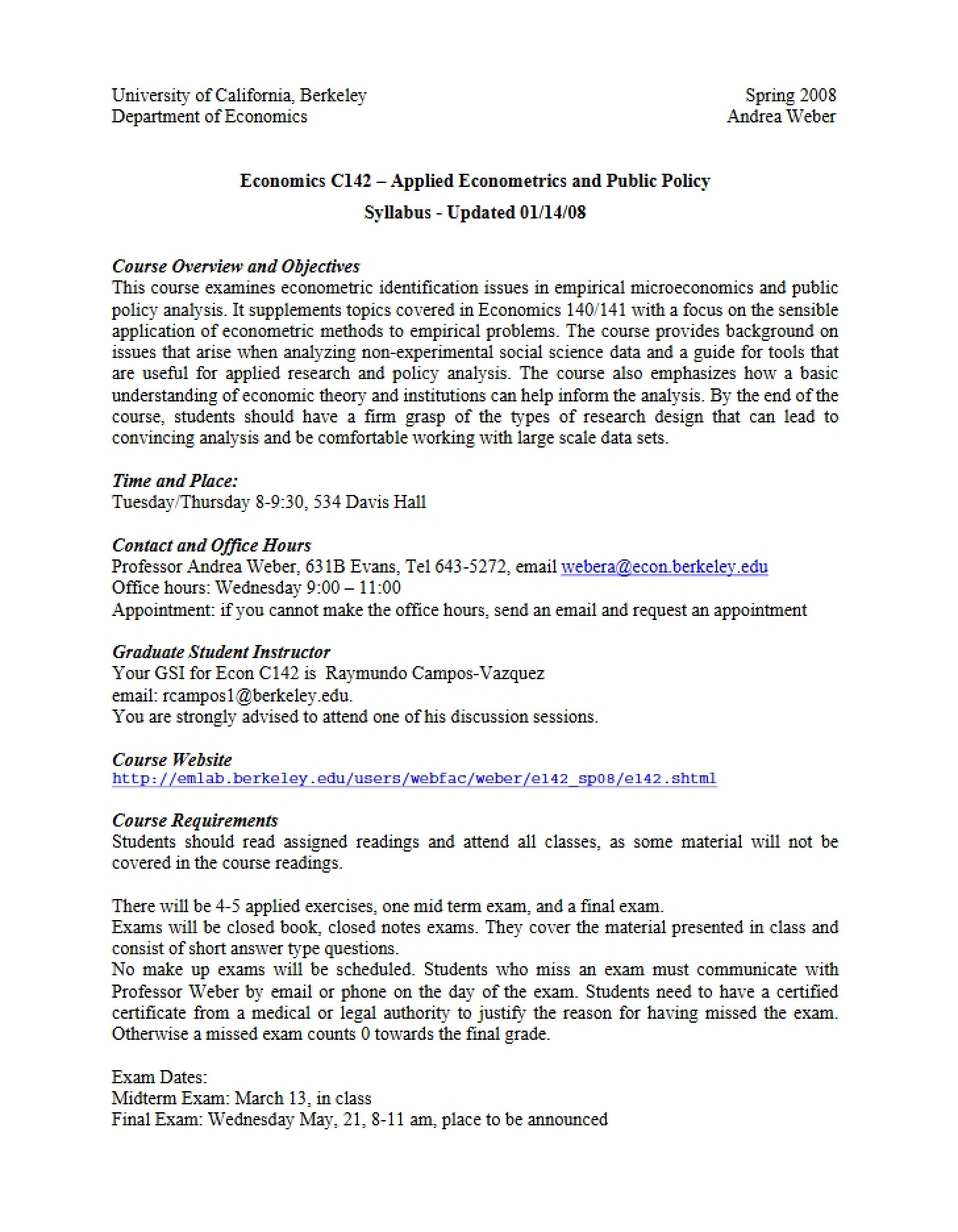
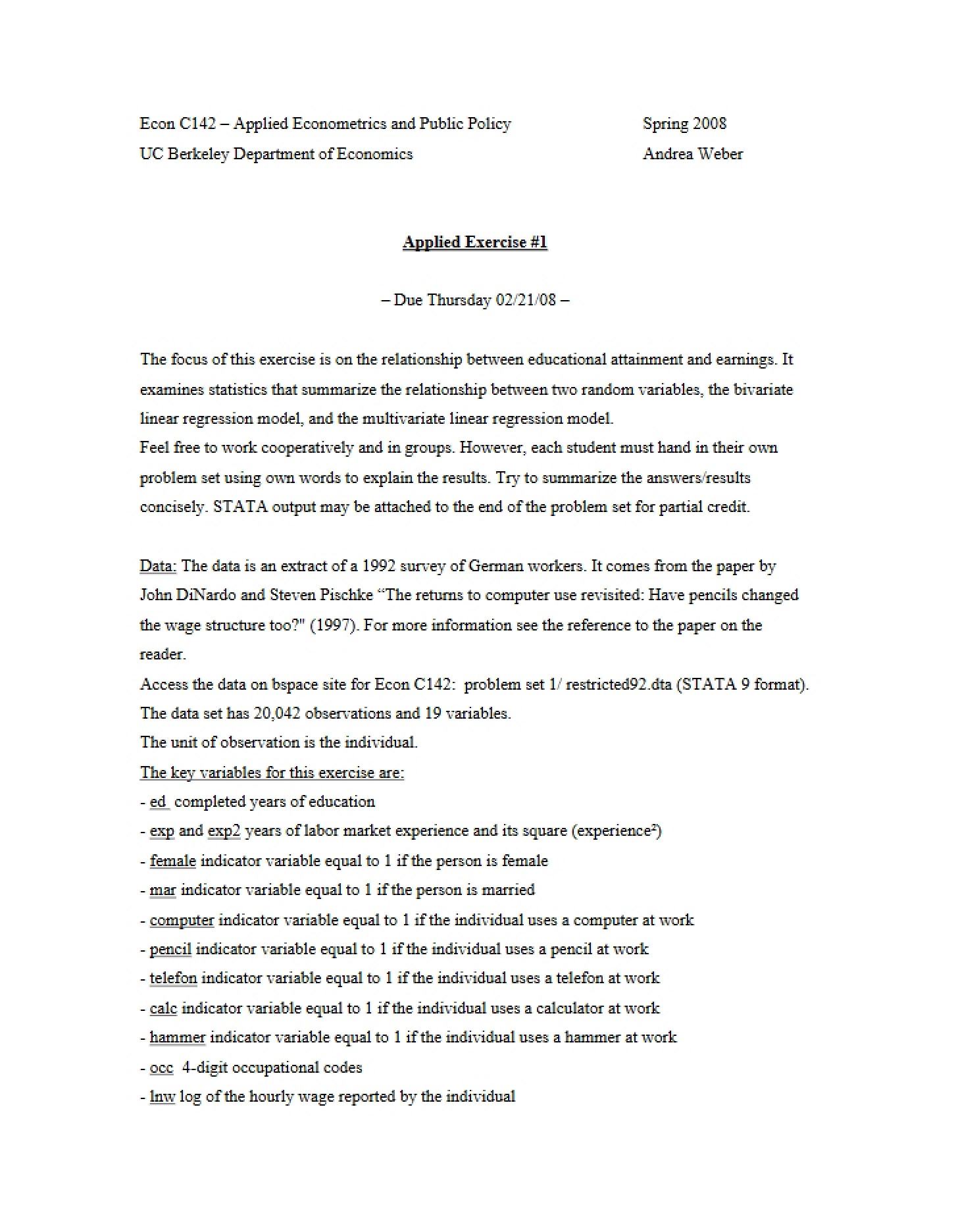
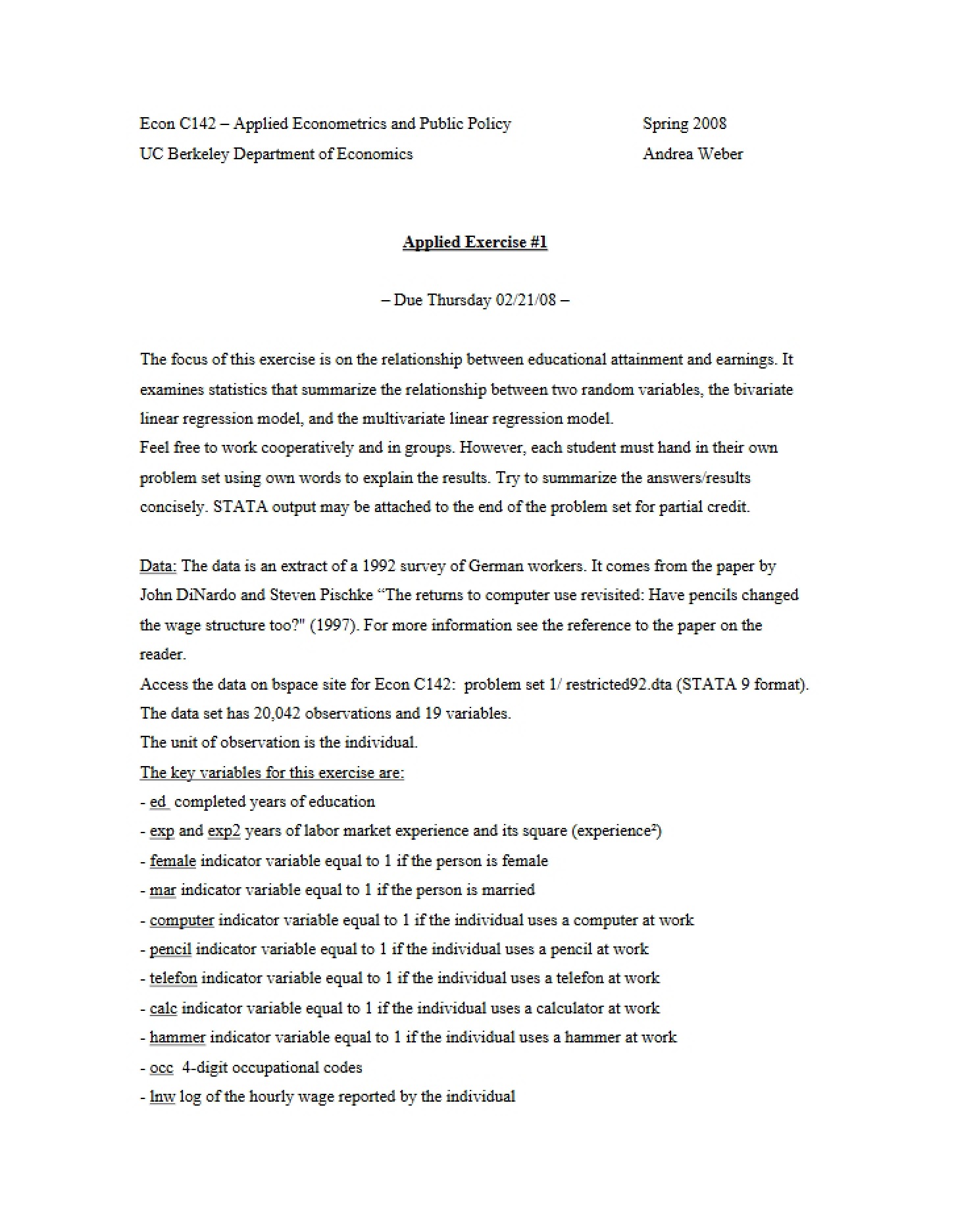
This is an applied exercise for an advanced undergraduate econometrics and public policy course at the University of California, Berkeley. It focuses on applying econometric techniques – specifically instrumental variables and proxy variable approaches – to a real-world economic question: understanding the relationship between education and wages. The exercise utilizes a dataset from the National Longitudinal Survey of Young Men (NLSYM) and requires students to perform regression analysis using statistical software.
Why This Document Matters
This exercise is designed for students enrolled in a rigorous econometrics sequence who are looking to solidify their understanding of how to address common econometric challenges like omitted variable bias. It’s particularly valuable when you’re ready to move beyond theoretical concepts and apply them to a practical dataset. Students preparing for further study in economics, public policy, or related fields will find this exercise beneficial for developing their analytical skills.
Topics Covered
* Instrumental Variables Estimation
* Omitted Variable Bias
* Proxy Variable Approaches
* Regression Analysis (with potential experience and demographic controls)
* Data Analysis using the NLS Young Men Cohort
* Interpreting Regression Coefficients
* Assessing Instrument Relevance and Validity
What This Document Provides
* A detailed description of the dataset, including key variables related to wages, education, family background, and geographic location.
* A series of analytical questions designed to guide you through the process of estimating the return to education.
* A framework for evaluating the potential biases in estimating the effect of education on earnings.
* Opportunities to compare and contrast different econometric techniques for addressing these biases.
* A practical application of econometric methods to a classic labor economics problem.