What This Document Is
This is a detailed set of lecture notes from an advanced Computer-Aided Verification course (ELENG 219C) at the University of California, Berkeley. It focuses on the intricacies of explicit-state model checking, specifically addressing the challenges of verifying liveness properties and the optimizations required to make this technique practical for complex systems. The material builds upon foundational concepts in formal verification and delves into advanced techniques used in industry-standard tools like SPIN.
Why This Document Matters
These notes are invaluable for students and researchers in computer engineering, formal methods, and software verification. They are particularly useful for those seeking a deeper understanding of how to apply model checking to asynchronous systems and overcome the performance bottlenecks that often arise in real-world applications. Individuals preparing for advanced coursework or research projects in related areas will find this a strong resource. It’s best utilized alongside a formal course or independent study, as it assumes a foundational knowledge of logic and automata theory.
Topics Covered
* Deadlock specification and its relationship to liveness properties
* Explicit-state model checking techniques for liveness verification
* The application of Buchi automata in LTL property checking
* Synchronous and asynchronous composition of systems
* Optimizations for model checking performance in practical scenarios
* The relationship between Kripke structures and Buchi automata
* Cycle detection algorithms for verifying properties
What This Document Provides
* A comprehensive exploration of the theoretical underpinnings of explicit-state model checking.
* Detailed explanations of how to translate LTL properties into Buchi automata.
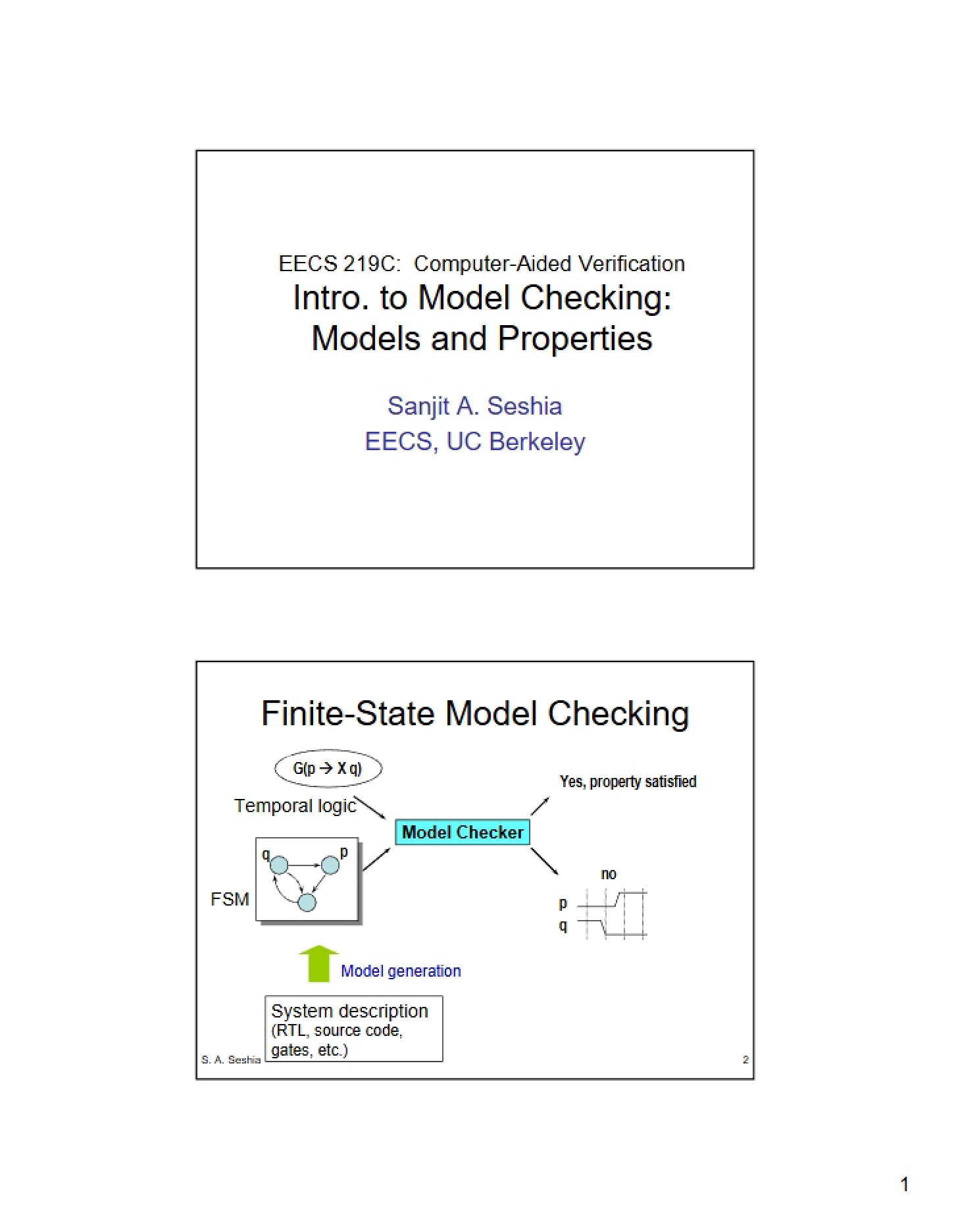
* An overview of the steps involved in verifying system correctness using model checking.
* Insights into the computational challenges associated with model checking and strategies for addressing them.
* A foundation for understanding the inner workings of model checking tools like SPIN.