What This Document Is
This document represents a chapter excerpt focusing on the complex economic issues surrounding externalities – costs or benefits incurred by parties not directly involved in a transaction. Specifically, it delves into methods for controlling externalities, a core topic within Environmental Economics. It’s designed for students seeking a deeper understanding of how economic principles can be applied to environmental challenges. This material builds upon foundational economic concepts and applies them to real-world environmental problems.
Why This Document Matters
This resource is invaluable for students enrolled in Environmental Economics courses, particularly those at the upper undergraduate or introductory graduate level. It’s most beneficial when you’re grappling with the challenges of designing effective environmental policies. Anyone preparing to analyze the economic impacts of pollution, or evaluate different regulatory approaches, will find this chapter a helpful starting point. Understanding these concepts is also crucial for informed participation in environmental debates and policy discussions.
Topics Covered
* Positive Externalities: Examining situations where economic activities generate benefits for unintended recipients.
* Negative Externality Control: Exploring various strategies for mitigating the harmful effects of pollution.
* Polluter Heterogeneity: Considering how differences among polluting entities impact optimal policy design.
* Pollution Trading & Permit Markets: Investigating market-based approaches to pollution reduction.
* The Choice Between Pollution Taxes and Standards: Analyzing the trade-offs of different regulatory instruments.
* The Role of Technology Diffusion in Externality Policy.
What This Document Provides
* A detailed exploration of the economic rationale behind addressing both positive and negative externalities.
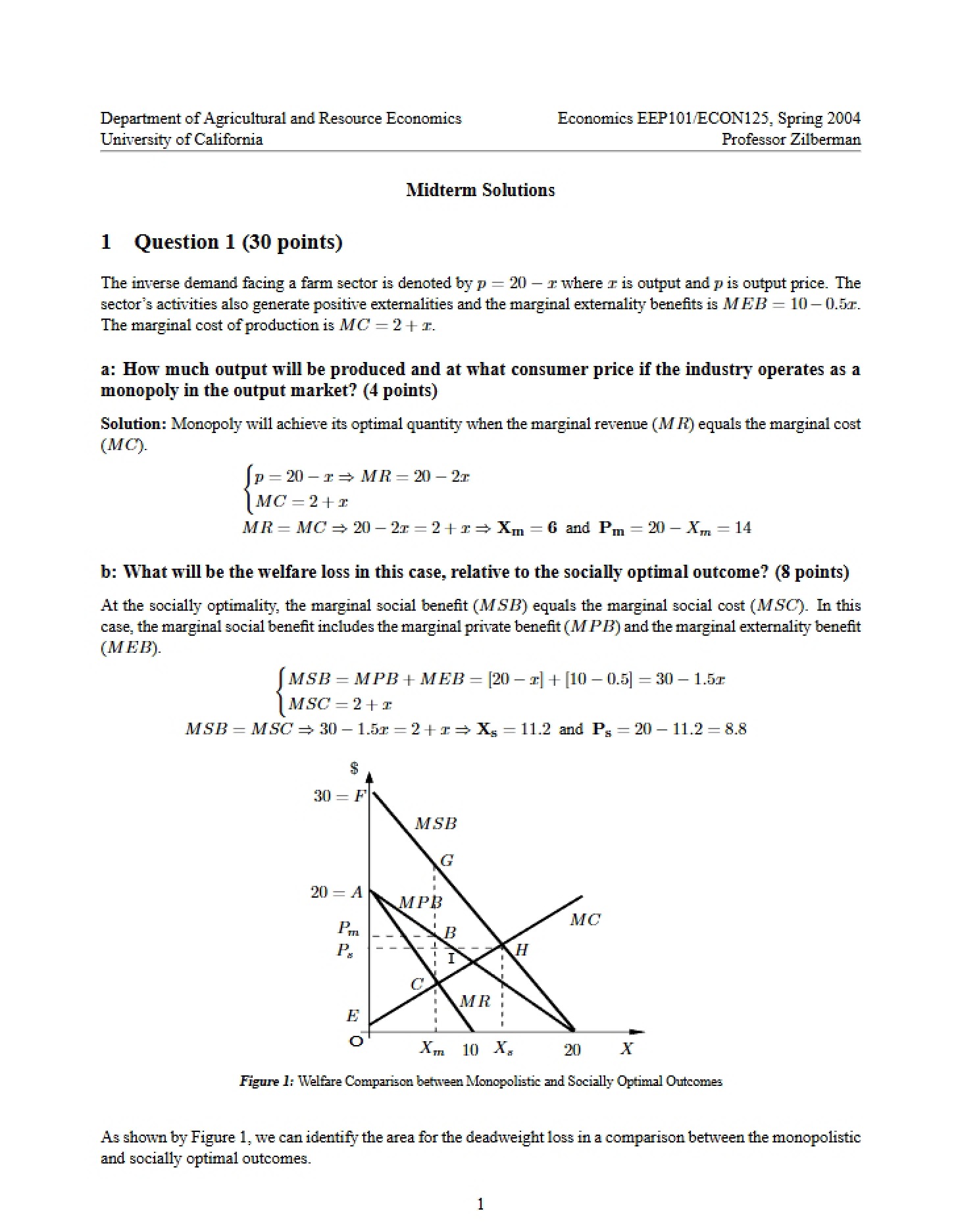
* Frameworks for modeling externalities and determining socially optimal levels of activity.
* Discussions on the practical challenges of implementing externality control policies.
* Conceptual models illustrating the welfare implications of different policy interventions, such as subsidies.
* An introduction to the complexities of designing efficient pollution control strategies when firms have varying abatement costs.