What This Document Is
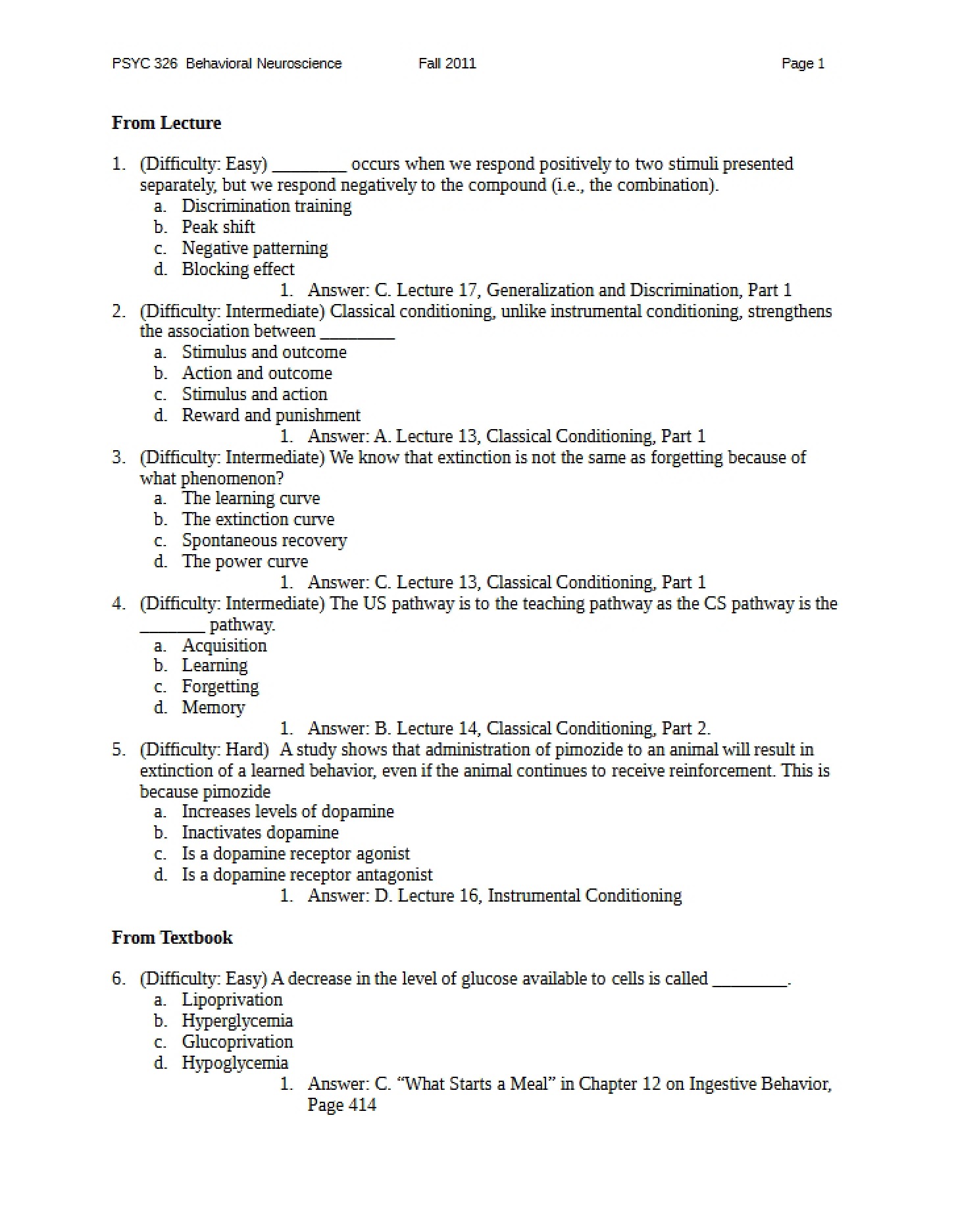
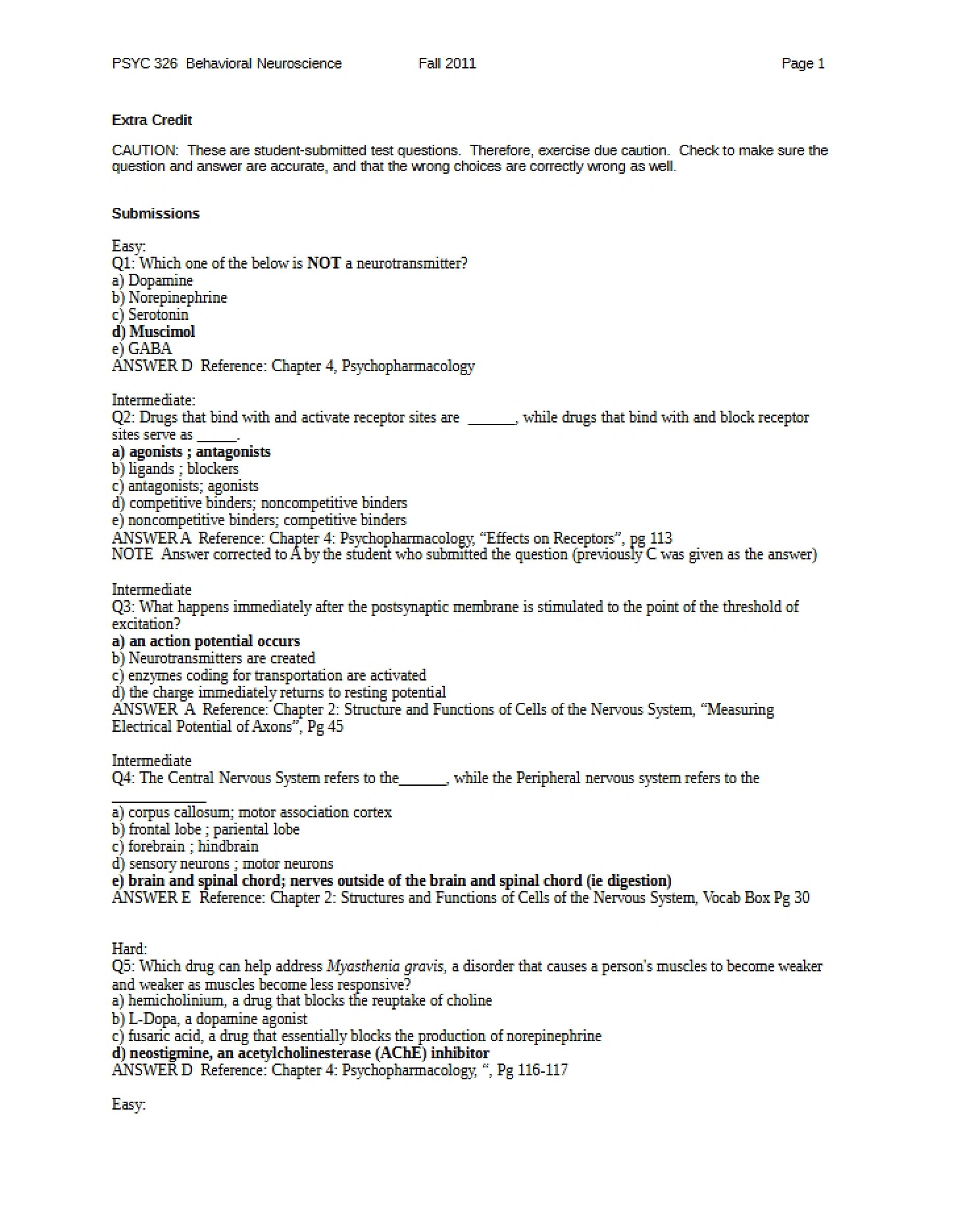
This document contains a collection of practice questions designed to test your understanding of core concepts covered in PSYC 326: Behavioral Neuroscience at the University of Southern California. Specifically, it represents extra credit questions from a Fall 2011 midterm exam. The questions are sourced from both lectures and assigned textbook readings, covering a range of topics within the field. Questions are categorized by difficulty level – easy, intermediate, and hard – to help you gauge your preparedness.
Why This Document Matters
This resource is ideal for students currently enrolled in or preparing for Behavioral Neuroscience courses. It’s particularly useful for self-assessment and identifying areas where further study is needed. Utilizing practice questions is a proven method for solidifying knowledge and improving exam performance. This collection offers insight into the *types* of questions your professor may ask, and the level of detail expected. It’s best used *in conjunction* with your course notes and textbook, not as a replacement for them.
Common Limitations or Challenges
Please be aware that this document represents a specific instance of an extra credit assignment from a past semester. While the core principles of behavioral neuroscience remain consistent, specific emphasis or details covered in lectures may evolve. This resource does *not* provide comprehensive coverage of all course material, nor does it guarantee the exact content of future assessments. It also does not include detailed explanations or worked solutions – it’s designed for self-testing.
What This Document Provides
* A variety of multiple-choice questions spanning key topics in behavioral neuroscience.
* Questions categorized by difficulty level (Easy, Intermediate, Hard).
* Indication of the source material for each question (Lecture or Textbook).
* Topics including classical and instrumental conditioning, brain structures involved in emotion and motivation, and hormonal influences on behavior.
* Questions relating to ingestive behavior and reproductive cycles.
* Insight into the format and style of questions used in this particular course.