What This Document Is
This is a course handout for ESE 520: Probability and Stochastic Processes at Washington University in St. Louis, specifically from the Fall 2015 semester. It functions as a foundational guide outlining the course structure, expectations, and logistical details for students enrolled in this graduate-level engineering course. It details important information regarding grading, schedule adjustments, and resources available to students.
Why This Document Matters
This handout is crucial for anyone considering enrolling in or currently taking ESE 520. It provides a clear understanding of the instructor’s expectations, the course’s prerequisites, and how performance will be evaluated. Students can use this information to assess their preparedness for the course and to plan their study schedule effectively. It’s particularly valuable at the beginning of the semester to ensure alignment with course policies and to understand potential scheduling considerations. Prospective students can use it to determine if the course aligns with their academic goals and background.
Common Limitations or Challenges
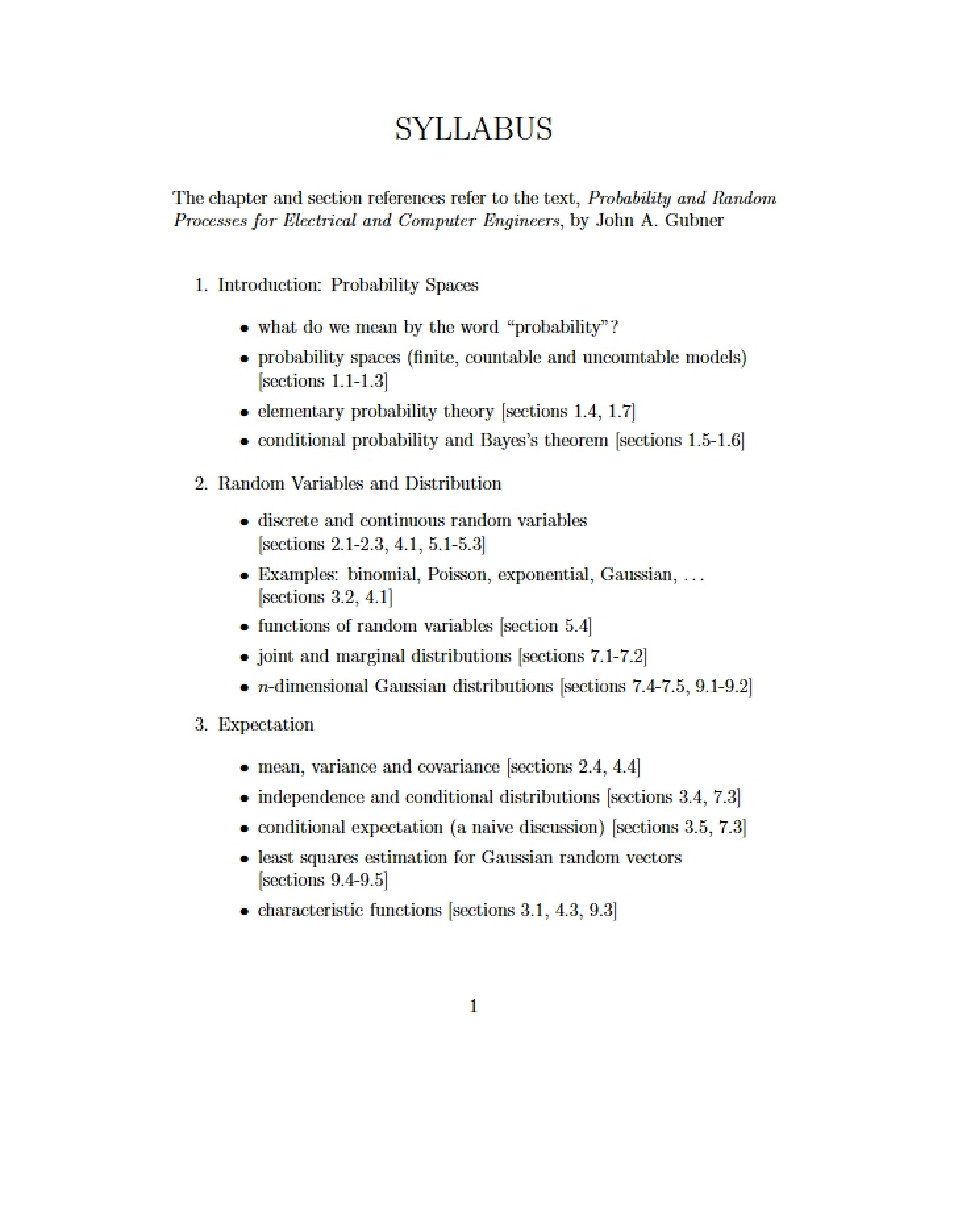
This handout does *not* contain the actual course content – lectures, problem sets, or detailed explanations of probability and stochastic processes concepts. It’s a logistical overview and does not substitute for attending lectures or completing assigned readings. It also doesn’t delve into the specific mathematical proofs or advanced calculus concepts that might be helpful for a deeper understanding, only noting their relevance. The syllabus detailing specific textbook sections is mentioned as being provided *separately*.
What This Document Provides
* Course logistics: Meeting times, location, and instructor contact information.
* Prerequisite knowledge: A list of foundational skills expected of students.
* Grading breakdown: The weighting of exams and homework assignments.
* Important dates: Key exam dates and potential schedule adjustments.
* Course resources: Information about the course webpage and required textbook.
* Course scope: A general overview of the topics covered in the first and second halves of the semester.
* Communication guidelines: Expectations for email correspondence with the instructor.