What This Document Is
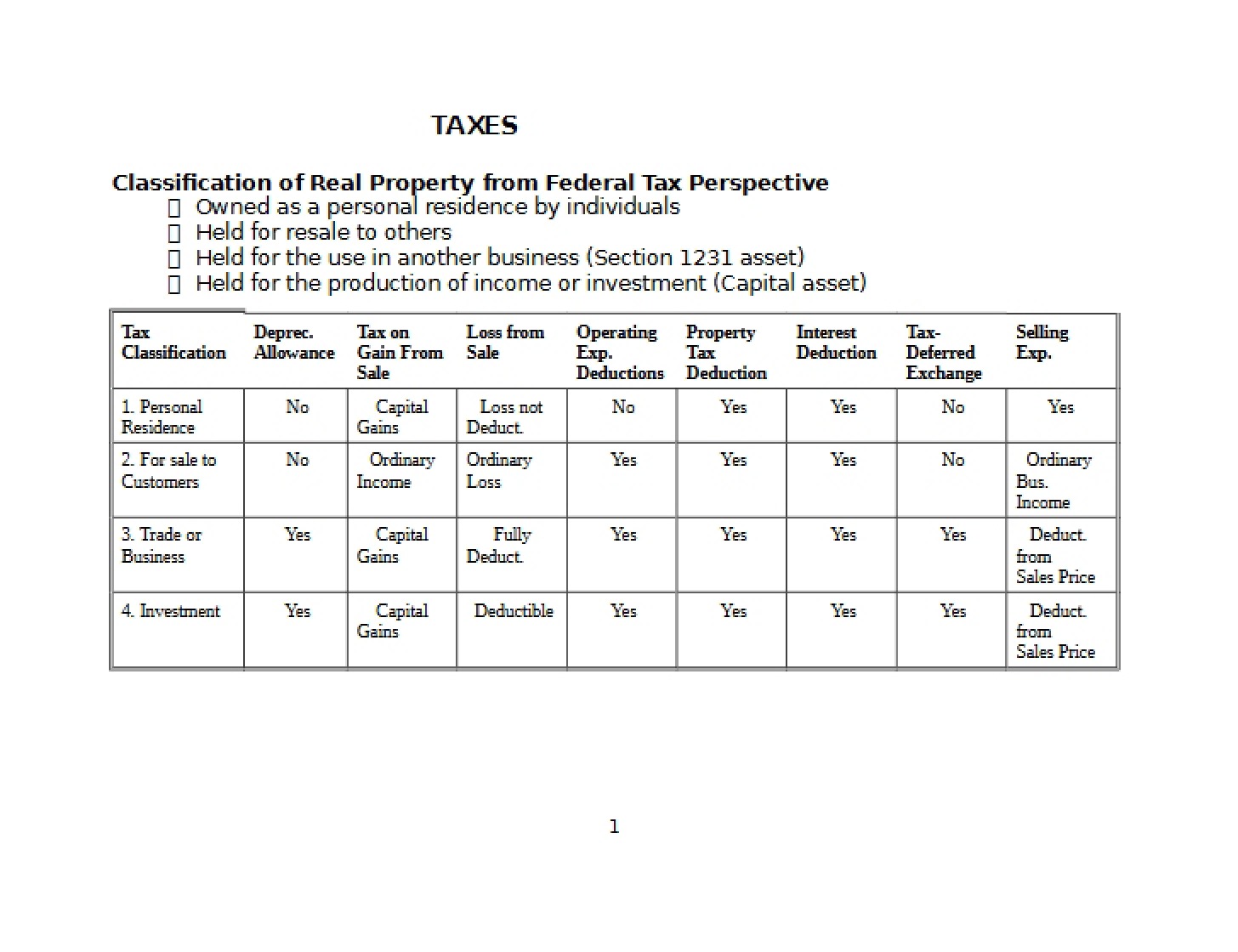
This study guide delves into the complexities of real property classification within the United States Federal tax system. Specifically, it examines how different types of real estate ownership and usage impact tax liabilities for investors. It’s designed for students seeking a comprehensive understanding of the tax implications associated with real estate investment and market analysis. This resource provides a foundational understanding of how real estate is treated for tax purposes, moving beyond simple net operating income calculations.
Why This Document Matters
This guide is essential for MBA students in real estate, finance, and accounting, as well as professionals involved in real estate investment, asset management, and tax planning. Understanding these classifications is crucial for accurate financial modeling, maximizing after-tax returns, and making informed investment decisions. It’s particularly valuable when analyzing potential acquisitions, dispositions, and ongoing property operations. Access to this detailed information will empower you to navigate the intricacies of real estate taxation with confidence.
Topics Covered
* Real Property Classifications for Federal Tax Purposes (personal residence, resale, business use, investment)
* The relationship between Taxable Income and Net Operating Income (NOI)
* Mortgage Deduction Calculations and Amortization Schedules
* Depreciation Methods and Allowances for Real Estate
* Original Cost Basis, Depreciable Basis, and Adjusted Basis calculations
* After-Tax Investment Analysis Framework
* Tax implications of personal property within real estate investments
What This Document Provides
* A detailed overview of how real estate is categorized for federal tax purposes.
* Explanations of key tax concepts related to real estate investment.
* Illustrative frameworks for understanding mortgage deduction calculations.
* A discussion of depreciation schedules applicable to various classes of real estate.
* A structured approach to after-tax investment analysis, including the consideration of operating expenses, interest, and replacement reserves.
* Key definitions and terminology related to real estate tax basis.