What This Document Is
This document represents Module 10 from MBA 280, Real Estate Investment and Market Analysis at the University of California, Berkeley. It’s a comprehensive exploration of the financial and legal frameworks underpinning real estate investments. This module delves into the various ways real estate projects are structured, financed, and owned, moving beyond basic property concepts to examine the intricacies of investment vehicles and risk/return profiles. It’s designed to provide a robust understanding of how to analyze and navigate the complexities of real estate deals.
Why This Document Matters
This module is crucial for MBA students, real estate professionals, and anyone seeking to make informed investment decisions in the real estate market. It’s particularly valuable when evaluating potential projects, understanding the implications of different ownership structures, or seeking to optimize financial arrangements. Whether you’re considering direct property investment, REITs, or participating in joint ventures, the concepts presented here will provide a foundational understanding of the key considerations. It’s best utilized when you need a detailed overview of structuring real estate investments for optimal outcomes.
Topics Covered
* Analysis of risk and return in real estate projects
* Legal forms of real estate organization (individual ownership, co-ownership, corporations, LLCs, REITs)
* Alternative financial structures, including equity and debt financing options
* Ownership structures: fee simple, leasehold, and hybrid arrangements
* Participating debt and convertible debt instruments
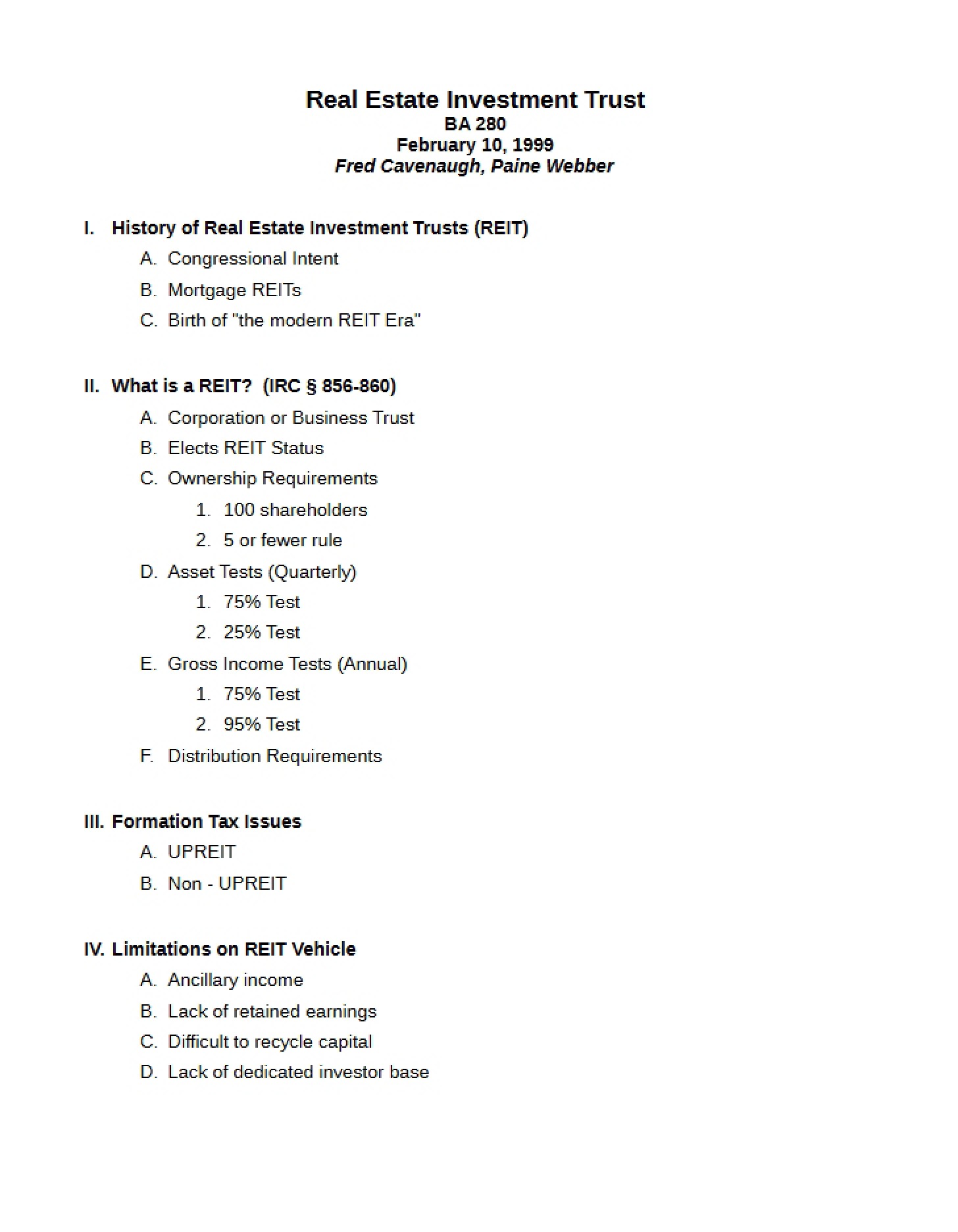
* Detailed examination of Real Estate Investment Trusts (REITs)
* Joint ventures and partnership structures
* Valuation of fee and leasehold interests
* Ground leases and equity leases
What This Document Provides
* A detailed overview of capital structures in real estate transactions, differentiating between equity and debt.
* An exploration of various ownership structures and their associated implications.
* A framework for understanding the nuances of alternative financial arrangements, including leveraged equity and hybrid structures.
* Insight into specialized financing techniques like participating debt and convertible debt.
* A comparative analysis of different REIT types and their investment characteristics.
* A foundation for evaluating the financial aspects of leasehold interests and ground leases.