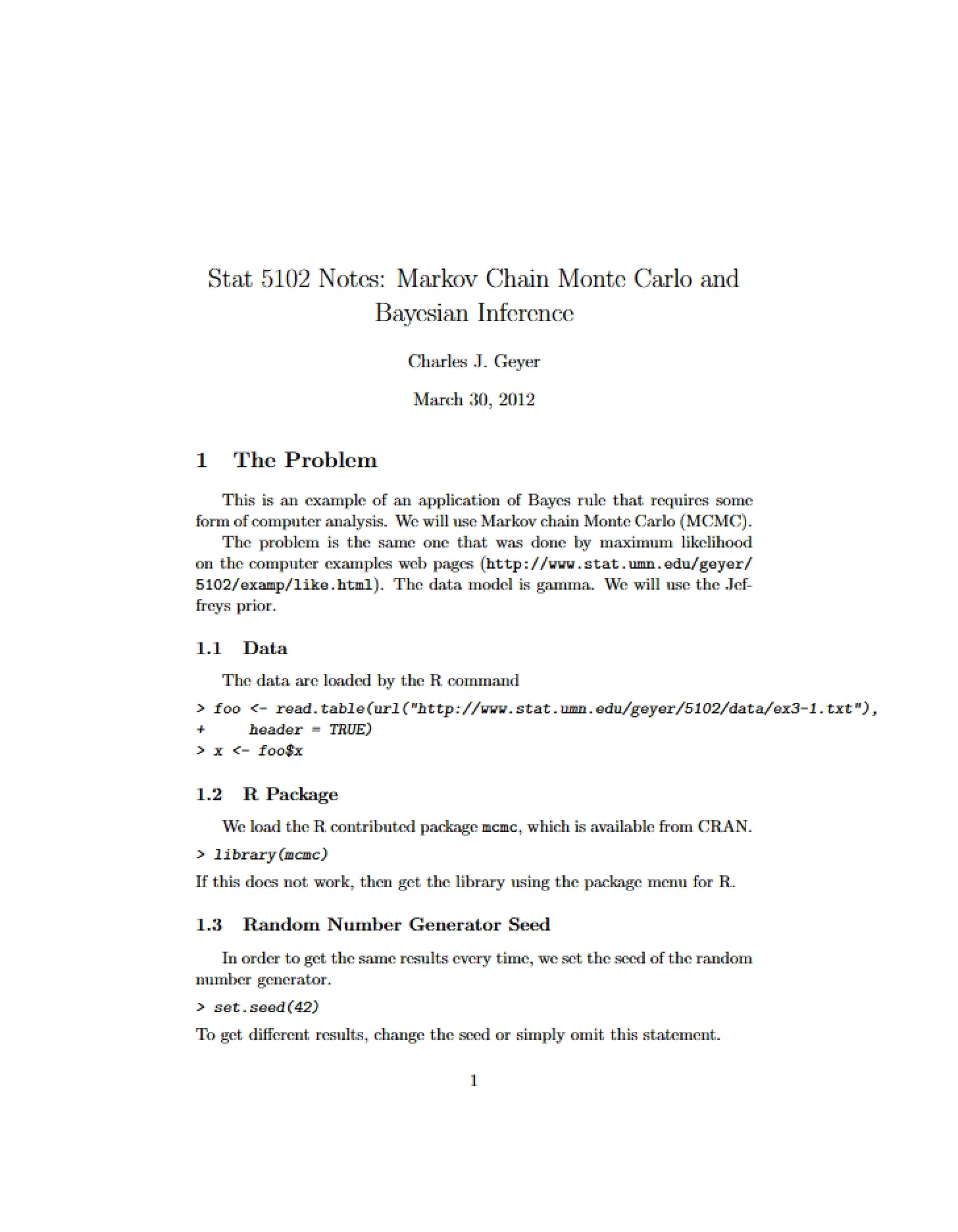
What This Document Is
This is a final assessment for STAT 5102: Theory of Statistics II, offered at the University of Minnesota Twin Cities. It’s a comprehensive examination designed to evaluate a student’s understanding of advanced statistical concepts covered throughout the course. The assessment focuses on theoretical foundations and application of statistical methods, requiring both computational skills and conceptual reasoning. It’s formatted as a closed-book, closed-notes exam with a time constraint, allowing only limited formula sheets and provided reference materials.
Why This Document Matters
This resource is invaluable for students currently enrolled in or preparing for a rigorous graduate-level statistics course, particularly one focusing on statistical theory. It’s most beneficial as a practice tool *after* completing coursework and studying key concepts. Students aiming to solidify their understanding of Bayesian inference, estimation theory, hypothesis testing, and sufficient statistics will find this particularly useful. Reviewing a completed assessment (available with purchase) can reveal the expected depth of knowledge and the types of problems encountered in the course.
Common Limitations or Challenges
This assessment does *not* include detailed explanations of the solutions. It presents problems requiring application of statistical theory, but doesn’t offer step-by-step guidance. It also doesn’t serve as a substitute for attending lectures, completing assignments, or engaging with course materials. Accessing this assessment alone won’t guarantee success; it’s a tool to be used in conjunction with a broader study plan. It represents a specific exam from a past semester and may not perfectly reflect the content of future assessments.
What This Document Provides
* A range of problems covering core topics in statistical theory, including prior distributions and posterior distributions.
* Questions relating to finding Jeffreys priors for specific distributions.
* Application of linear regression models and associated statistical inference.
* Problems focused on sufficient statistics and their properties.
* Exercises involving maximum likelihood estimation and asymptotic distributions.
* Scenarios requiring the application of geometric and Cauchy distributions.
* Tasks involving method of moments estimation.
* A clear indication of the point value assigned to each problem, reflecting its relative importance.