What This Document Is
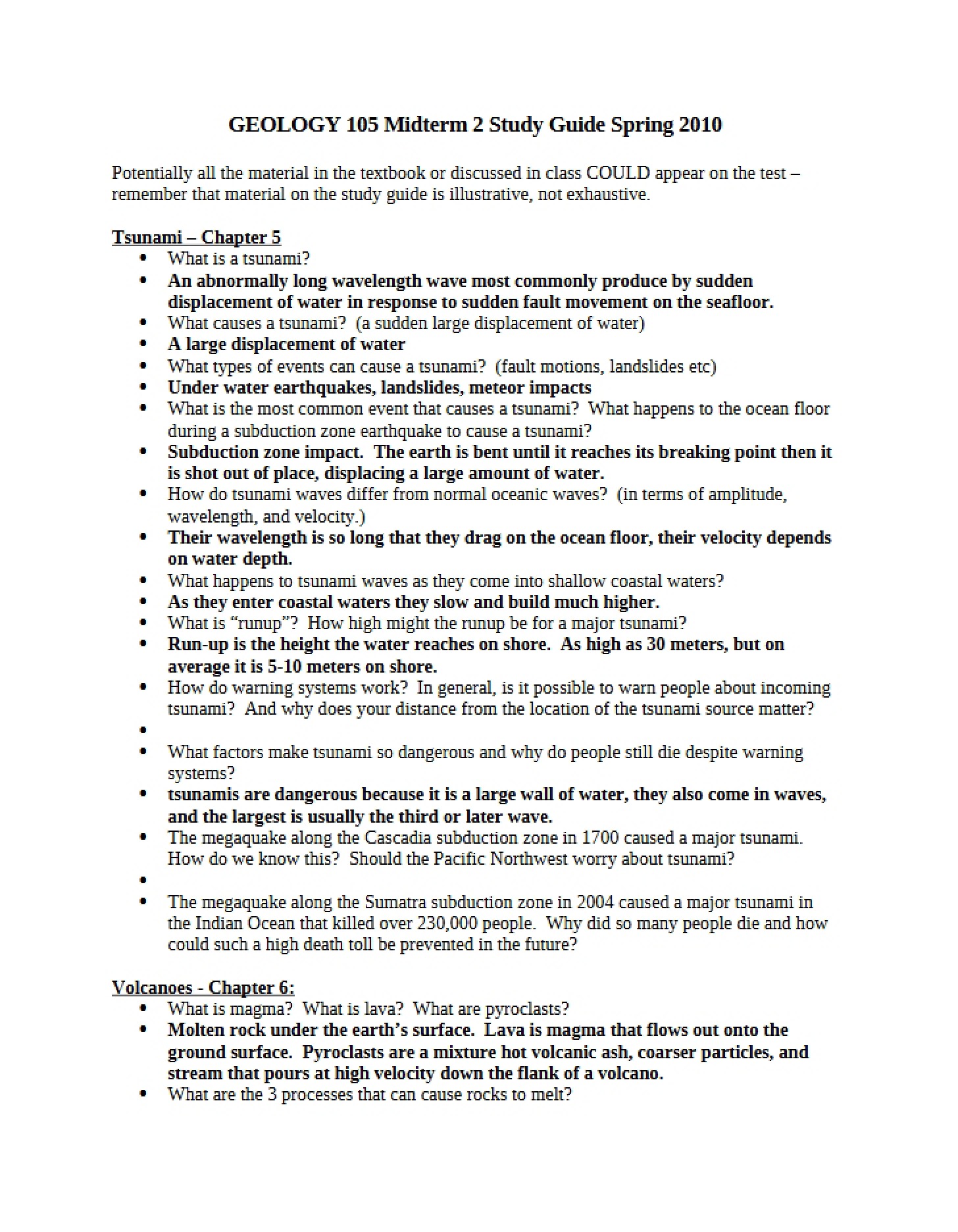
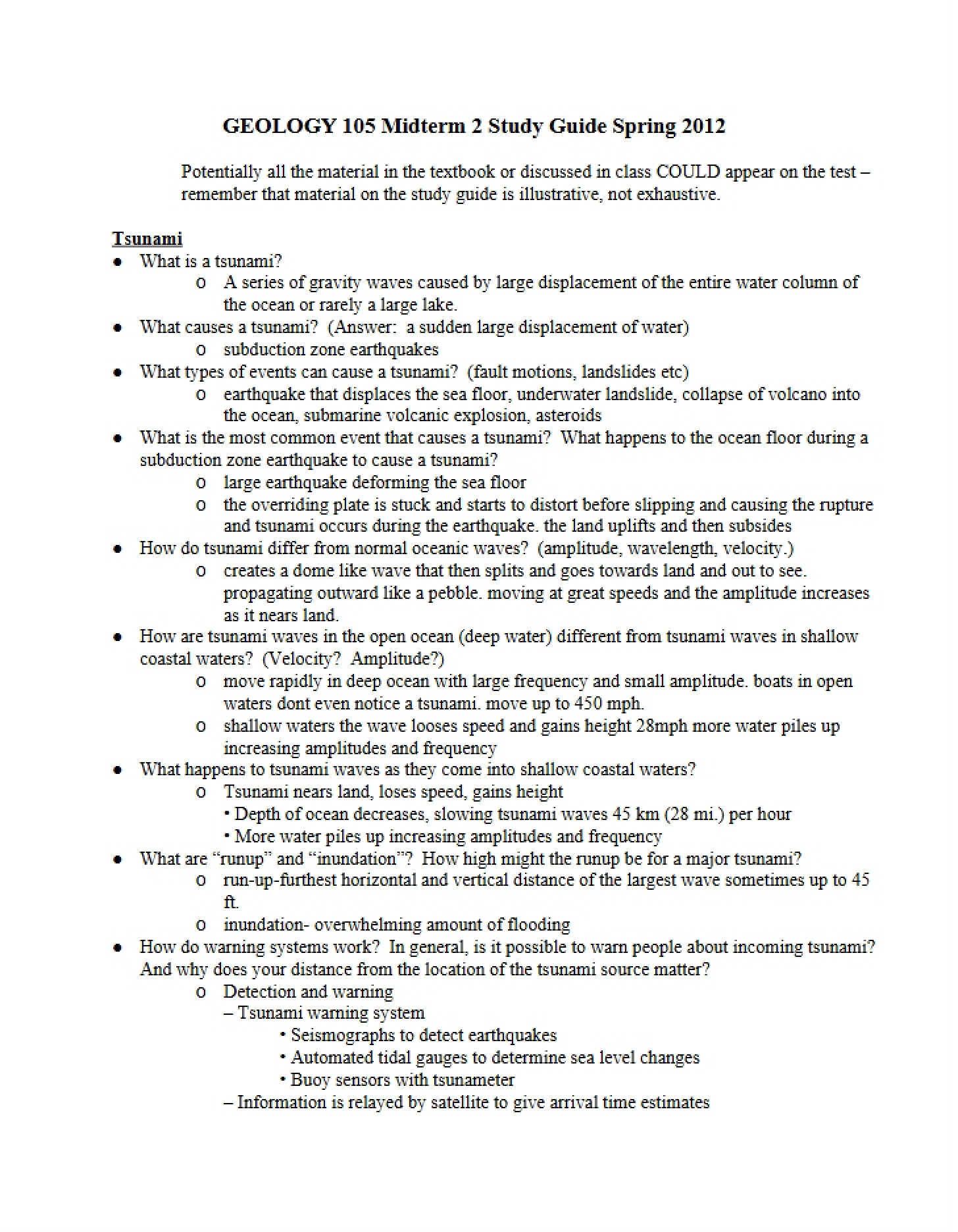
This is a study guide designed to help students prepare for the first midterm exam in GEOL 105: Geological Hazards and Their Human Impact at the University of Delaware. It outlines the key concepts and areas of focus that will be assessed on the exam, offering a roadmap for effective studying. The exam format will include both multiple-choice and short-answer questions.
Why This Document Matters
This resource is invaluable for any student enrolled in GEOL 105 who wants to maximize their performance on the midterm. It’s best used in conjunction with lecture notes, textbook readings, and other course materials as a focused review tool. Understanding the scope of the exam and prioritizing study efforts are crucial for success, and this guide provides that foundation. It’s particularly helpful when you’re ready to consolidate your knowledge and identify areas needing further attention.
Topics Covered
* Foundations of Hazard Assessment: Recurrence intervals, probability, and financial risk related to natural disasters.
* Earth Materials: Minerals, rocks (igneous, sedimentary, metamorphic), and their compositions.
* Geologic Time: Principles of relative and absolute dating, the Geological Time Scale, and the age of the Earth.
* Plate Tectonics: Earth’s layers, continental drift, sea-floor spreading, plate boundaries, and associated geological features.
* Earthquakes: Causes, fault types, stress regimes, and the elastic rebound theory.
What This Document Provides
* A comprehensive overview of the topics that *could* be included on the midterm exam.
* Key terminology and concepts related to geological hazards and Earth processes.
* Guidance on the types of knowledge expected – from definitions to understanding relationships between geological phenomena.
* A framework for understanding how different geological concepts connect to real-world hazards.
* References to relevant course materials, such as lecture PowerPoints and textbook chapters.