What This Document Is
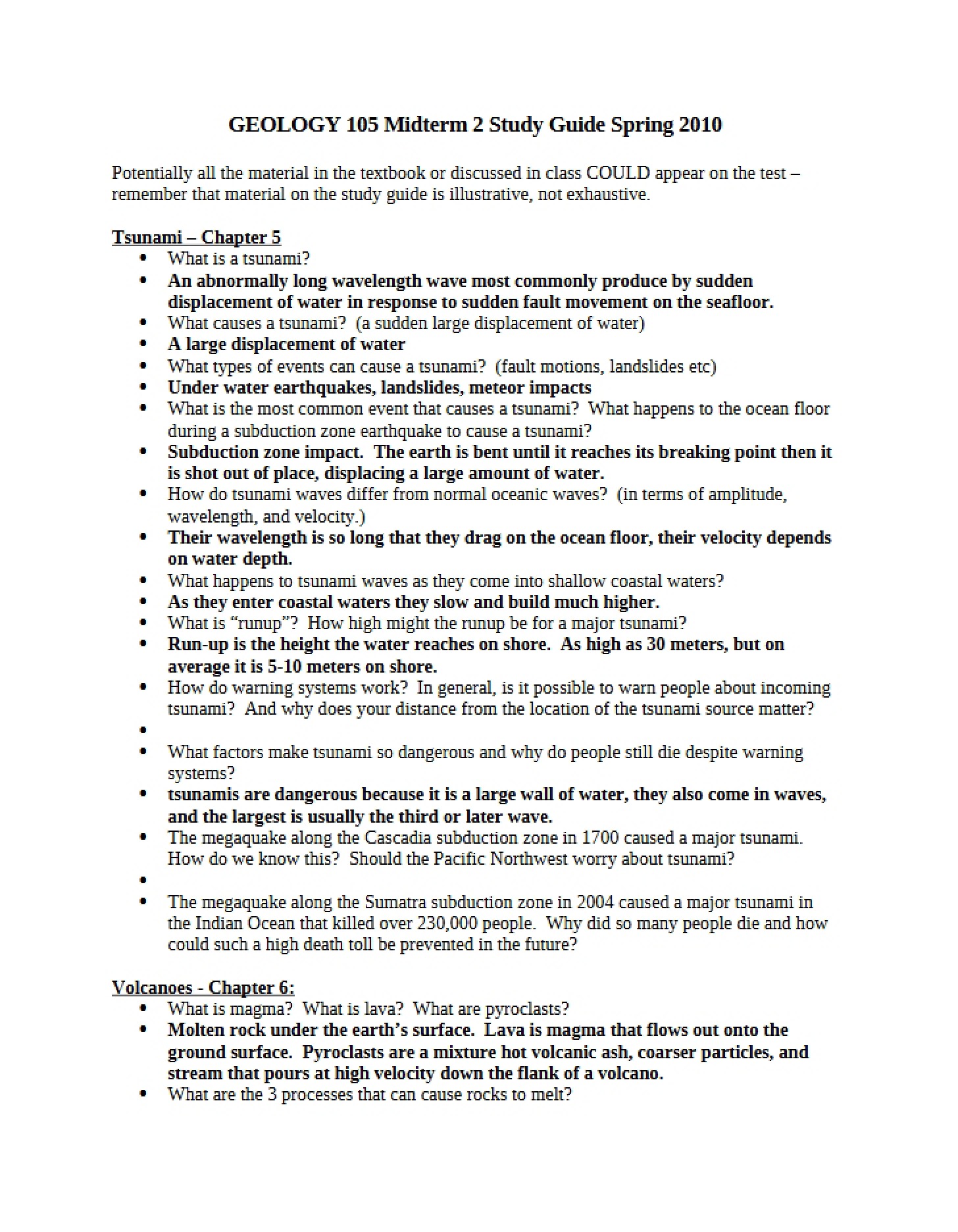
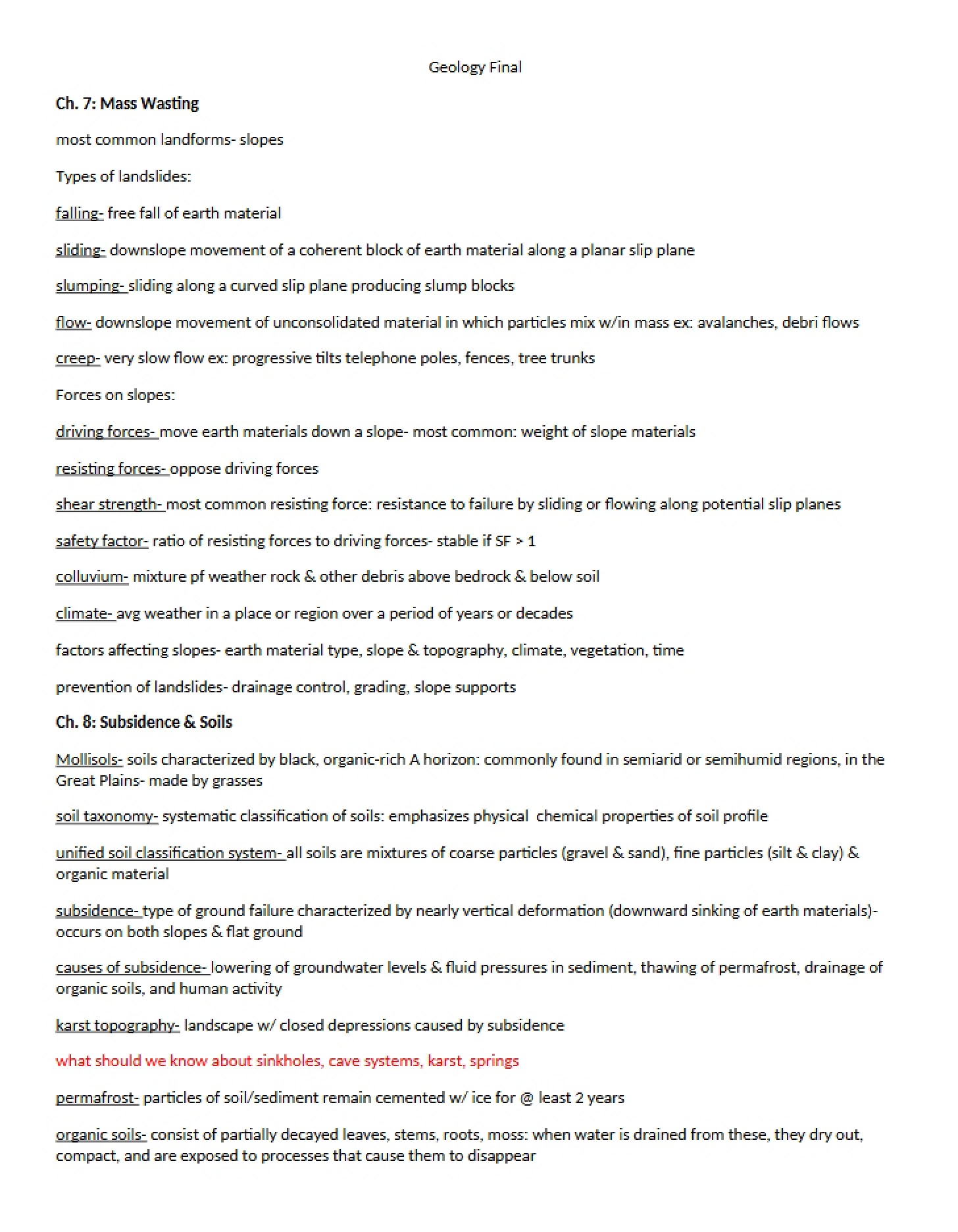
This is a comprehensive study guide designed to help students prepare for the first exam in GEOL 105: Geological Hazards and Their Human Impact at the University of Delaware. It consolidates key concepts and information presented in lectures, readings, quizzes, and reading assessments, offering a focused review of foundational geological principles. This guide is intended to be a primary resource for exam preparation, helping students identify areas for further study and reinforce their understanding of core course material.
Why This Document Matters
This study guide is invaluable for any student enrolled in GEOL 105 who wants to maximize their performance on the first exam. It’s particularly useful for students who benefit from a structured review of course content, or those who want to ensure they’ve covered all essential topics. Utilizing this guide *before* the exam will help you assess your knowledge, identify areas needing further attention, and approach the exam with confidence. It’s best used in conjunction with your lecture notes and assigned readings.
Topics Covered
* Foundations of Natural Hazards: Definitions, risk assessment, and the factors influencing disaster events.
* Earth Materials: The composition, properties, and formation of minerals and rocks (igneous, sedimentary, and metamorphic).
* Geologic Time: Understanding the geologic timescale, major eras, and methods of dating Earth’s history.
* Plate Tectonics: Earth’s structure, the theory of plate tectonics, plate boundaries, and associated geological phenomena.
* Earthquakes: Fault types, seismic waves, earthquake cycles, and methods for locating and measuring earthquakes.
What This Document Provides
* A clear outline of the exam’s scope, including the specific materials covered (lectures, readings, quizzes).
* A focused review of key concepts related to Earth’s structure, composition, and dynamic processes.
* Guidance on interpreting geological data, such as maps, figures, and graphs.
* A framework for understanding the relationship between geological processes and natural hazards.
* References to important terminology and foundational principles discussed throughout the course.