What This Document Is
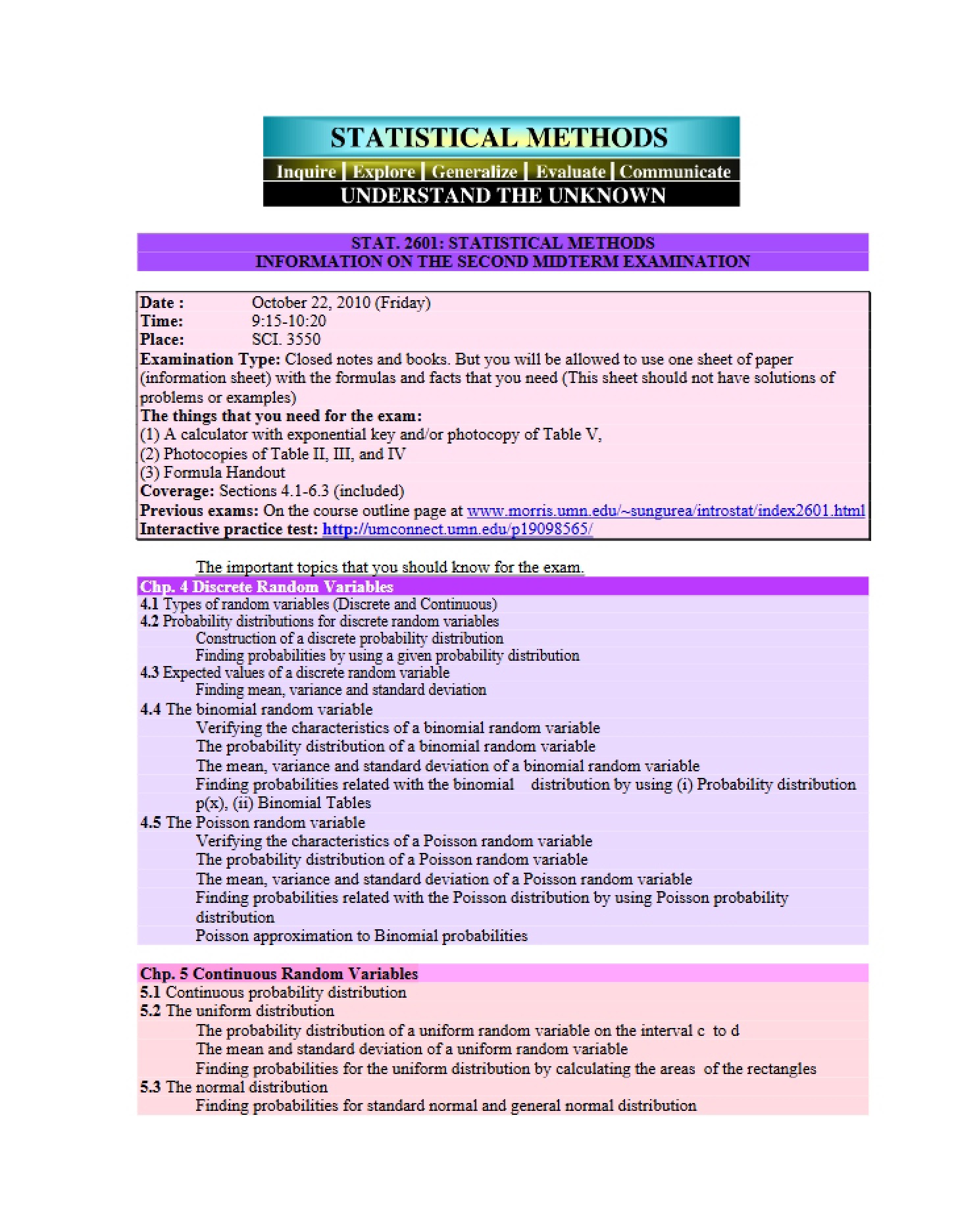
This document provides detailed information regarding the first midterm examination for STAT 2601: Statistical Methods at the University of Minnesota Twin Cities. It outlines the scope of the exam, specifying the topics and concepts that will be assessed. It’s designed to help students prepare strategically for a closed-note, closed-book assessment, while allowing the use of a self-prepared formula sheet.
Why This Document Matters
This resource is crucial for any student enrolled in STAT 2601 who wants to maximize their performance on the first midterm. It’s best utilized *before* beginning intensive studying, to understand the overall focus of the exam, and then again during final review to ensure all key areas have been covered. Students who carefully review this information will have a clearer understanding of where to concentrate their study efforts and what types of questions to anticipate. It’s particularly helpful for students who benefit from a clear roadmap of assessment criteria.
Common Limitations or Challenges
This document does *not* contain practice questions, worked examples, or solutions to any potential exam problems. It will not teach you the material; rather, it directs you to the areas you need to master. It also doesn’t provide specific details on the difficulty level or weighting of individual topics – only a broad overview of the content covered. Access to the full document is required to understand the specific nuances and application of these concepts as tested on the exam.
What This Document Provides
* A clear statement of the exam format (closed-note/book with permitted materials).
* A list of core statistical concepts that will be evaluated, including descriptive statistics (measures of central tendency and dispersion).
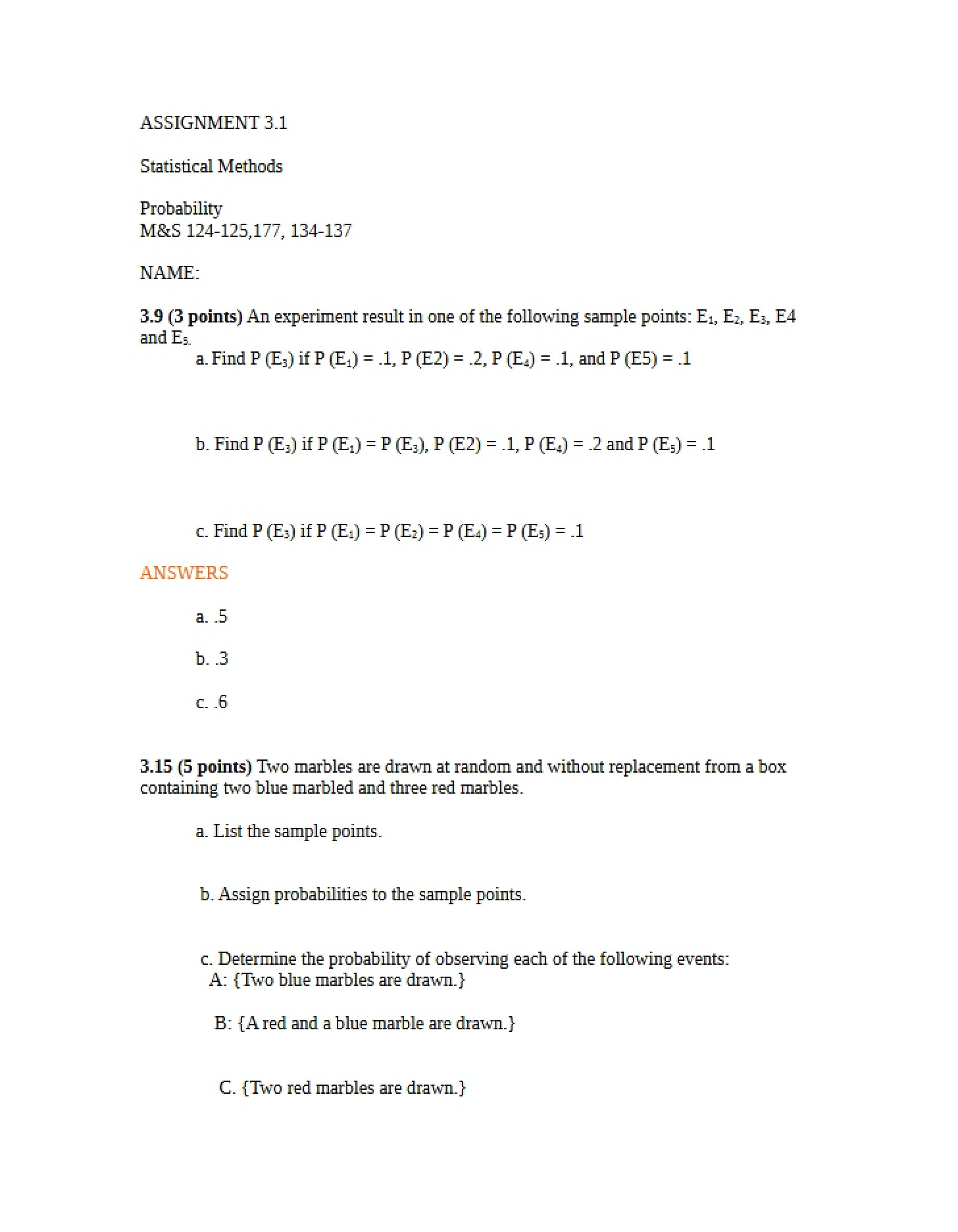
* Identification of key topics related to probability, including complementary events and random sampling.
* An overview of topics related to data representation and interpretation, such as stem-and-leaf displays and boxplots.
* Guidance on applying statistical principles to real-world scenarios, as illustrated through example datasets.
* Information on assessing the independence of events.
* Discussion of accuracy and probability in the context of diagnostic testing.
* Overview of system reliability and component failure probabilities.