What This Document Is
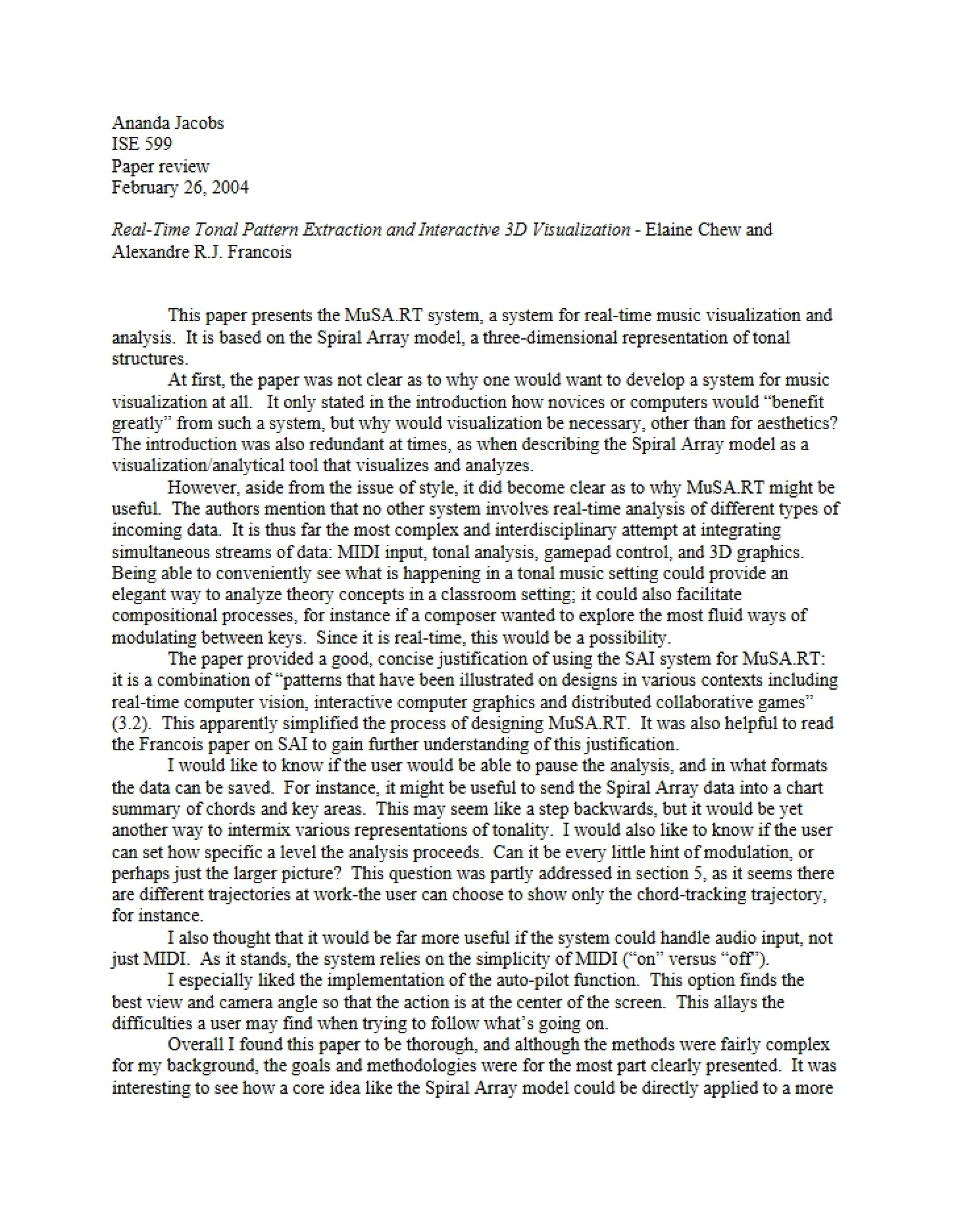
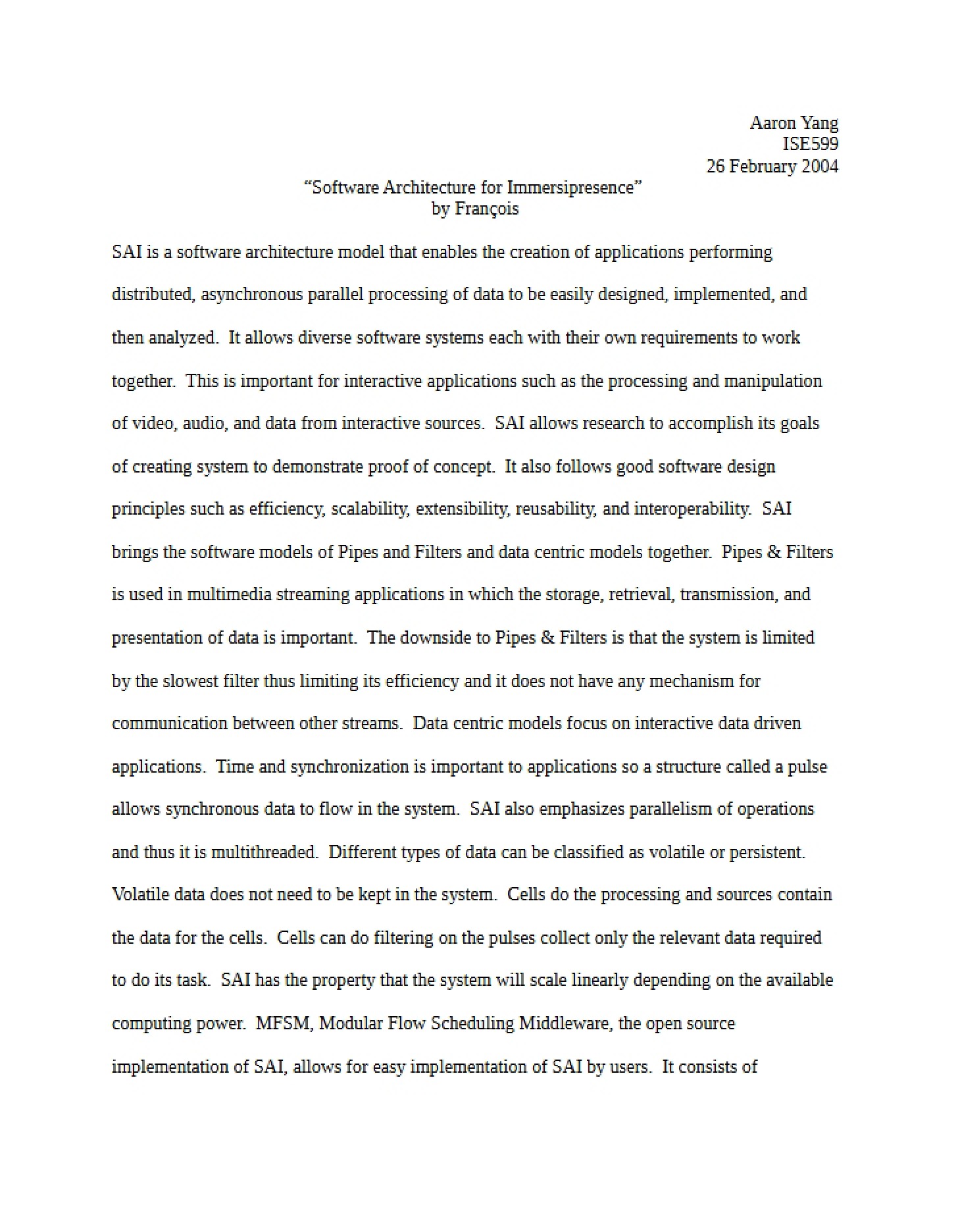
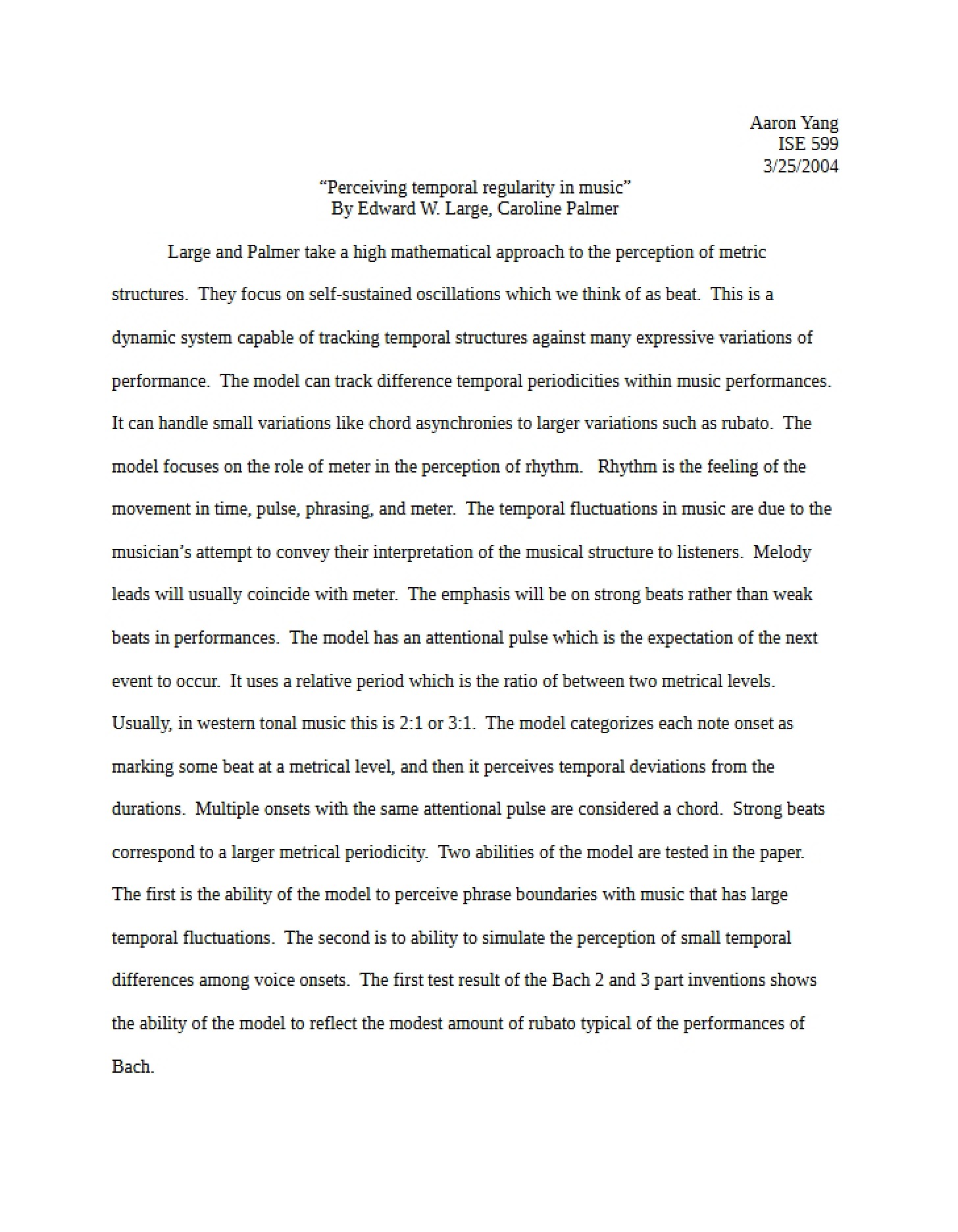
This document represents a detailed exploration of software architecture principles applied to the field of music perception and cognition. Specifically, it focuses on a software architecture model called SAI (likely an acronym for a system detailed within), designed for building complex systems capable of real-time analysis and interactive visualization of musical elements – particularly tonal patterns. It appears to be a record of a course, ISE 599 at the University of Southern California, centered around engineering approaches to understanding how we perceive and process music. The material delves into the transition from theoretical algorithms to fully implemented, functional software systems.
Why This Document Matters
This resource would be invaluable for graduate students in fields like computer science, electrical engineering, music technology, or cognitive science who are interested in the intersection of these disciplines. It’s particularly relevant for those undertaking projects involving real-time audio processing, interactive music systems, or the computational modeling of musical cognition. Professionals developing audio analysis tools, interactive performance systems, or music information retrieval applications will also find the concepts presented here highly applicable. It’s best utilized when you need a robust framework for designing and implementing high-performance audio software.
Common Limitations or Challenges
This document is a focused exploration of a specific architectural model (SAI) and its application to music-related tasks. It does *not* provide a comprehensive introduction to all software architecture styles, nor does it offer a complete tutorial on music theory or signal processing. The material assumes a foundational understanding of programming concepts, data structures, and potentially some familiarity with digital signal processing. It’s also important to note that the document focuses on the *design* and *architecture* of systems, rather than providing ready-made code or step-by-step implementation guides.
What This Document Provides
* A detailed overview of the SAI software architecture model.
* Discussion of architectural properties crucial for performance and scalability.
* Exploration of the relationship between algorithmic design and practical software implementation.
* Considerations for system requirements, including efficiency, real-time processing, and low latency.
* Insights into the design of systems for interactive rendering and synchronization of audio and visual elements.
* A roadmap for building complex software systems, from initial concepts to integrated systems.
* Analysis of a specific system, MuSART, as a case study for the SAI model.