What This Document Is
This resource is a comprehensive study guide designed to accompany advanced undergraduate coursework in Engineering Thermodynamics. Specifically, it focuses on the foundational principles of energy, energy transfer, and applying these concepts to general energy analysis of thermodynamic systems. It’s structured as a PowerPoint-based guide, likely intended for use alongside a core textbook – *Thermodynamics: An Engineering Approach* by Cengel and Boles. The material delves into the various forms of energy a system can possess and how energy crosses system boundaries.
Why This Document Matters
This study guide is invaluable for students enrolled in courses like AME 310 at the University of Southern California, or similar Thermodynamics I courses at other institutions. It’s particularly helpful for those who benefit from a visual and organized approach to complex concepts. Students preparing for quizzes, exams, or seeking to solidify their understanding of energy principles will find this resource beneficial. It’s best utilized *during* the study process, as a companion to lectures and textbook readings, rather than as a standalone learning tool.
Common Limitations or Challenges
This guide does not offer fully worked-out problem solutions or step-by-step calculations. It focuses on the *theory* behind energy analysis, providing a framework for understanding the concepts. It assumes a base level of understanding of physics and calculus. While it explains different modes of energy transfer, it doesn’t provide specific application scenarios or detailed engineering examples. Access to the corresponding textbook is highly recommended for a complete understanding.
What This Document Provides
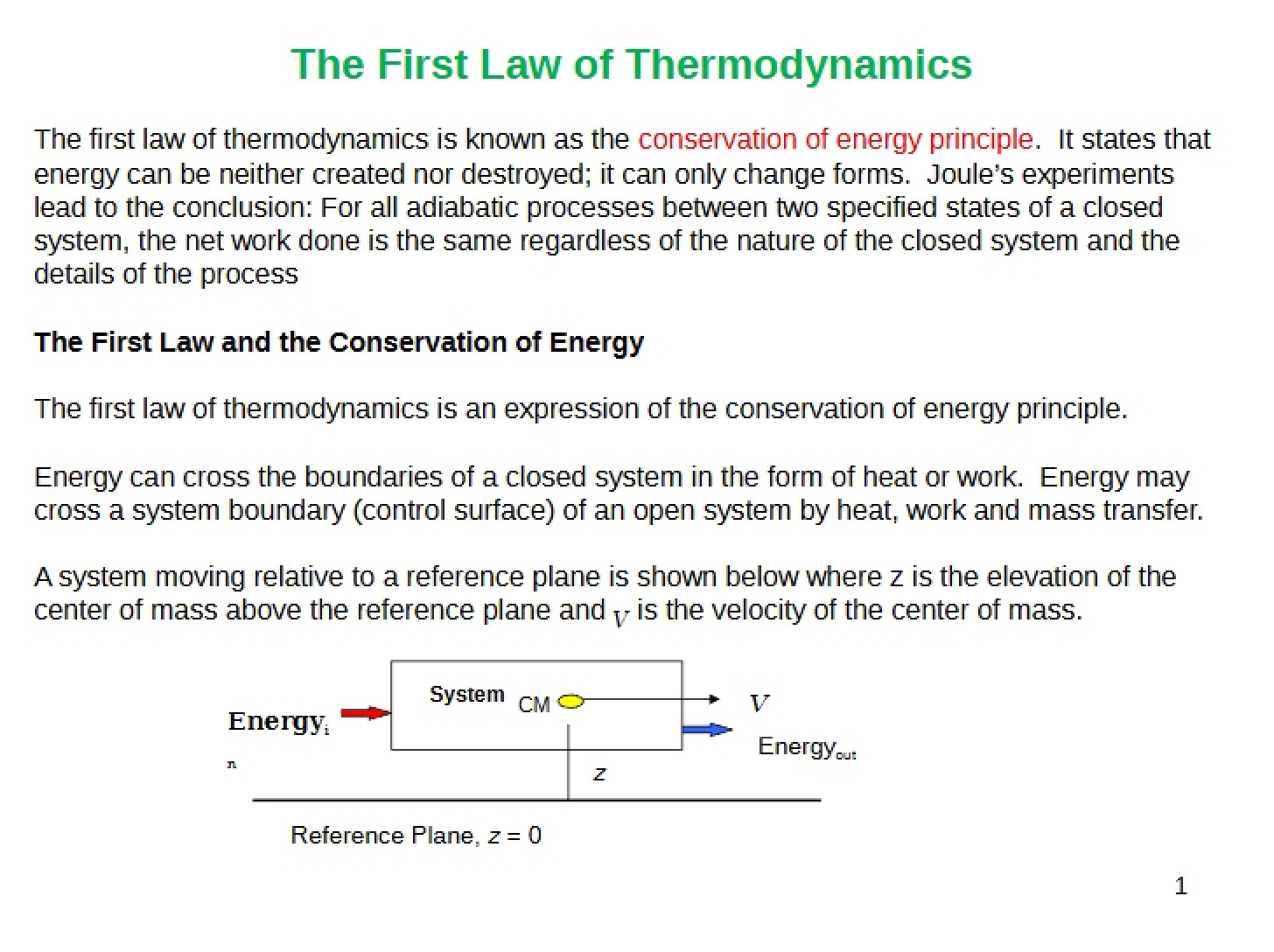
* A detailed overview of different energy forms (thermal, mechanical, kinetic, potential, etc.).
* Explanation of internal energy and its relationship to molecular activity.
* Discussion of energy transfer mechanisms – heat and work – and their characteristics.
* Clarification of the distinction between state properties and path functions.
* An introduction to the classical sign convention for heat and work.
* Definitions of key terms related to energy and energy transfer.
* Framework for understanding total energy calculations for systems.