What This Document Is
This document provides a foundational exploration of the First Law of Thermodynamics, a core principle within the field of engineering thermodynamics. It’s designed for students tackling introductory thermodynamics coursework, specifically those studying energy conservation and its application to various systems. The material focuses on establishing a robust understanding of how energy interacts with and within physical systems, laying the groundwork for more complex thermodynamic analyses.
Why This Document Matters
This resource is invaluable for students in AME 310 at the University of Southern California, or any similar engineering thermodynamics I course. It’s best utilized when first encountering the First Law, as a study aid during problem set completion, or as a reference when building a conceptual understanding of energy transfer mechanisms. Students who struggle with visualizing energy changes or applying the conservation of energy principle will find this particularly helpful. It’s a strong starting point before diving into detailed calculations and specific applications.
Common Limitations or Challenges
This document focuses on the *principles* underlying the First Law. It does not offer step-by-step solutions to thermodynamic problems, nor does it provide worked examples demonstrating its application to real-world engineering scenarios. It also doesn’t delve into advanced topics like different types of thermodynamic processes or detailed property evaluations. It’s a conceptual foundation, not a complete problem-solving guide.
What This Document Provides
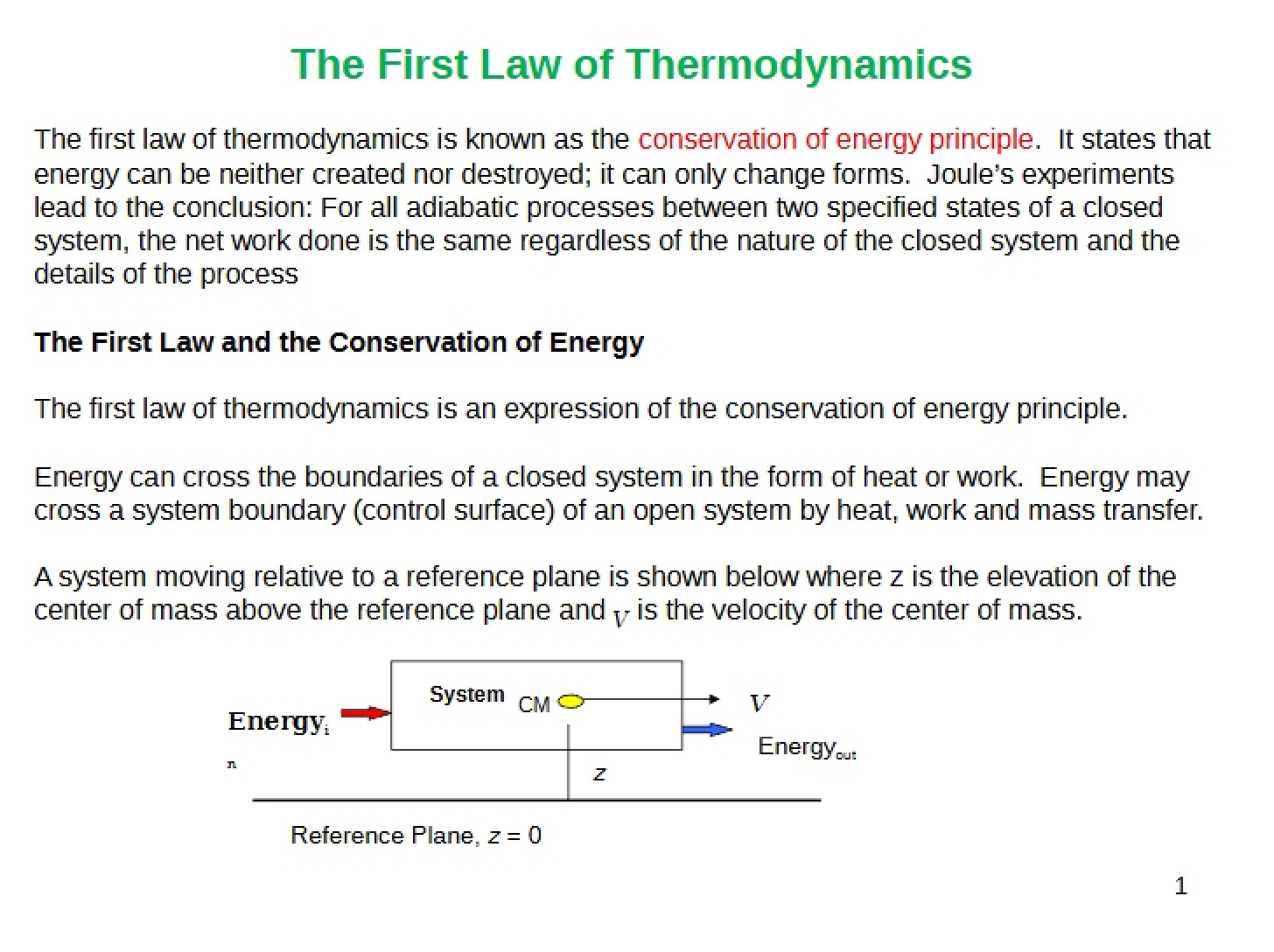
* A clear articulation of the First Law of Thermodynamics and its connection to the conservation of energy.
* An explanation of how energy crosses system boundaries through heat and work.
* Definitions of key terms like internal energy, kinetic energy, and potential energy.
* A discussion of the different mechanisms of energy transfer, including heat, work, and mass flow.
* An overview of how to express the First Law for both closed and open systems.
* A framework for understanding the concept of stored energy within a system.