What This Document Is
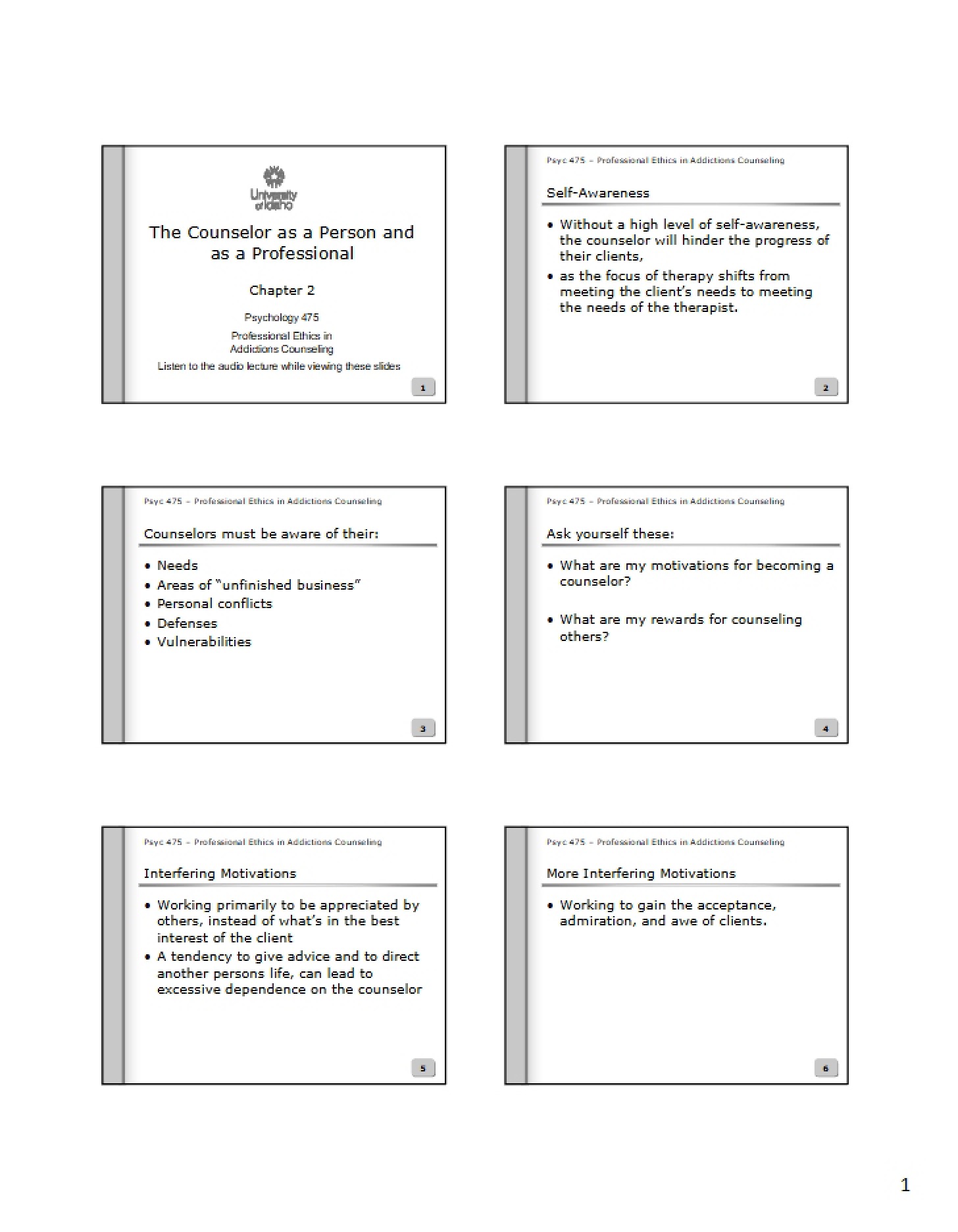
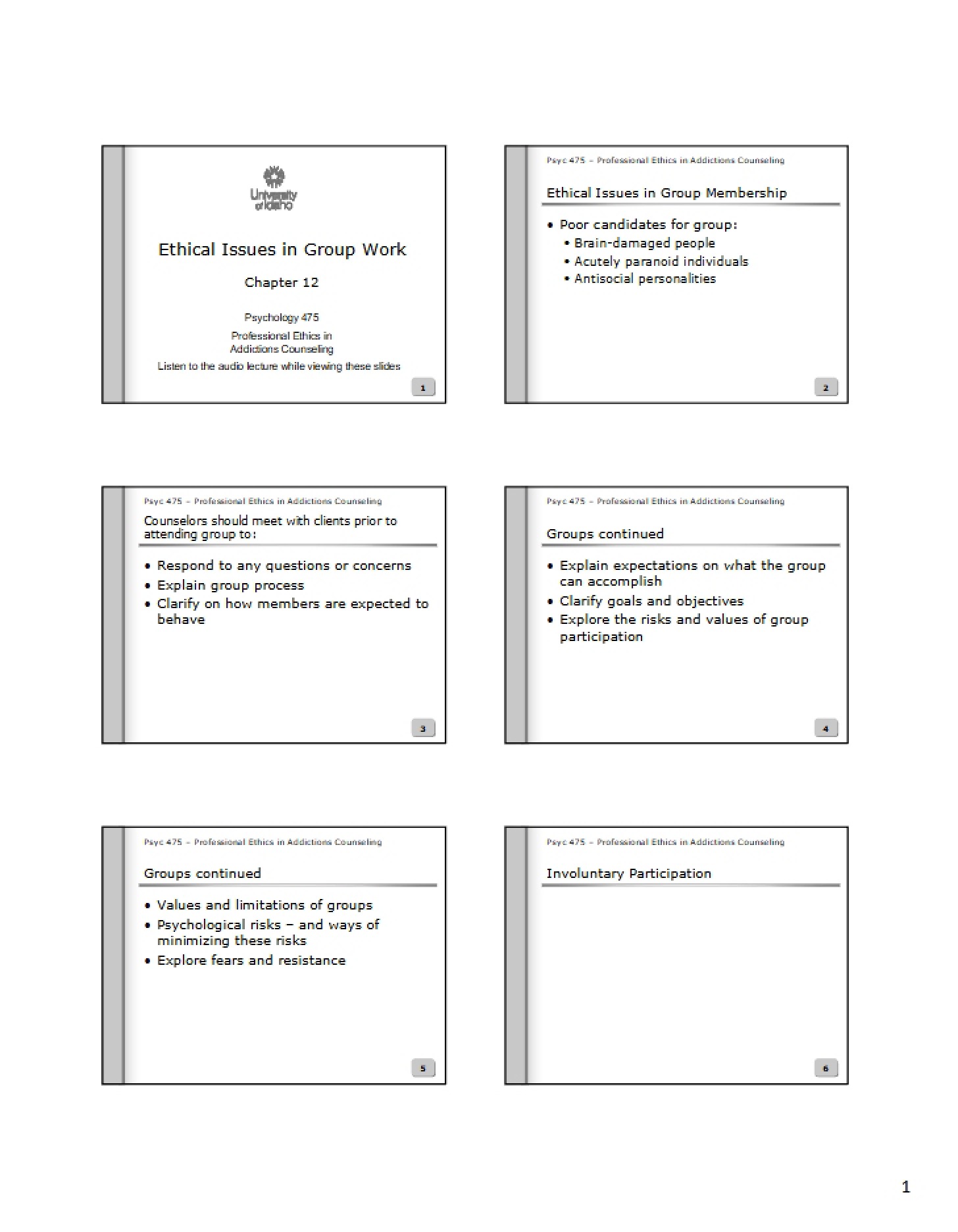
This resource is a comprehensive overview of ethical considerations within the helping professions, specifically tailored for students and professionals in addictions counseling. It delves into the complexities of ethical practice, moving beyond simple adherence to codes and exploring the nuanced challenges faced in real-world scenarios. This material is designed to support learning in PSYC 475: Professional Ethics in Addictions Counseling at the University of Idaho.
Why This Document Matters
This resource is invaluable for anyone preparing for a career in addictions counseling, social work, psychology, or related fields. It’s particularly helpful for students navigating coursework on professional ethics, and for practicing counselors seeking to deepen their understanding of responsible and virtuous practice. Use this material to build a strong foundation for ethical decision-making and to prepare for the complex situations encountered when working with vulnerable populations. It’s a crucial step towards becoming a confident and ethically sound practitioner.
Topics Covered
* The limitations of relying solely on ethical codes.
* The interplay between personal values, professional standards, and institutional policies.
* Distinctions between law, ethics, morality, and values.
* Different levels of ethical practice – from mandatory compliance to aspirational ideals.
* Core virtues essential for ethical professionals.
* Fundamental moral principles guiding ethical conduct.
* The importance of professional monitoring and accountability.
* Exploring principle ethics versus virtue ethics.
What This Document Provides
* Key definitions of essential terms related to ethical decision-making.
* An exploration of the historical purpose and function of codes of ethics.
* A framework for understanding the complexities of ethical dilemmas.
* Insight into the characteristics of virtuous professionals.
* An overview of core virtues like prudence, integrity, and benevolence.
* Discussion of basic moral principles such as autonomy and nonmaleficence.
* A foundation for navigating ethical challenges in the field of addictions counseling.