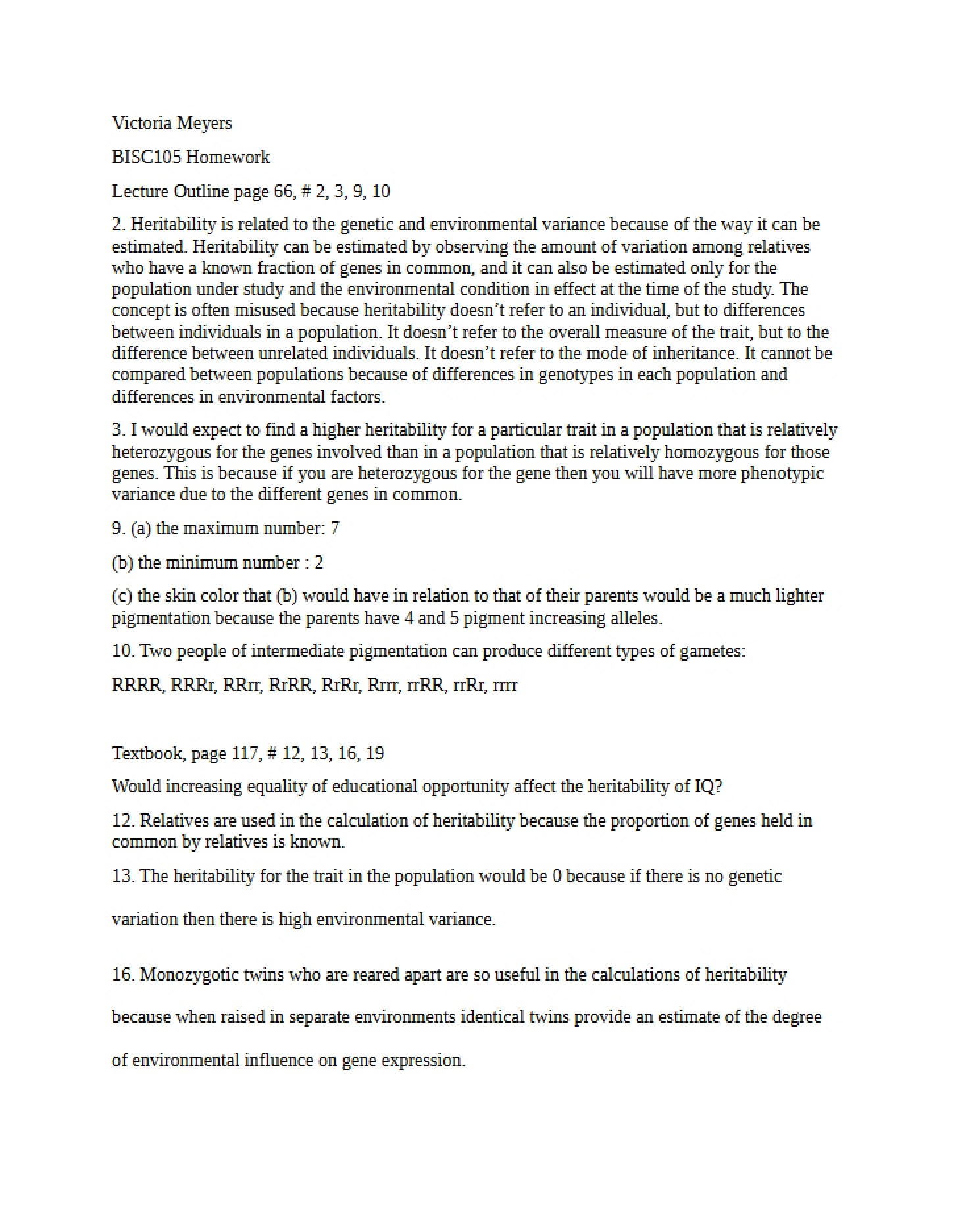
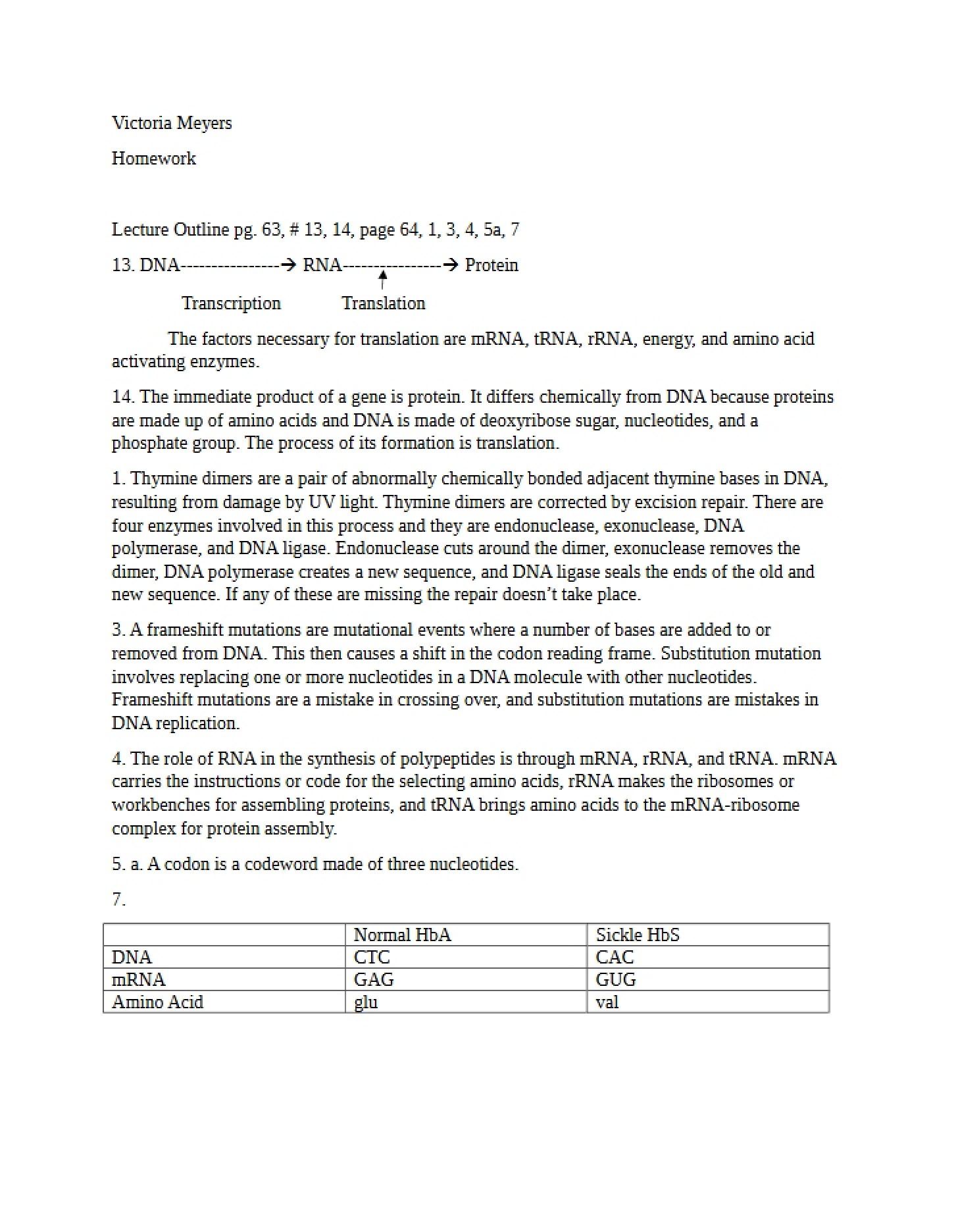
What This Document Is
This is a completed homework assignment for BISC 105: Human Heredity and Development at the University of Delaware. It demonstrates an application of core concepts discussed in lectures and assigned readings, requiring students to synthesize information and articulate their understanding of complex biological processes. The assignment focuses on key principles within the field of genetics and cellular division.
Why This Document Matters
This resource is particularly valuable for students enrolled in BISC 105 who are seeking to solidify their grasp of heredity and development. It can be used as a study aid to check your own work, identify areas where your understanding may differ, and gain insight into how course material is applied to specific questions. Reviewing a completed assignment can be a powerful learning tool *after* you’ve made a good faith effort to complete the work yourself.
Topics Covered
* Mitosis and Meiosis: Comparative analysis of stages and processes.
* Causes and consequences of chromosomal abnormalities (specifically triploidy).
* The significance of genetic variation mechanisms (crossing over and independent assortment).
* Karyotype analysis and interpretation.
* Cytokinesis and its role in cell division.
* Non-disjunction and its impact on chromosomal number.
* Cell cycle phases and terminology (including G0 phase).
What This Document Provides
* Detailed responses to assigned questions from the course textbook and lecture outlines.
* A demonstration of how to connect lecture material with textbook readings.
* An example of how to articulate complex biological concepts in a clear and concise manner.
* A framework for understanding the relationships between different stages of cell division.
* Illustrative examples relating to chromosomal structure and function.