What This Document Is
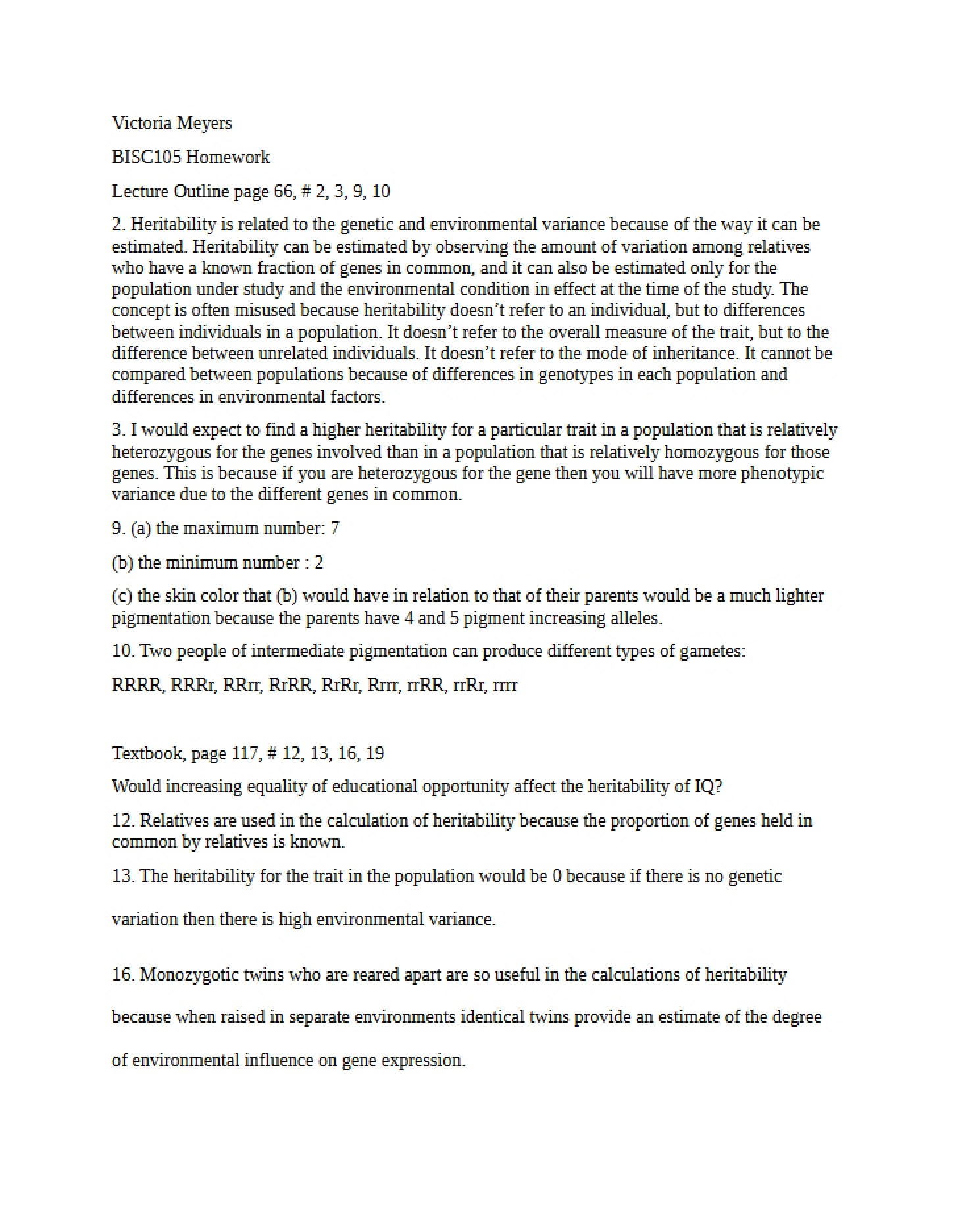
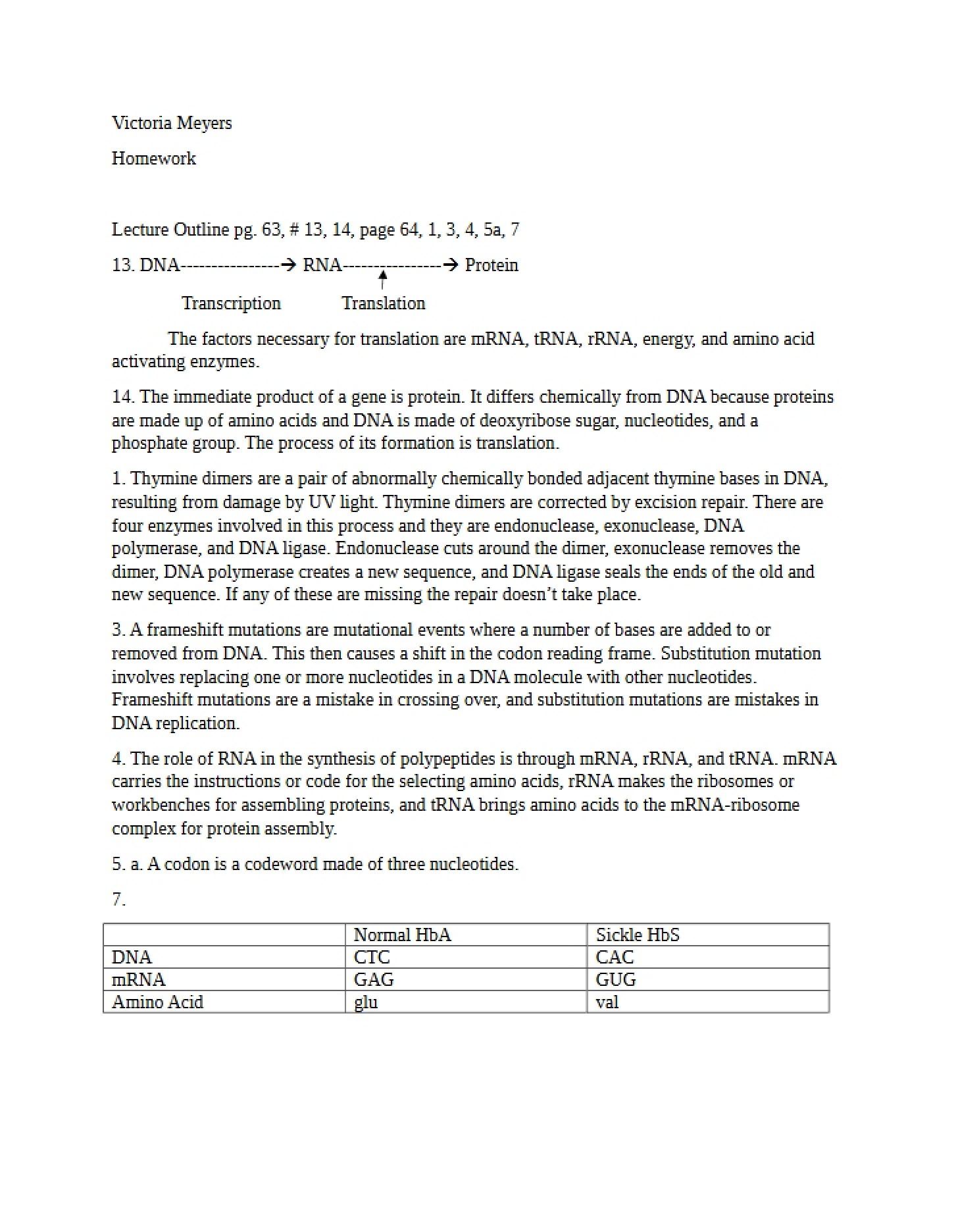
This is a completed homework assignment for BISC 105: Human Heredity and Development at the University of Delaware. It demonstrates application of core concepts related to chromosomal abnormalities, inheritance patterns, and the factors influencing genetic outcomes. This assignment builds upon lecture material and assigned textbook readings, requiring students to synthesize information and articulate their understanding of complex genetic principles. It serves as a valuable example of how course material is assessed and the expected level of detail in responses.
Why This Document Matters
This assignment is particularly helpful for students currently enrolled in BISC 105, or those taking a similar introductory human genetics course. It’s beneficial to review when preparing for quizzes and exams, or when working through your own homework problems. Studying a completed assignment can clarify expectations, highlight key areas of focus, and provide insight into effective approaches to answering challenging questions. It’s especially useful if you’re looking for a model response to guide your own work – though remember, independent learning is key!
Topics Covered
* Chromosomal Abnormalities (Aneuploidy, Polyploidy, Trisomy, Triploidy)
* Non-disjunction and Parental Origin
* Specific Chromosomal Syndromes (Edwards Syndrome)
* Gamete Formation and Aneuploidy Risk
* Maternal Selection and its Role in Embryonic Development
* Chromosomal Mutations (Deletion, Duplication, Inversion, Translocation)
* Karyotype Analysis and Interpretation
What This Document Provides
* Detailed responses to assigned homework questions.
* Application of concepts from lecture outlines and textbook chapters.
* Illustrative examples relating to human genetic conditions.
* A demonstration of how to connect theoretical knowledge to specific scenarios.
* A framework for understanding the complexities of chromosomal inheritance.