What This Document Is
This document represents a detailed set of worked solutions for Homework Four from EE 555: Broadband Network Architectures, offered at the University of Southern California in Spring 2012. It’s designed as a companion resource to the original assignment, offering a deep dive into the problem-solving approaches used for core concepts within the course. The material focuses on practical application of theoretical knowledge related to network design and analysis.
Why This Document Matters
This resource is invaluable for students currently enrolled in, or revisiting, a broadband network architectures course. It’s particularly helpful when you’re looking to solidify your understanding of complex topics by examining how problems are approached and structured. It can be used as a study aid during exam preparation, a reference when tackling similar assignments, or a tool for identifying areas where your own understanding might need strengthening. Students who benefit most will be those actively working through related coursework and seeking a deeper comprehension of the subject matter.
Common Limitations or Challenges
It’s important to remember that this document provides solutions *specifically* for Homework Four from a particular semester. While the underlying principles are broadly applicable, the specific scenarios and network configurations addressed within may differ from your own assignments. This resource is not a substitute for actively engaging with the course material, attending lectures, or developing your own problem-solving skills. It assumes a foundational understanding of the concepts presented in the course.
What This Document Provides
* Detailed explorations of network flooding scenarios and packet generation analysis.
* Applications of CIDR notation and subnetting techniques.
* Illustrative examples of routing table construction and updates.
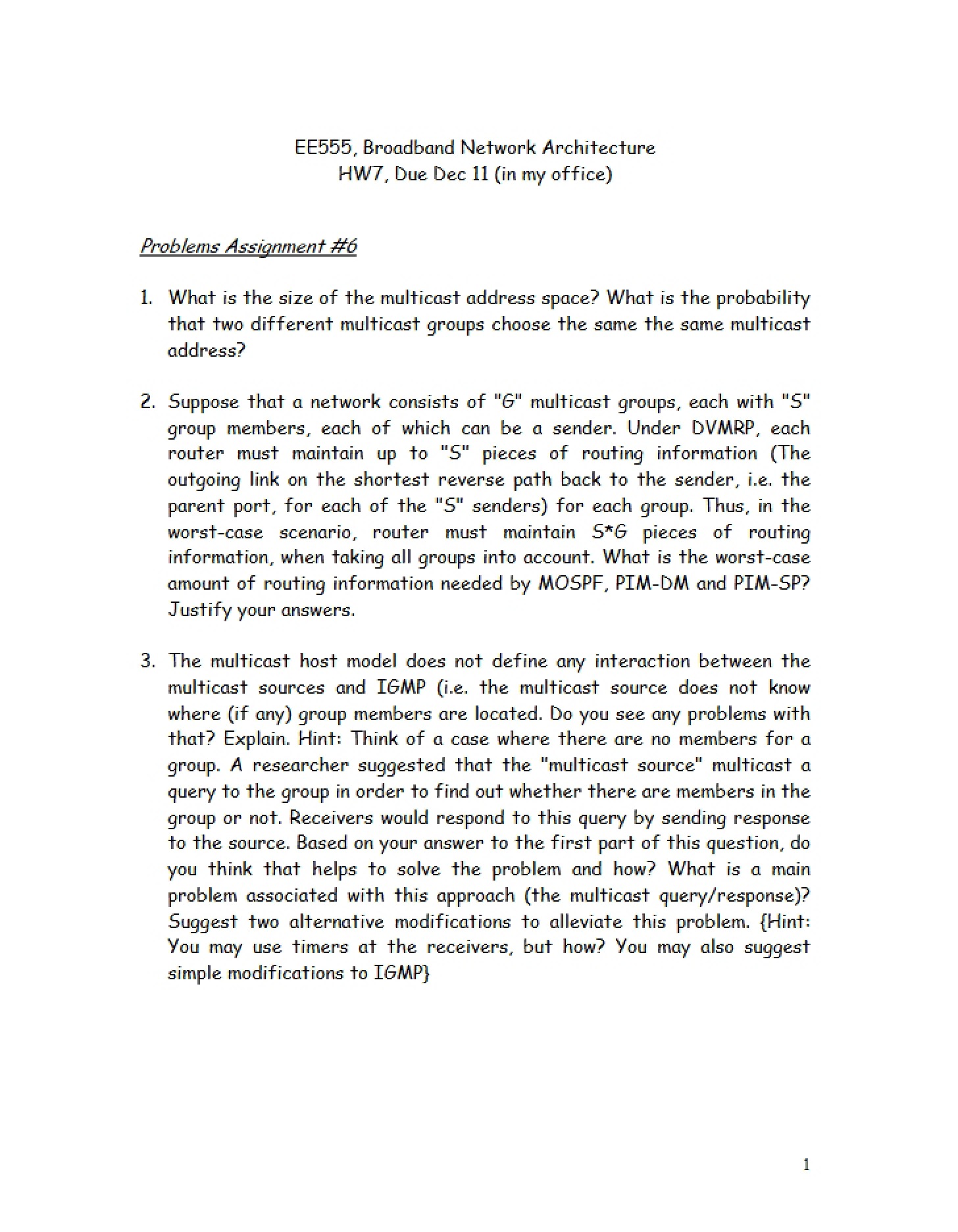
* Discussions surrounding multicast address space and probability.
* Analysis of network overhead and its impact on multicast group communication.
* Comparative insights into the complexities of different multicast routing protocols (MOSPF, PIM-DM, PIM-SM).
* Considerations for packet processing speeds and table search optimization in high-speed networks.