What This Document Is
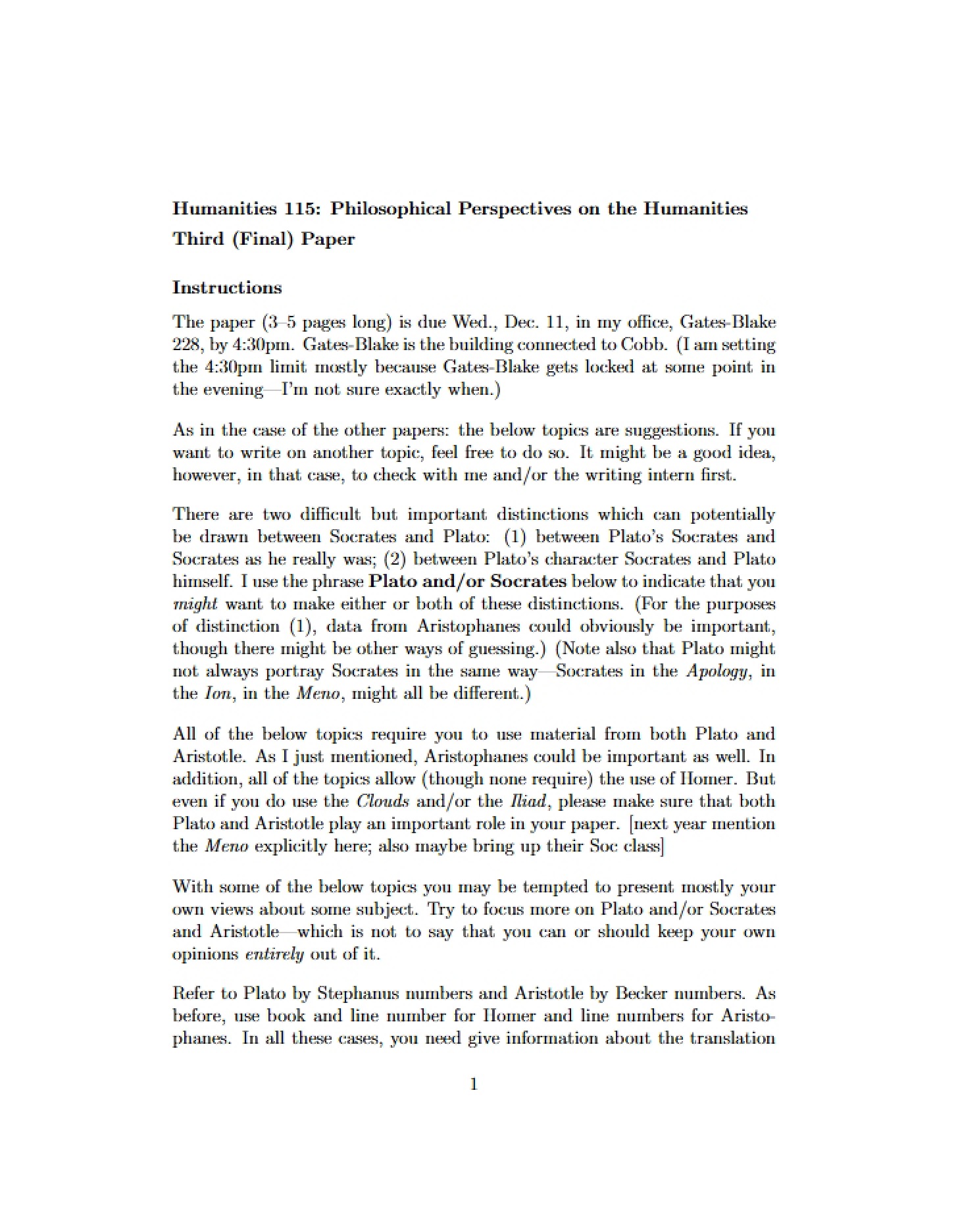
This document outlines the requirements and suggested topics for the second paper assignment in Humanities 115: Philosophical Perspectives on the Humanities, offered at the University of California, Santa Cruz. It serves as a guide for students preparing a substantial written work exploring key themes and ideas from course readings. The assignment focuses on critical analysis and comparative thinking within the context of classical philosophical texts and their interpretations.
Why This Document Matters
This resource is essential for any student enrolled in Humanities 115 who is preparing to complete the second major paper. It clarifies expectations regarding length, source material, citation style, and the overall approach to the assignment. Reviewing this document *before* beginning your research and writing will help ensure your paper meets the course criteria and allows you to focus your efforts effectively. It’s particularly useful during the planning and outlining stages of the writing process.
Topics Covered
* Explorations of differing perspectives on mortality and what constitutes a fate "worse than death."
* Analysis of concepts related to benefit, harm, and the pursuit of the good life.
* Investigations into the art of rhetoric, public speaking, and the relationship between truth, justice, and persuasion.
* Comparative studies of characters and authors encountered throughout the course, including those from the *Iliad* and the works of Plato, Aristophanes, Xenophon, and Diogenes Laertius.
* Considerations of wisdom, knowledge, and understanding – their value and potential drawbacks.
What This Document Provides
* Detailed instructions regarding paper length and due date.
* A list of suggested paper topics designed to stimulate critical thought.
* Guidance on the appropriate use of course materials and external sources.
* Specific citation guidelines for texts used in the course (including the *Iliad*, Plato’s works, and others).
* Advice on constructing a strong argument through comparative analysis and avoiding superficial interpretations.