What This Document Is
This study guide delves into the foundational distinctions crucial for understanding assessment practices within the field of Speech-Language Pathology. It’s designed to clarify the core principles that underpin the selection and interpretation of various evaluation methods. The material focuses on the theoretical underpinnings of testing and measurement as applied to communication disorders, providing a framework for critical thinking about clinical practice.
Why This Document Matters
This resource is particularly beneficial for students in introductory Speech-Language Pathology courses who are beginning to grapple with the complexities of diagnostic procedures. It’s ideal for review before exams, for clarifying concepts discussed in lectures, and for building a solid base of knowledge regarding standardized and non-standardized assessment. Anyone preparing to evaluate and diagnose communication disorders will find this a valuable reference point.
Topics Covered
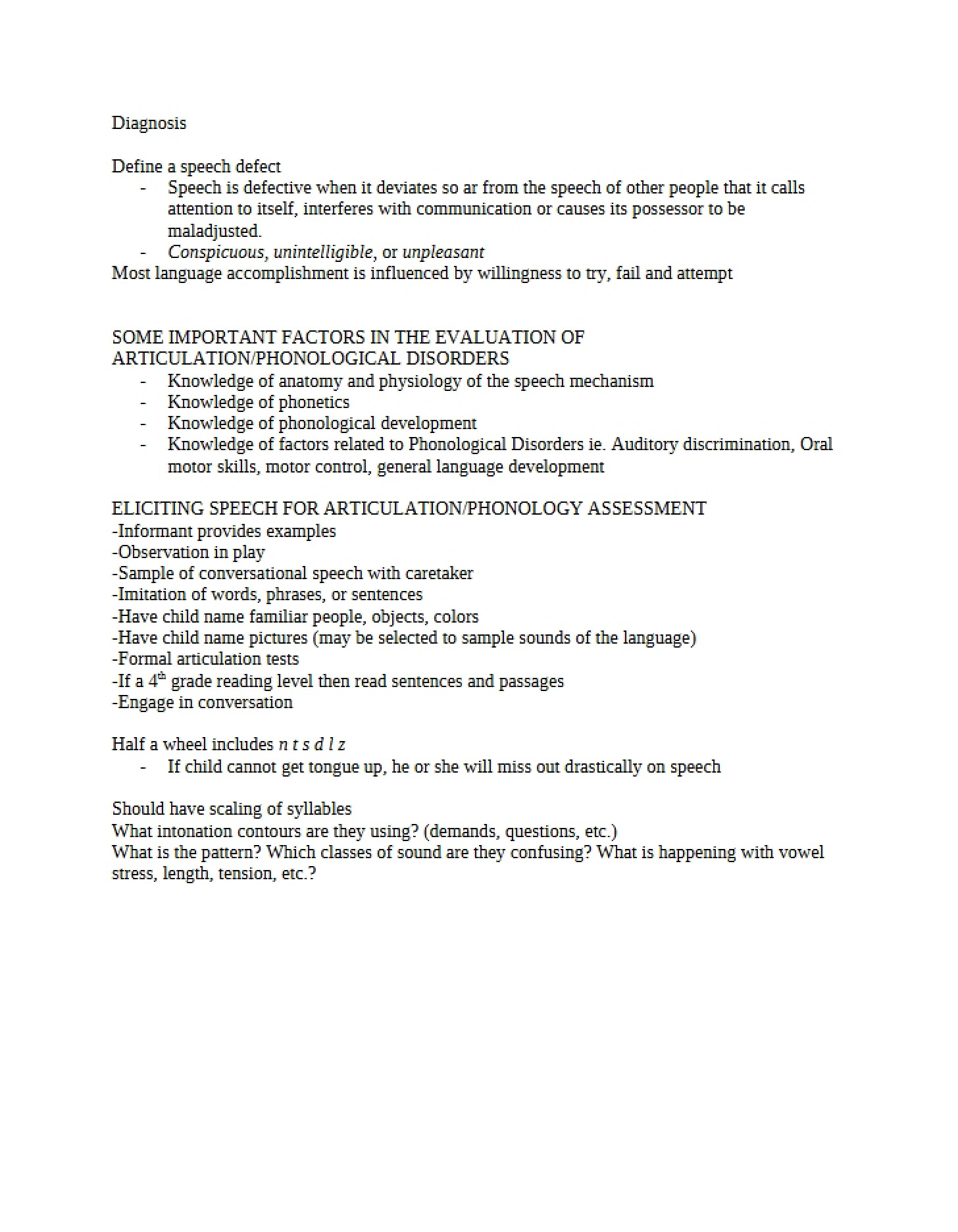
* The fundamental differences between standardization, norm-referenced, and criterion-referenced assessments.
* The concepts of validity and reliability in both formal and informal measurement.
* Factors influencing the accuracy and consistency of assessment results.
* Methods for establishing inter-rater reliability.
* Understanding central tendency, variance, and the normal curve in relation to test score interpretation.
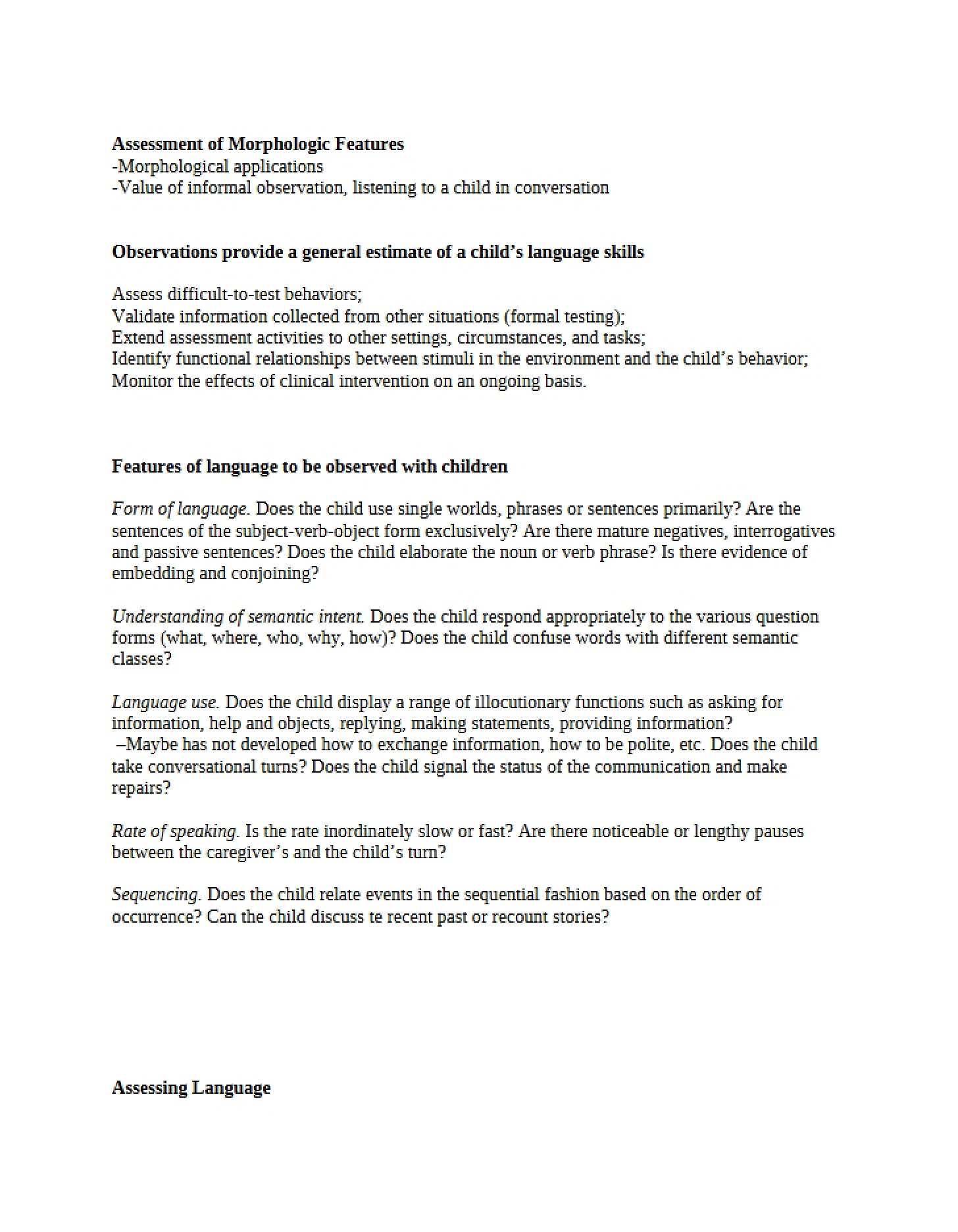
* Various sources of information used in gathering case history data.
* Considerations when utilizing reports and interviews from informants.
What This Document Provides
* Clear definitions of key terminology related to assessment and evaluation.
* An exploration of the importance of careful test selection and administration.
* A discussion of potential pitfalls and limitations in assessment procedures.
* An overview of different methods for collecting relevant client information.
* A framework for understanding the statistical concepts essential for interpreting assessment data.