What This Document Is
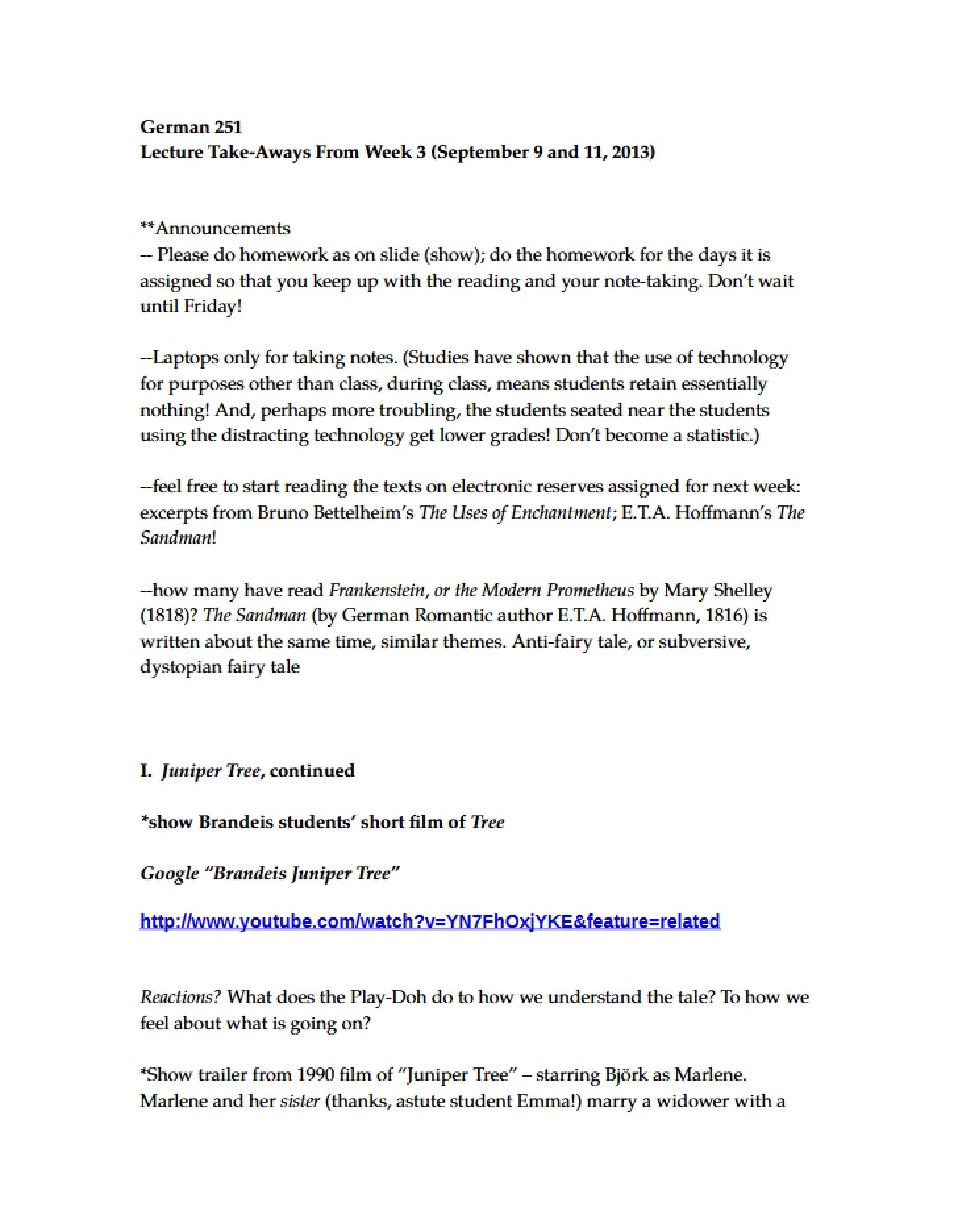
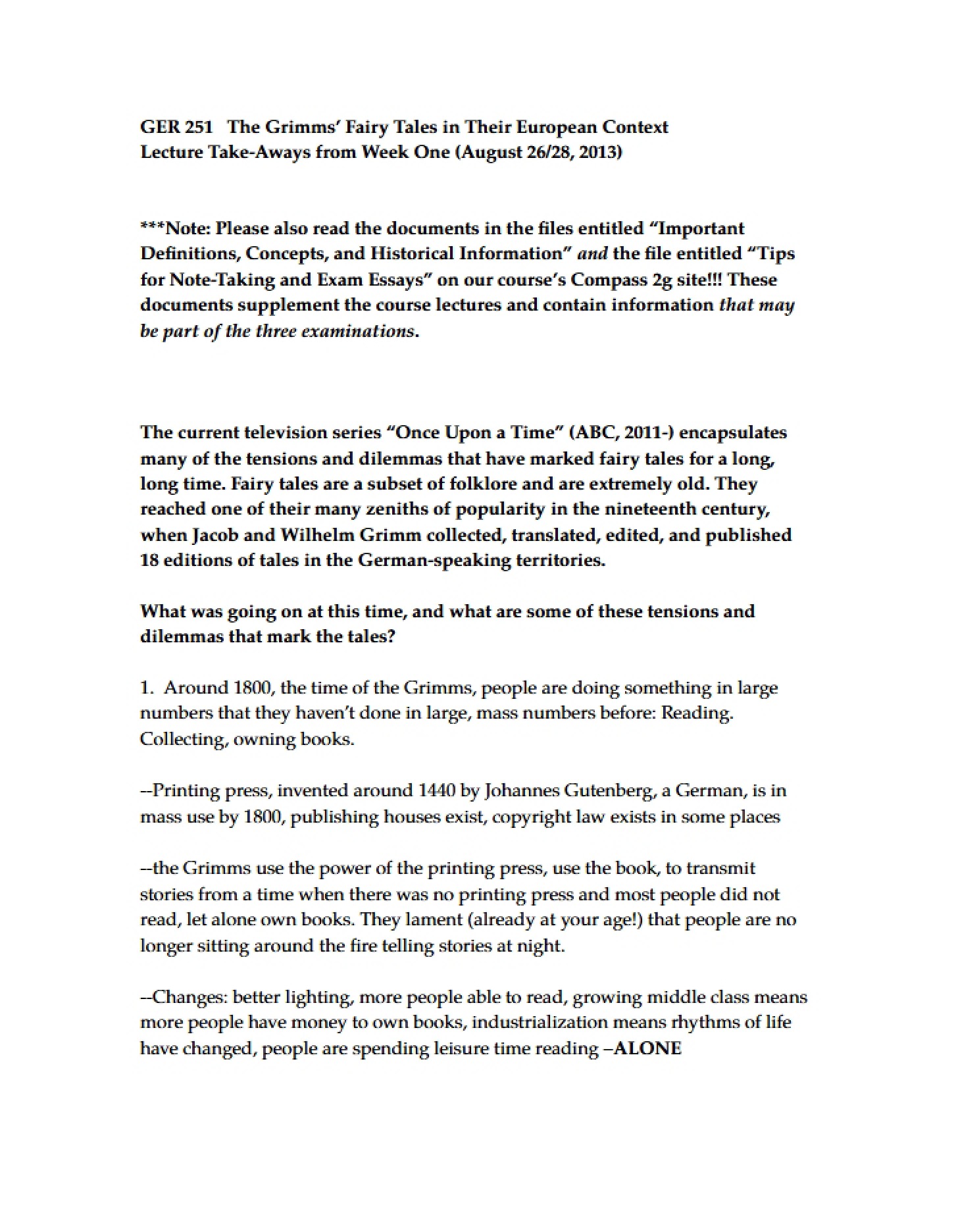
This resource offers a detailed overview of key lecture takeaways from Week 4 of GER 250, Grimm's Fairy Tales In Context, at the University of Illinois at Urbana-Champaign (Fall 2013). It serves as a concentrated study aid, designed to reinforce understanding of complex theoretical concepts discussed in class. The material focuses on critical approaches to fairy tale analysis and their relationship to broader cultural and historical forces. It’s particularly useful for students seeking to solidify their grasp of the course’s core arguments.
Why This Document Matters
Students enrolled in GER 250 will find this resource invaluable as they prepare for assessments and deepen their comprehension of the course material. It’s especially helpful for reviewing before the First Examination, scheduled for September 27th. Those who benefit most will be students looking for a concise yet thorough recap of lecture content, and those wanting to explore the connections between fairy tales, mass culture, and individual identity. Accessing this guide can help you efficiently navigate the course’s challenging themes.
Topics Covered
* The impact of mass reproduction on artistic “aura” and value.
* The relationship between consumerism, objectification, and self-perception.
* The debate surrounding the construction versus inherent nature of identity.
* The role of fairy tales in shaping cultural understandings of personhood.
* The concept of simulation and its connection to technology and artistic representation.
* Analysis of aesthetic and psychological dimensions of remakes and revisions.
* Exploration of the interplay between technology, modernity, and narrative.
What This Document Provides
* A recap of Jack Zipes’s central arguments regarding the “culture industry” and its influence on fairy tales.
* A focused examination of the concepts of originality, imitation, and revision within the context of fairy tale adaptations.
* A framework for understanding the significance of reproduction technologies (like the printing press) in the dissemination and transformation of fairy tales.
* Contextualization of key themes in preparation for a detailed discussion of “The Sandman.”
* Connections between theoretical concepts and specific literary examples.