What This Document Is
This is a comprehensive lab manual designed to accompany the Fundamentals of Biomedical and Industrial Engineering Laboratory (BME 1110L) course at Wright State University. It serves as a practical guide for students engaging in hands-on experiments and projects that reinforce core engineering principles. The manual details the procedures and expectations for a series of laboratory sessions, bridging theoretical knowledge with practical application. It’s a key resource for successfully completing the lab component of this foundational engineering course.
Why This Document Matters
This lab manual is essential for any student currently enrolled in BME 1110L at Wright State University. It will be particularly helpful when preparing for each lab session, understanding the objectives of each experiment, and properly documenting your work for submission. It’s also a valuable reference throughout the semester for recalling key concepts and troubleshooting common issues encountered during experimentation. Students who utilize this manual effectively will be better equipped to grasp the practical aspects of biomedical and industrial engineering and achieve higher grades in the course.
Common Limitations or Challenges
This manual is specifically tailored to the BME 1110L course and its associated lab experiments. It does *not* provide a substitute for attending lab sessions, actively participating in discussions, or seeking clarification from the instructor or teaching assistants. The manual outlines the *what* and *why* of each lab, but doesn’t replace the need for critical thinking and problem-solving skills developed through direct experience. It also assumes a basic understanding of fundamental engineering concepts introduced in the accompanying lecture course.
What This Document Provides
* Detailed overview of lab policies, including submission guidelines and file naming conventions.
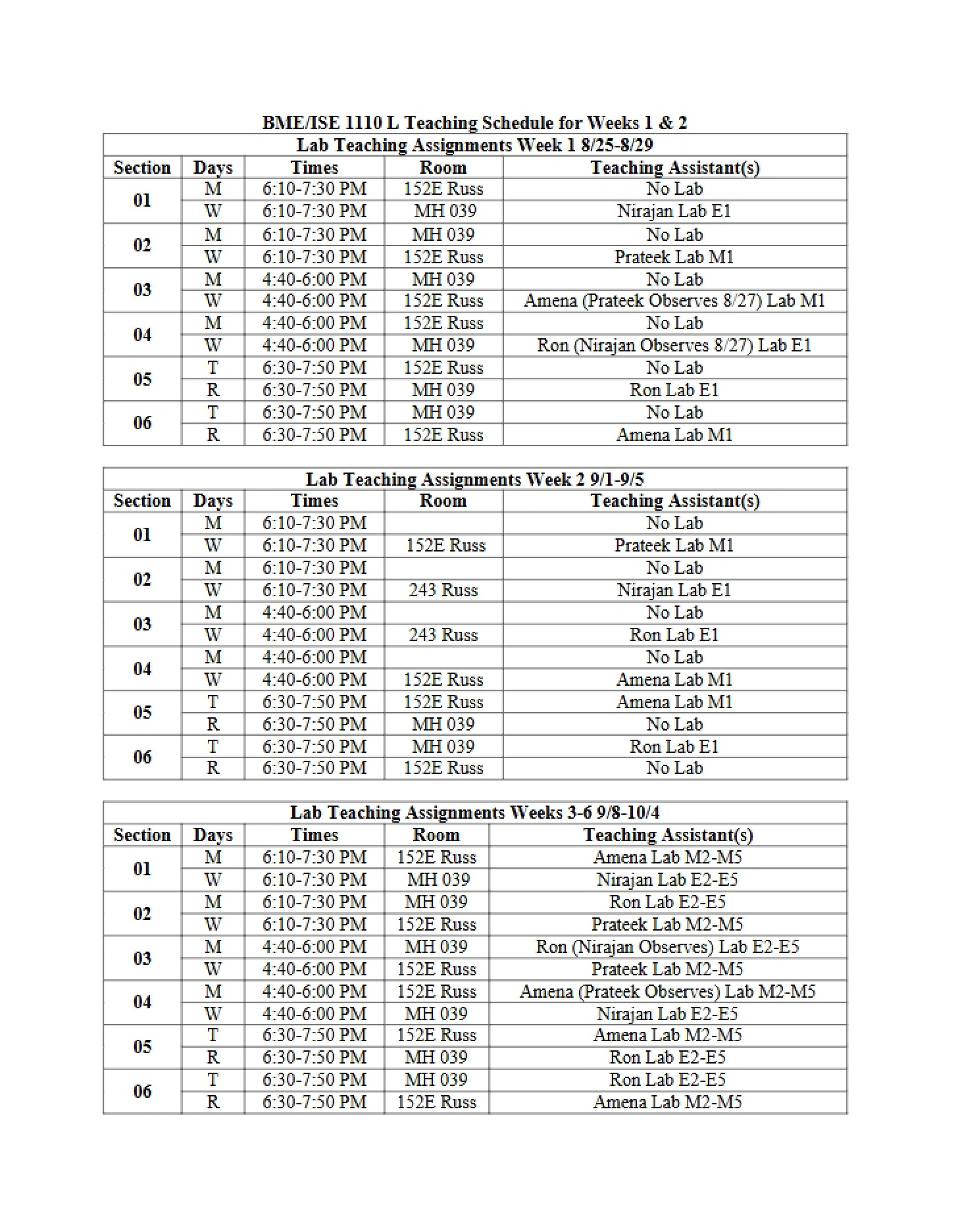
* Information regarding course staff and their contact details for support.
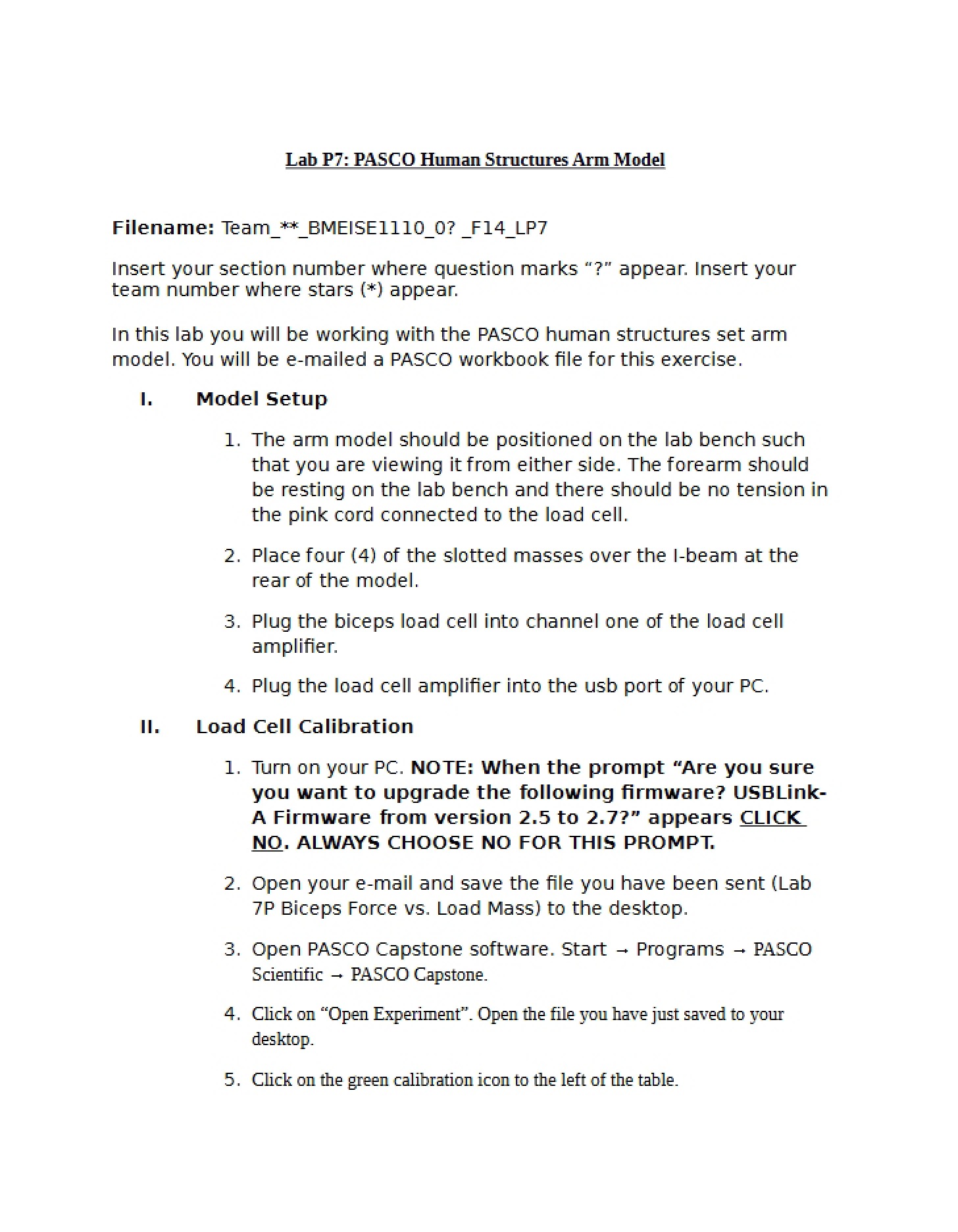
* A structured sequence of laboratory exercises covering a range of engineering software and techniques.
* Introductions to key software packages used in biomedical and industrial engineering, including Excel, MatLab, and SolidWorks.
* Descriptions of lab activities involving circuit prototyping, data analysis, and 3D modeling.
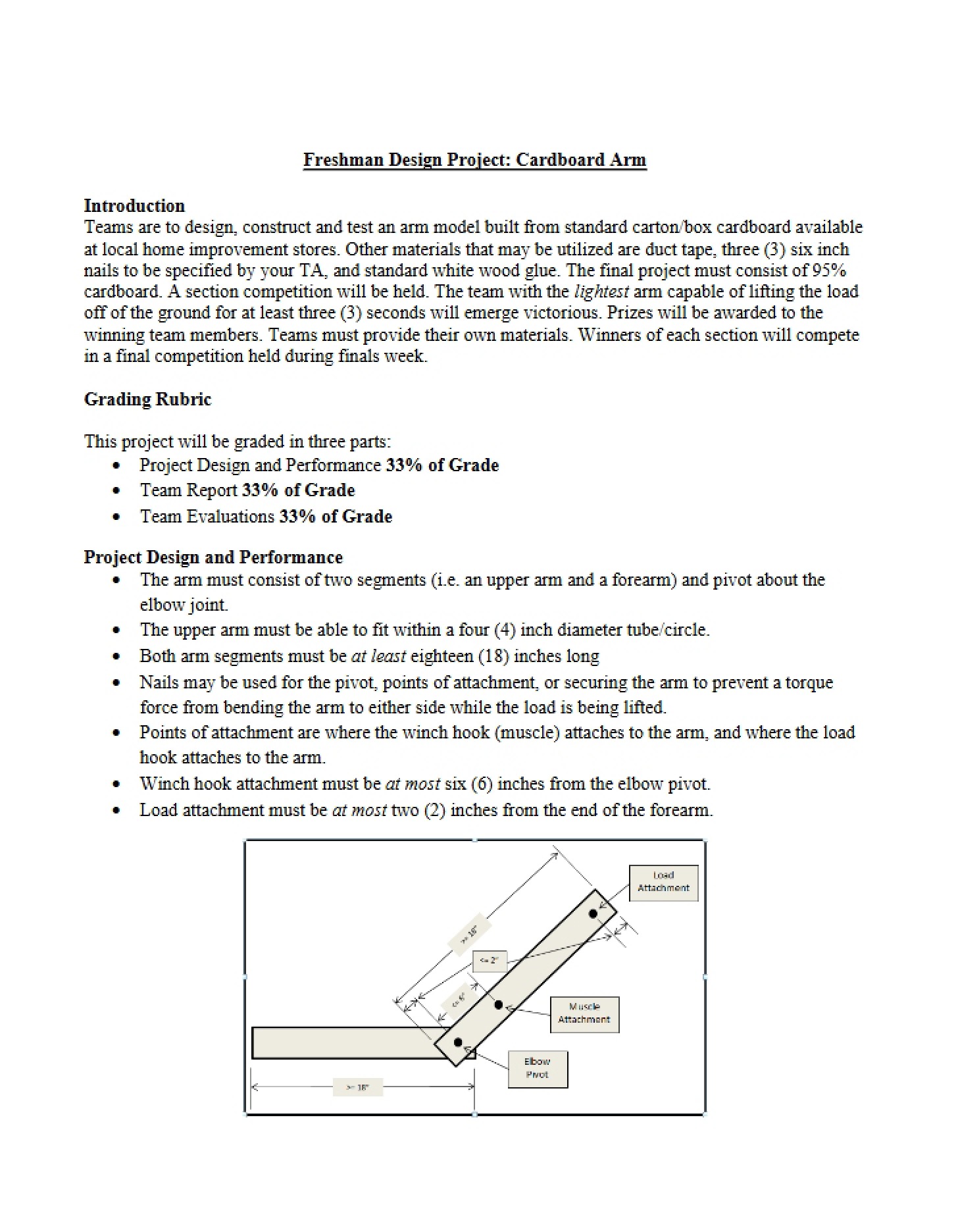
* Information on a freshman design project involving a cardboard arm model.